


National Security Strategy – Verbal cosmetics and no change of policy (Part III)






Europe
European allies enjoy a significant hard power advantage over Russia by almost every measure, save nuclear weapons. As a result of Russia’s war in Ukraine, European relations with Russia are now deeply attenuated, and many Europeans regard Russia as an existential threat.
(NSS, p 25)
To refresh your memory of how this actually happened, since the NSS 2025 apparently does not know or does not want to tell.
In 2014, the United States overthrew the elected government of Ukraine. They put a regime loyal to them in power. According to the New York Times, the Central Intelligence Agency took over all Ukrainian intelligence services. We recall that the US, together with NATO, restructured and trained the Ukrainian military from 2014 to 2022. Among other things, we have this article from the New York Times, The Secret History of the War in Ukraine, about how the US is waging the entire war against Russia from Wiesbaden, Germany.
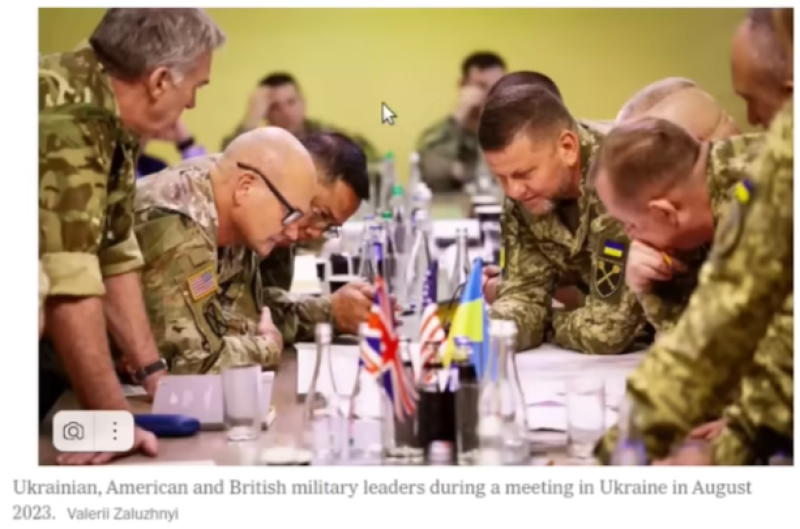
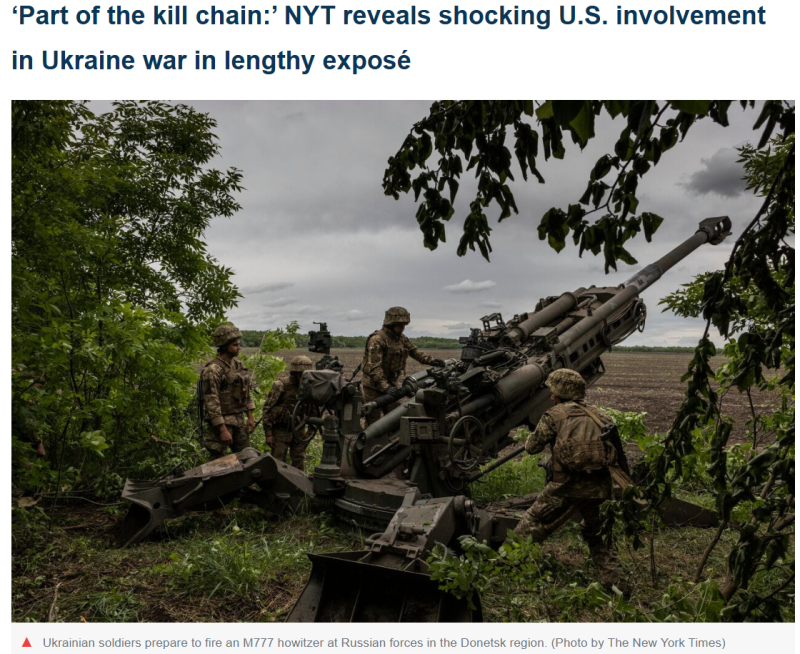
Everything from overall strategy to the selection and targeting of individual Russian units on the battlefield is determined by US commanders, not Ukrainians. US intelligence is helping Ukraine attack Russian energy infrastructure deep inside Russian territory.
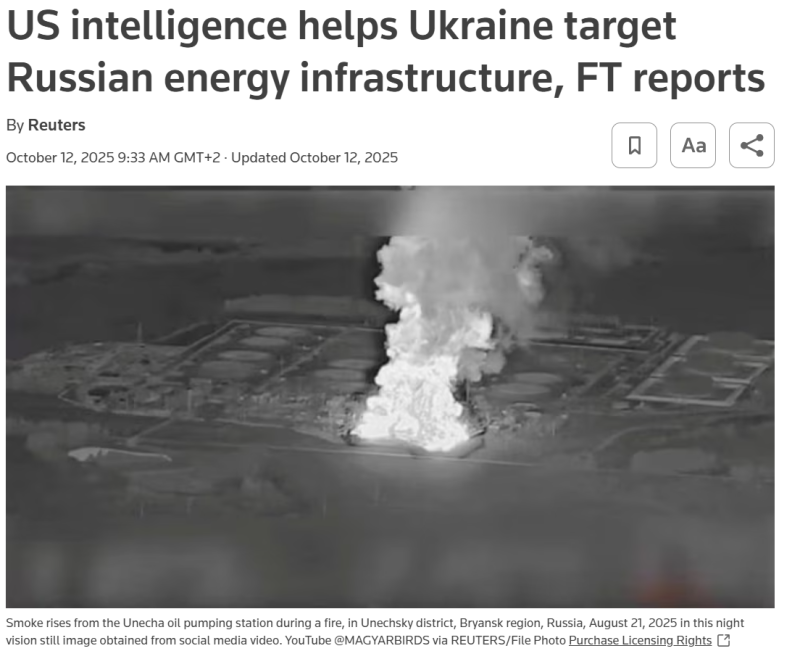
The US is waging this war against Russia. To do so, it is using Ukraine and Europe. It is America's war. They started the war. They are waging the war. Without the US, the war could not continue.
Only the US can end the conflict in Ukraine. But they do not want to. That is why they are pretending that Ukraine or Europe are preventing the US from mediating in a war that they themselves instigated and are waging.
Back to the NSS 2025 paper.
Managing European relations with Russia will require significant U.S. diplomatic engagement, both to reestablish conditions of strategic stability across the Eurasian landmass, and to mitigate the risk of conflict between Russia and European states.
(NSS, p 25)
Once again, it is the US that has turned all this upside down. Before 2014, Europe worked closely with Russia. They benefited from the existing pipelines. Russia sold large quantities of cheap hydrocarbons to Europe. Europe benefited from this. Their industry flourished as a result. They began to work more closely with China and trade goods back and forth. And it was the US that intervened and turned all this upside down. They overthrew Ukraine, reorganized and rebuilt its military into a de facto extension of NATO, took over the Ukrainian secret services and turned them into a weapon they could use against Russia on Russian territory. President Trump himself, in his first term, provided lethal aid to Ukraine to provoke a proxy war with Russia, knowing full well what he was doing.
And we know this because this paper by the Rand Corporation from 2019, entitled “Extending Russia,” said long before the war began that this is exactly what would happen.
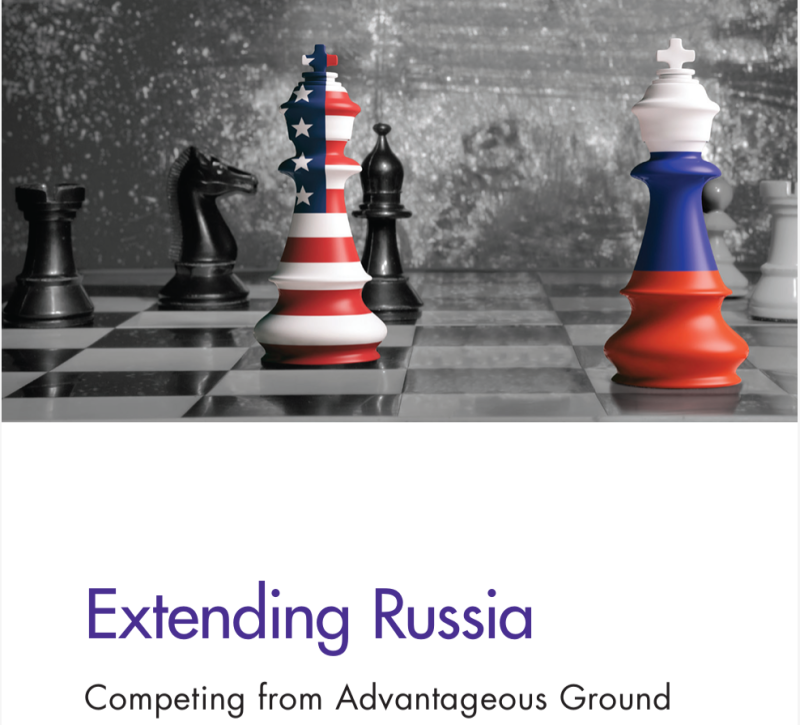
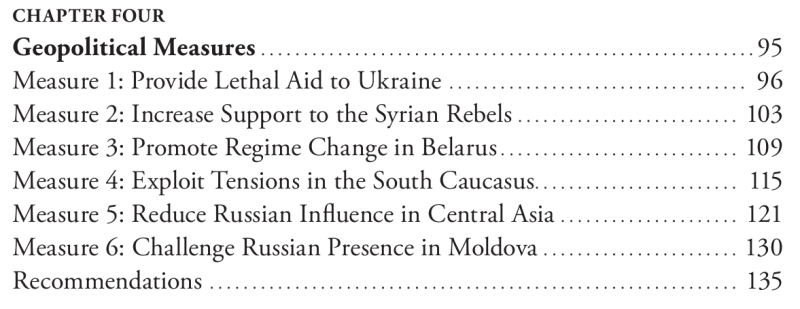
“Geopolitical measures: supplying lethal aid to Ukraine.” That happened under the first Trump administration. That was not Biden's decision. It was President Trump who did that.
So it was the United States that turned relations between Europe and Russia upside down, not Russia and not Europe. It was the US that did that. And it is the US that, through its political interference around the world, including in Europe, has brought to power those who are currently preventing any rational solution to this conflict, which the US itself triggered.
But this is how they are presenting it now:
...to reestablish conditions of strategic stability across the Eurasian landmass, and to mitigate the risk of conflict between Russia and European states.
(NSS, p 25)
So the US is acting as if this were its plan, even though it actually caused this problem itself. And what is the goal here? What do they mean by that? “Shaping European relations with Russia,” “restoring the conditions for strategic stability.” What is strategic stability, and for whom? Who will consider this stability? Will Russia consider this stability, or will the United States consider this stability in terms of US dominance in the region?
It is a core interest of the United States to negotiate an expeditious cessation of hostilities in Ukraine, in order to stabilize European economies, prevent unintended escalation or expansion of the war, and reestablish strategic stability with Russia, as well as to enable the post-hostilities reconstruction of Ukraine to enable its survival as a viable state.
(NSS, p 25)
Once again: “Restoring strategic stability with Russia.” What does that mean at present? The balance of power in Europe is such that Russia is winning this proxy war that the US is waging against Russia in Ukraine. Russia is building up a huge army that is overwhelming the combined efforts of the United States and all its European proxies on the battlefield.
So what do they mean by restored strategic stability? A stability in which the US is the dominant power in Europe and Russia loses influence. That is the plan.
As described, many people fall into wishful thinking and assume that this means a good relationship with Russia. But there has never been such a relationship between the US and Russia. It only existed between Europe and Russia, and the US itself destroyed it, including under the first Trump administration.
And then there is this:
Our goal should be to help Europe correct its current trajectory. We will need a strong Europe to help us successfully compete, and to work in concert with us to prevent any adversary from dominating Europe.
(NSS, p 26)
“Compete.” Compete in what sense? For the US, it's about maintaining and expanding its dominance over the planet “and working with us to prevent an adversary from dominating Europe”. So, once again, they're not talking about Russia and China posing a threat. But what adversary are they talking about here that could dominate Europe? It can only be Russia. They are increasing NATO spending solely to continue confronting and threatening Russia.
And so the US stands there and says, “Well, we want to end the conflict in Ukraine and we want strategic stability with Russia.” They leave the concrete meaning of this vague, and every attempt by Russia to negotiate a concrete solution comes to nothing.
The cessation of hostilities in Ukraine does not therefore mean peace between Ukraine and Russia or a real end to the conflict for the US. It could mean a freezing of the front line, which is exactly what the US has been talking about all along. Every single proposal they have made to Russia has been a freeze, not an end to the conflict with the real causes of the war being addressed.
And, of course, the directive that Secretary of War Hegseth presented in Europe in February still applies: Minsk 3.0. That is why they do not go into detail in this NSS 2025.
But why should we assume that the NSS 2025 will contain anything other than what Minister of War Hegseth has presented, namely Minsk 3.0? All the proposals that the US has made to Russia so far have been faithful copies of Minsk 3.0, which involves freezing the conflict and containing Russia in Ukraine, while the US implements the international division of labor and strategic sequence presented here with regard to China and then returns to Russia, as they have virtually announced?
And what will Europe's role be then?
Cultivating resistance to Europe’s current trajectory within European nations; Opening European markets to U.S. goods and services and ensuring fair treatment of U.S. workers and businesses.
(NSS, p 27)
The US is being imposed on Europe by ruling out all other possible alternatives. For example, the US sells liquefied natural gas to Europe, which is much more expensive than Russian hydrocarbons. This program has been running since the first Trump administration, which already sanctioned the construction of pipelines. President Trump has not only imposed sanctions on Russia because of Nord Stream, but also because of its construction.
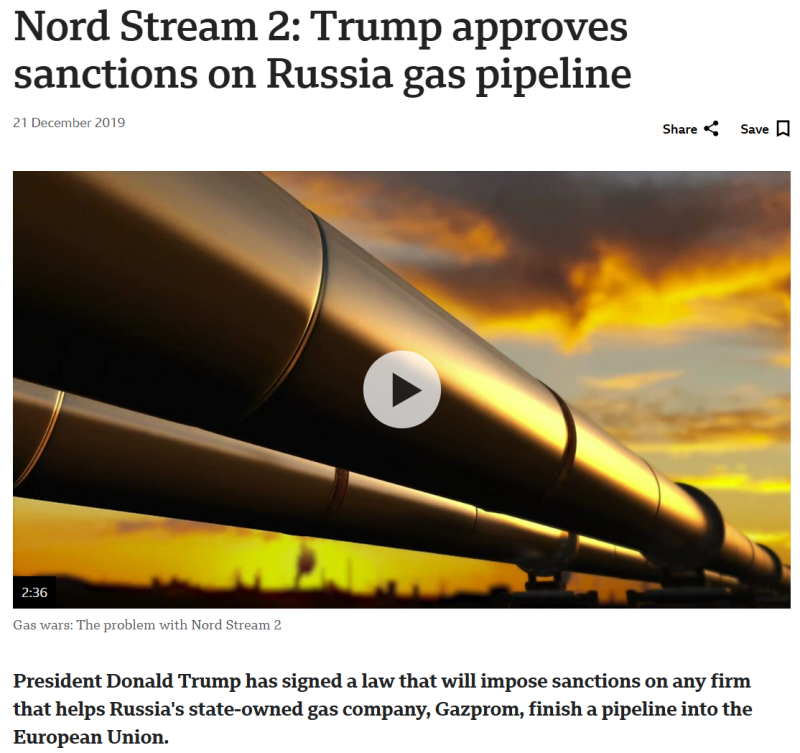
This is what they mean by fair conditions: the US eliminates alternatives and forces Europe to accept its own goods, services, and control.
Middle East and Africa
America will always have core interests in ensuring that Gulf energy supplies do not fall into the hands of an outright, that the Strait of Hormuz remain open, that the Red Sea remain navigable, that the region not be an incubator or exporter of terror against American interests or the American homeland, and that Israel remain secure. We can and must address this threat ideologically and militarily without decades of fruitless “nation-building” wars. We also have a clear interest in expanding the Abraham Accords to more nations in the region and to other countries in the Muslim world.
(NSS, p 28 f.)
Essentially, the goal is to consolidate control over the Middle East through proxy wars and short, intense military operations rather than through nation-building wars. The goal is the same, only the approach is slightly different, as evidenced by the transition since 2011 from the US occupation of Iraq to proxy wars waged by the US against several nations in the region. And the NSS 2025 simply acknowledges this transition.
And then Africa is almost a footnote. There are literally only three short paragraphs in the NSS 2025. Essentially, they are about doing exactly the same thing everywhere else, from Latin America to Europe to Asia and the Middle East: eliminating governments that do not agree with us and do not submit to us, working with those we have already subjugated politically, using terrorists as a pretext to maintain our presence in all these places, gaining access to Africa's natural resources, and preventing other nations from doing so.
Conclusion
All in all, it is clear that the NSS 2025 is a continuation of the Wolfowitz Doctrine, updated for the year 2025. It is virtually indistinguishable from the 1992 version.
The White House speaks openly of US dominance, not only in the US itself and the Western Hemisphere, but of global dominance. It also speaks explicitly and at length about the need for the US to dominate Asia, while at the same time ruling out any possibility that a competitor not belonging to the Western Hemisphere could conduct significant business in the Western Hemisphere.
We have presented all these quotes in detail to show that behind the sometimes beautiful-sounding sentences lies the obvious reality of continuity in the agenda. If you stick to just a handful of carefully selected quotes that could be interpreted as a kind of upheaval in US foreign policy, you overlook the psychological technique behind them. And you overlook the core of the statements. There is no real geopolitical change. This is the Wolfowitz doctrine revamped. It will continue.
There is no point in holding your breath and hoping for change over the next six months or more, or even until the end of the Trump administration. It will not happen.
Even those who thought that President Trump would fight against the Deep State and end all wars have been deceived. For about a year now, there has been virtually no positive change in this regard. The situation has become more dangerous and desperate worldwide, and it will remain so.
People who retreat into wishful thinking and fantasy refuse to add their voices to the opposition. But we should all raise our voices against these policies, raising awareness of what is actually happening, as opposed to what the US wants us to believe.
We should raise our voices for multipolarism, rather than being fooled by this repackaged Wolfowitz doctrine presented by the Trump administration, just like all other administrations before it.
«National Security Strategy – Verbal cosmetics and no change of policy (Part III)»