


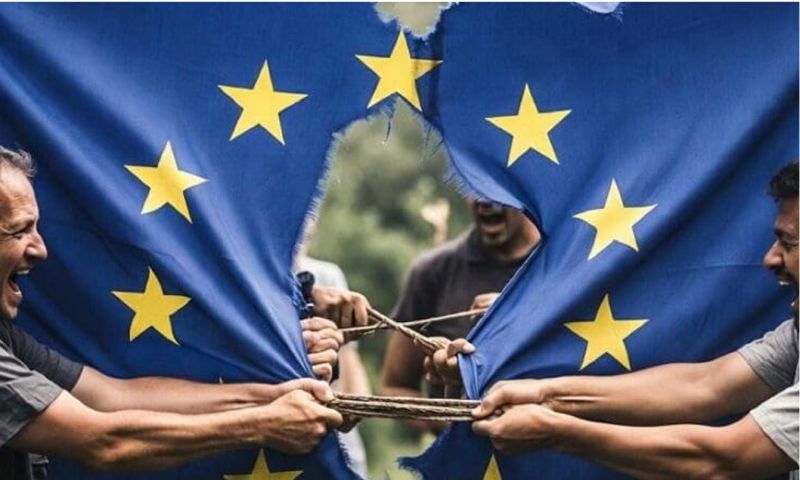
The European Union Threatens Belgium—And Destroys Europe’s Reputation As A Safe Financial Hub






EU Pushes the Limits
The EU’s indefinite freeze and planned “reparations loan” on €210 billion in Russian assets are legally explosive and politically divisive. Yet the European power brokers in Brussels, Berlin, Paris, and London are determined to push it through—no matter the cost.
As of December 12, 2025, the EU launched its boldest financial maneuver since the Cold War. On December 11, EU ambassadors invoked emergency Article 122 TFEU to freeze €210 billion of Russian central-bank reserves—€185 billion at Euroclear in Brussels.
By turning a sanctions regime, which required unanimous six-monthly renewal, into a quasi-permanent mechanism enforceable by qualified-majority voting, the EU has effectively eliminated any chance of these assets returning to Moscow—unless Russia pays full reparations to Ukraine, a scenario diplomats call extremely unlikely.
“Reparations Loan” or Legal Expropriation?
Officially, the assets are meant to back a massive, near-zero-interest “reparations loan” to Kyiv—potentially up to €165 billion. Ukraine would only repay if Russia compensates war damages.
In reality, this is a sophisticated legal disguise for outright expropriation. This is not cautious management of frozen funds, as the G7 recommended in 2024. It is the functional equivalent of seizing sovereign property at the highest level.
Central-bank assets enjoy near-absolute immunity under international law. The UN Convention on State Immunity (2004) codifies this. EU officials, the ECB, the IMF, and Japan all warn: touching the principal—or pledging it indefinitely as collateral—is unlawful expropriation. The planned reparations loan permanently robs Russia of the economic value of its property—without courts, without law.
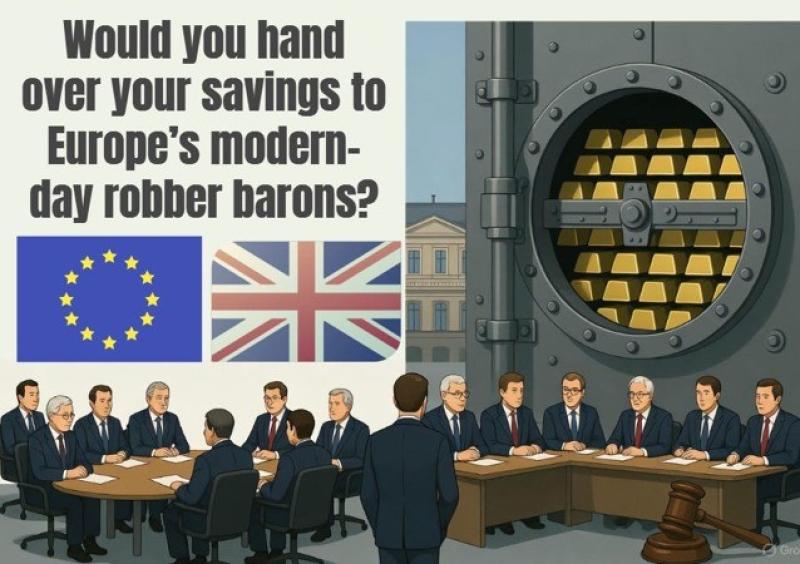
Belgium Draws the Line
Belgium, home to Euroclear and custodian of the largest portion of the frozen assets, refuses to play along. Prime Minister Bart De Wever demands clear EU-wide liability sharing and airtight legal guarantees. Without them, Euroclear will not lend a single euro.
Those guarantees are being withheld. Officials in Brussels and the major capitals know the plan cannot survive international law. A court would almost certainly rule for Russia. Joint liability would expose the risk and make the project politically impossible. So Belgium is left to take the fall alone.
Open Coercion
Now the mask is off. According to senior diplomats quoted by Politico on December 11–12, Brussels delivered an ultimatum to one of the EU’s six founding members. If Belgium blocks access to Russian funds, the Commission and major states will “pull out other sides.”
Translation: Belgium will be treated like Hungary—excluded from decision-making, ignored in Council meetings, its officials isolated, turned into an internal pariah.
The Bitter Reality
This open coercion reveals EU desperation. Without Russian assets, the Union cannot fund project Ukraine at scale. National budgets are empty or politically blocked. Taxpayers in Germany, France, and elsewhere refuse another blank check.
Without the subsidies, Kyiv collapses. The civilian budget, government salaries, and the front—pushing toward key cities—will fail. Even the most committed EU politicians cannot deny it: Ukraine has lost this war.
Spiraling Irresponsibility
Yet the EU persists. Every extra day costs civilian lives—sacrificed on the altar of ideological stubbornness and institutional vanity.
But one unintended truth may emerge: when the EU threatens a founding member for defending the rule of law, even loyal EU citizens—not just in Belgium—will see the Union’s true face.
Frozen, Radioactive, Explosive
€210 billion sits frozen in Brussels vaults: legally immobilized, condemned by the ECB, IMF, and Japan, politically explosive, and morally radioactive. Europe has drawn a red line it has no right to draw—and is ready to force its members to cross it.
The price of this hubris is coming—and it won’t be measured in euros alone, but in the last shreds of EU credibility and the destruction of Europe’s reputation as a Safe Financial Hub.
«The European Union Threatens Belgium—And Destroys Europe’s Reputation As A Safe Financial Hub»