


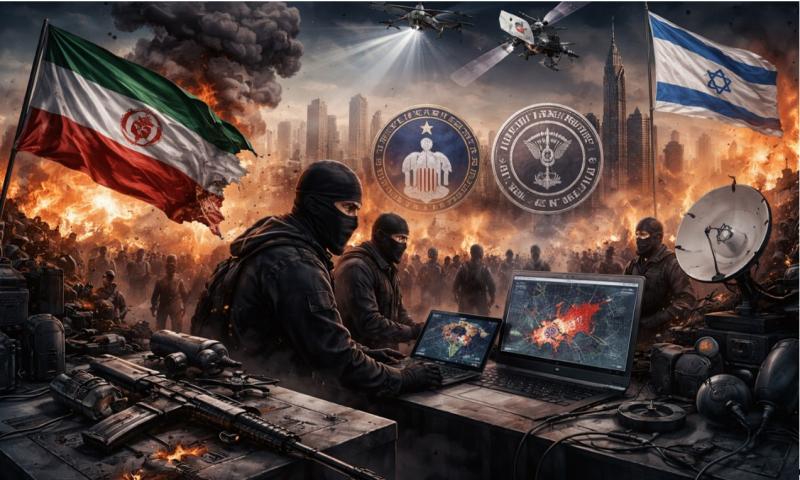
The Architecture of a Crisis Manufactured by Hostile Foreign Powers






Suffocating foreign sanctions have severely damaged Iran's economy and fueled protests, but internal mismanagement by the government has also exacerbated the crisis.
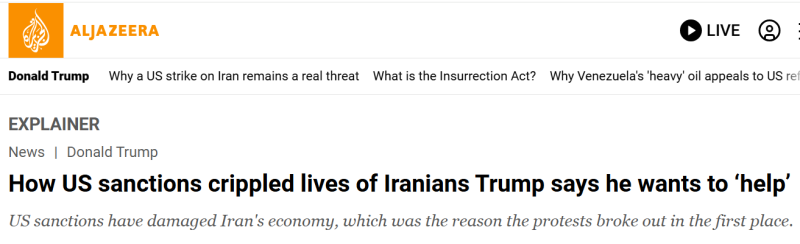
What sanctions do, for example, is restrict access to imported supplies, causing widespread factory closures and job losses for workers who depend on foreign materials. Or patients may die due to shortages of essential medicines blocked by sanctions, severely affecting healthcare and daily life. In other words, sanctions not only make the lives of ordinary people miserable — they also kill.
However, government failures have compounded these effects: authorities failed to adequately protect the rial from depreciation, build sufficient foreign currency reserves, implement effective capital controls, or swiftly secure financial support from partners such as China or other BRICS members.
Iran's situation bears strong similarities to Russia's 2014 ruble crisis, triggered by falling oil prices and Western sanctions. Moscow responded decisively: the Central Bank sharply raised interest rates, floated the ruble to allow natural adjustment, imposed capital controls to curb outflows, and used foreign reserves strategically to stabilize the currency quickly. These measures prevented a deeper collapse and restored confidence. Russia's adversaries rejoiced too soon.
By contrast, Iran could have achieved similar stabilization with relatively modest measures, such as a small loan from China of just a few hundred million dollars to bolster reserves and intervene in currency markets. Instead, ongoing vulnerabilities—combined with fiscal deficits and reliance on a tiered exchange-rate system—have fueled hyperinflation (exceeding 40% in late 2025), record rial lows (over 1 million to the dollar by early 2026), and economic hardship.
Axis of Regime Change: Israel and US Efforts to Escalate Peaceful Protests into a Coup
Iran’s opponents were fully aware of this critical vulnerability. The current wave of unrest began on December 28, 2025, when the traditional merchant class (Bazaaris)—generally conservative, loyal to the Islamic Republic, and supporters of conservative candidates (not the reformist President Masoud Pezeshkian) in the last election—initiated peaceful strikes following a sudden 30–40% depreciation of the rial, which plunged to a record low of over 1.4 million per USD. For merchants, this made imported goods prohibitively expensive and unsellable, serving as an early indicator of national economic frustration.
Government officials, during meetings with the Bazaaris, described the collapse as a targeted financial attack orchestrated by currency traders and, undoubtedly, foreign intelligence agencies operating out of Dubai—part of a well-coordinated, comprehensive campaign to destabilize the country.
The Bazaaris’ protests were modest, peaceful, and not aimed at the government itself. In the months leading up to the unrest, roughly 40,000 Starlink terminals were smuggled into Iran (Forbes). Unlicensed and illegal under Iranian law, such a large-scale operation against the state could only have been orchestrated by foreign intelligence agencies like the CIA or Mossad. The terminals were meant to allow coordination between rioters and their foreign backers—particularly in case the Iranian government shut down domestic internet access.
When students, labor groups, and political factions joined, the protests remained largely peaceful, focused on economic grievances rather than regime overthrow. Clerical control over the economy may cause mismanagement—just as Germany’s economy once floundered under a minister better known for writing children’s books.
The real driver, however, is U.S. and Israeli policy: a campaign rooted in hostility to Iran’s independence and its steadfast support for the Palestinian people. Both major American parties (called “Uniparty” by their critics) pursue the same agenda—using sanctions, propaganda, and coercion to make Iranians so desperate they will either accept or demand regime change.
The protests spread from Tehran across the country shortly after Israeli Prime Minister Netanyahu met President Trump at Mar-a-Lago on December 29, 2025. Hebrew-language media subsequently reported that Trump had given Israel the green light to restart the regime-change operation left unfinished after the June 2025 war. This was further supported by a Financial Times article titled “Israel waits on US to settle ‘unfinished business’ with Iran,” where the “unfinished business” explicitly refers to overthrowing the Tehran government.
The Israeli "surprise attack" in June 2025
The June 2025 Israeli “sneak attack” involved covert ground units, including locally recruited agents armed with drones and anti-tank weapons smuggled in suitcases, as well as assassinations of military leaders and nuclear scientists, cyberattacks, and missile and drone strikes launched from nearby areas.
The operation aimed at regime change, based on the perception that Iran was a “house of cards,” similar to earlier assumptions about Syria. Iran was initially caught off guard and withdrew some mobile defenses but quickly recovered, neutralizing the infiltrators—partly through internet shutdowns—and countering the threats.
From Information War to Street War: Strategic Deception, Violence and Psychological Pressure
Well-organized violent groups soon infiltrated the initially peaceful protests in early January 2026, committing murders, arson, and attacks on public infrastructure. Western media largely ignored these acts and misrepresented the movement as broadly anti-government. The rioters’ objective—mirroring that of the U.S. and Israel—was to transform the demonstrations into a full uprising or “revolution,” as their foreign backers described it.
Israel’s Channel 14 (ערוץ 14), a staunchly pro-government television station, openly reported that the Mossad was supplying weapons directly to the so-called protesters.
A Channel 14 journalist stated: “We reported tonight on Channel 14: foreign actors are arming the protesters in Iran with live firearms, which is the reason for the hundreds of regime personnel killed… Everyone is free to guess who is behind it.,” clearly implying Israel.
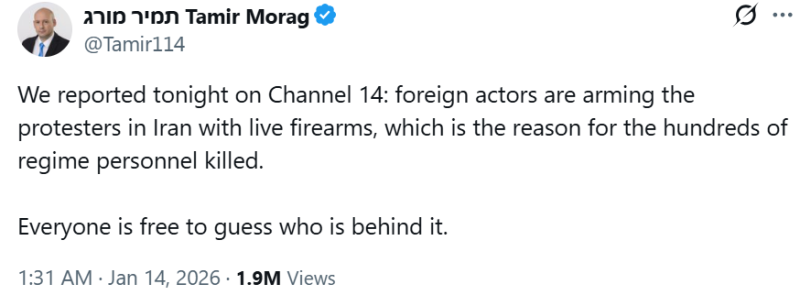
This admission confirms that the violent riots with ‘hundreds of regime personnel killed’ were indeed foreign-fueled rather than spontaneous and homegrown.
The pattern is strikingly similar to Libya and Syria in 2011, where the West initially labeled armed groups as “peaceful protesters,” then supplied them with weapons that escalated the situations into full-scale violent insurgencies.
Western Media and Narratives
Amnesty International and Human Rights Watch described the protests in Iran as “largely peaceful,” despite clear evidence to the contrary.
As unrest spread to all 31 provinces in January 2026, a sophisticated campaign of coordinated information operations emerged to destabilize public order.
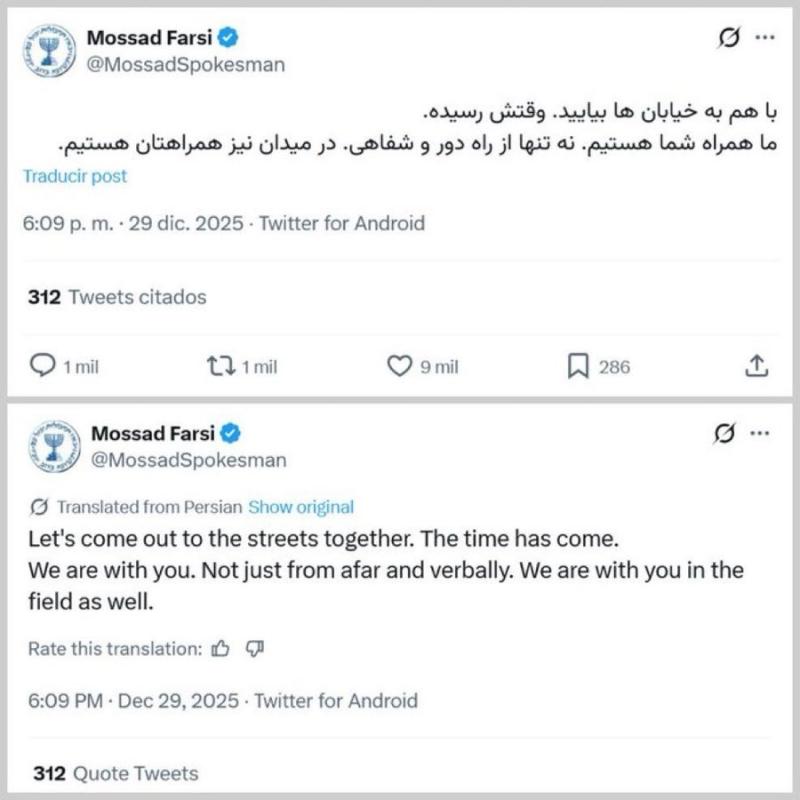
The psychological operations began on December 29, 2025, at the beginning of the still small protests, when Mossad published a Persian-language message on social media: “Let’s come out to the streets together. The time has come. We are with you. Not just afar and verbally. We are with you in the field as well.”
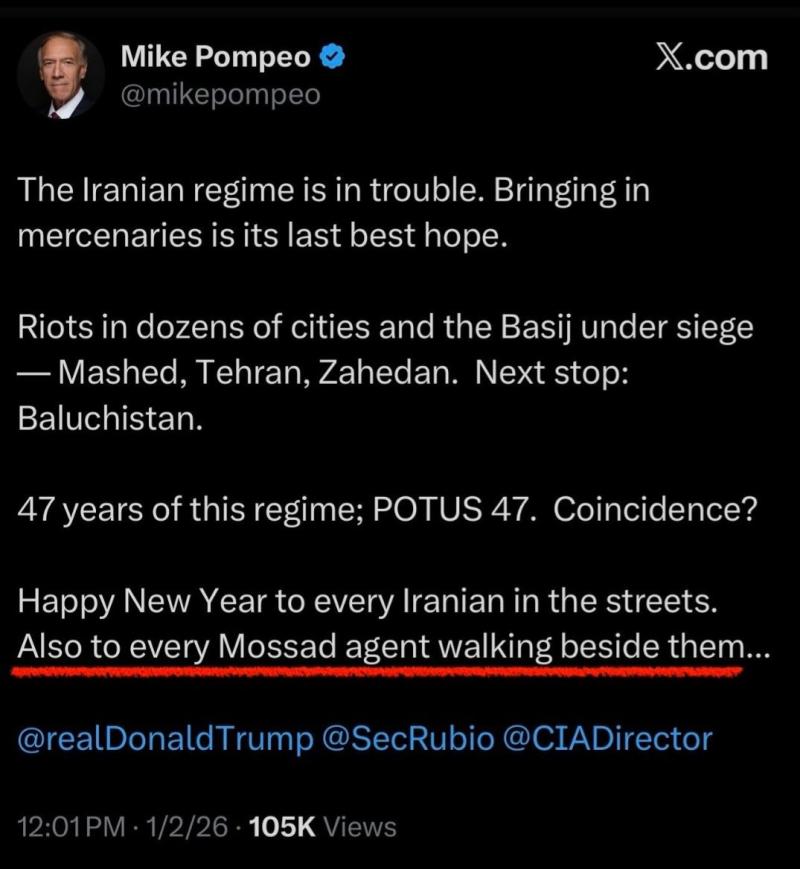
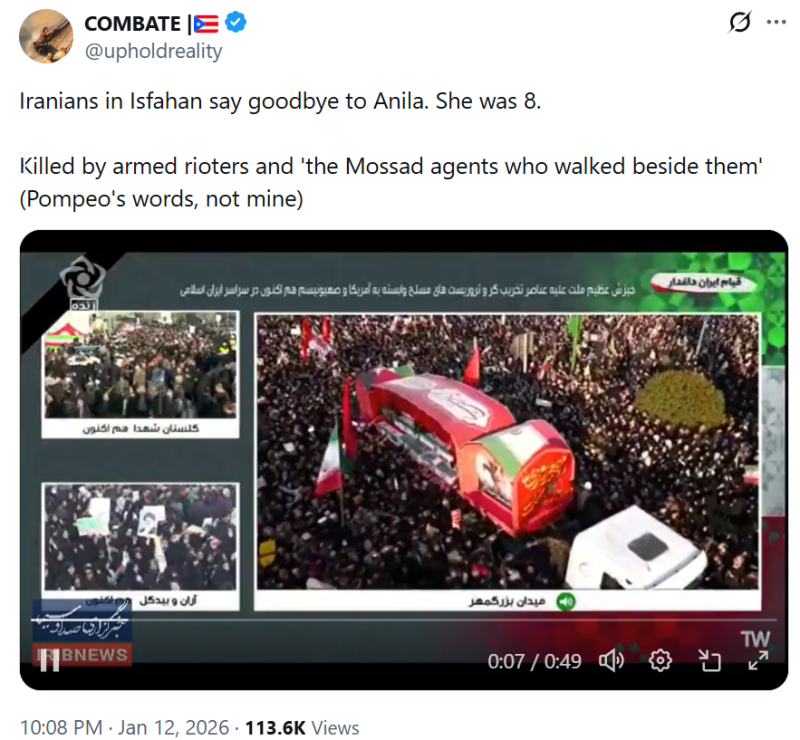
And Trump’s former CIA director, Mike Pompeo, an outspoken Zionist, openly wished a “Happy New Year” to every Mossad agent supposedly “protesting” inside Iran, making little effort to hide the implication that Mossad was actively exploiting the demonstrations to advance its own agenda.
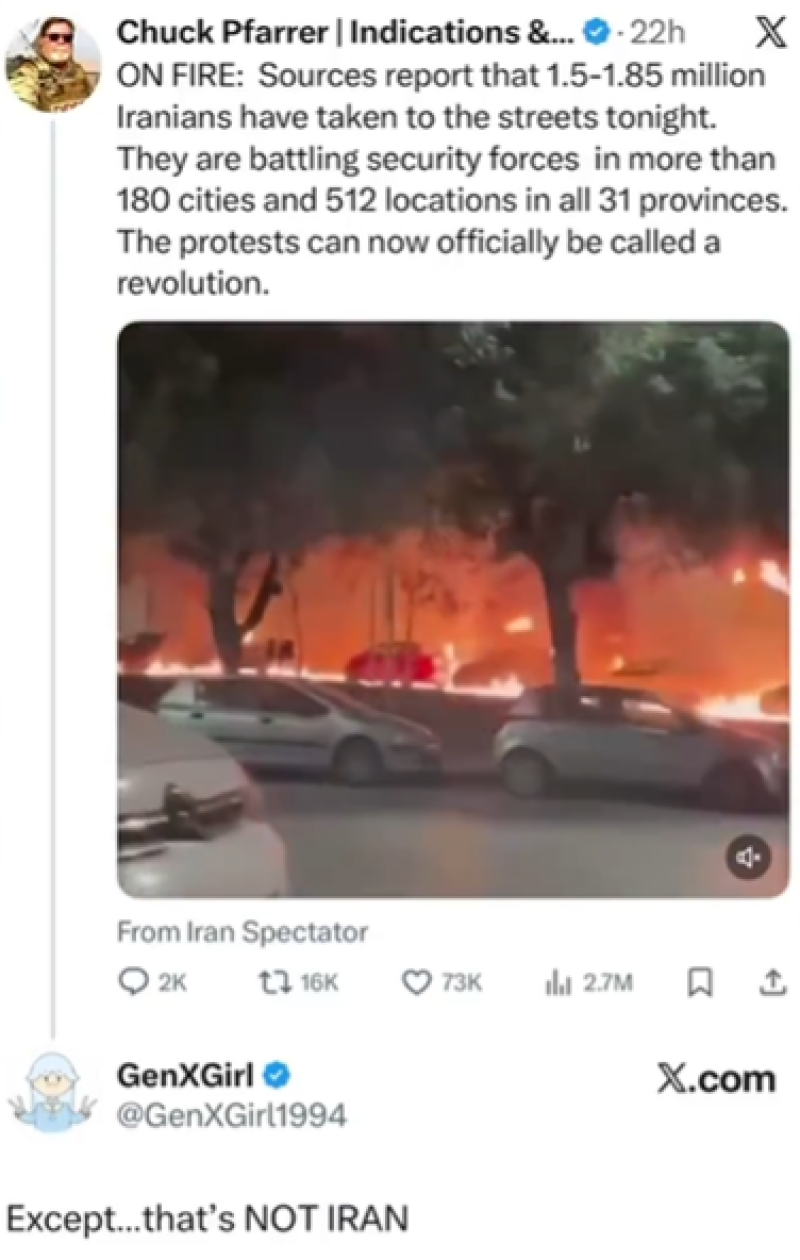
Massive media campaigns followed spreading narratives of looming economic collapse and rampant corruption to intensify public demoralization. Fake and manipulated videos—including AI-generated material and recycled footage from other countries—were widely circulated, giving the impression of widespread violence and regime instability.
The meticulous coordination of the operation made it clear that it was orchestrated by professional foreign actors and not the result of spontaneous domestic activities.
Western media and cultural propaganda
Foreign media outlets such as BBC Persian played a key role in preparing the ground for the protests by influencing the political attitudes of the Iranian middle class over an extended period of time and by promoting Western cultural ideals — large festivals, LGBTQ pride events, and Eurovision-style entertainment — in order to portray life in the West as superior and to fuel dissatisfaction with the Iranian government, as noted by Max Blumenthal, editor of The Grayzone and an expert on Iran. During his recent travels across Iran, Blumenthal met Iranians from all walks of life, including some who consumed this media.
Even BBC Channel 4’s own documentary has acknowledged the BBC’s historical involvement in the 1953 coup against Iran’s democratically elected Prime Minister Mohammad Mossadegh, reflecting a long-standing and troubling tradition.
BBC Persian has also acknowledged that Iranians interviewed were contacting them via Starlink—devices distributed by the CIA explicitly for regime-change purposes.
Similarly, the London-based channel “Iran International,” originally funded by Saudi Arabia and now closely tied to Israel, has functioned as a Farsi-language outlet encouraging unrest, even providing near-instructional content for rioters and glorifying acts of violence as part of “resistance.”
Unavoidably, the protests turned violent. Militants from the MEK (People’s Mojahedin Organization of Iran, which supported Saddam Hussein during the Iran–Iraq War) trained in camps in Iraq and Albania by the CIA, according to fomer CIA officers, along with U.S.-trained Kurdish factions crossing from Iraq, were among the most violent actors. These armed groups attacked ordinary citizens to provoke security forces into firefights, resulting in civilian casualties that were then blamed on the government in the information war.
Former CIA officer John Kiriakou explained: “So what they did is this: there are hundreds of thousands of Afghan refugees in Iran. They’ll never get Iranian citizenship. And because they don’t have paperwork, they’re not entitled to free medical, to food aid, welfare, nothing. And they’re desperate. Well, those are the guys that the Israelis recruited. It’s like, ‘we want you to stand on this corner. And every time you see this general drive-by, make a note of it and then transmit back to us. Here’s $100.’ They recruited thousands.”
Western Media Silence and Narrative Control
Western media amplified portrayals of peaceful protesters while ignoring the killing of police officers and civilians by violent protesters and foreign agents, and underreporting massive pro-government rallies. As with regime-change operations against other countries, the goal was to influence public opinion and justify a potential military escalation.
In early January, severe unrest engulfed several cities, yet the Western mainstream media largely ignored it. The following examples represent only a fraction of the widespread violence and chaos.
On January 9, severe rioting erupted in Mashhad, with anti-government groups setting fire to fire stations, buses, city property, and subway facilities, causing an estimated $18 million in damage, according to local authorities.
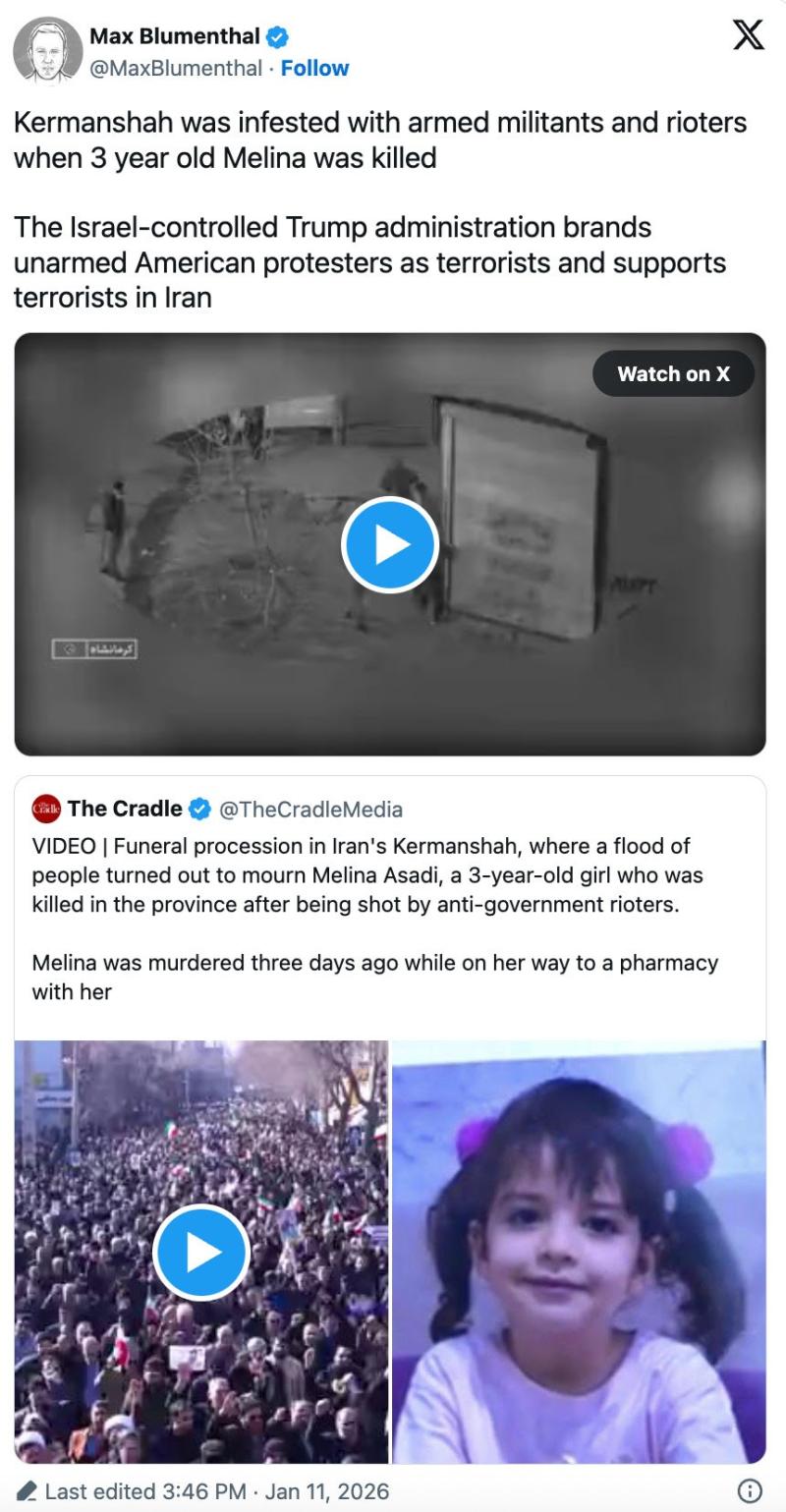
In Kermanshah, three-year-old Melina Azadi was killed by gunfire attributed to rioters.
Armed militants were filmed shooting at police and attacking unarmed security forces in Kermanshah, Hamadan, Lorestan, and other regions.
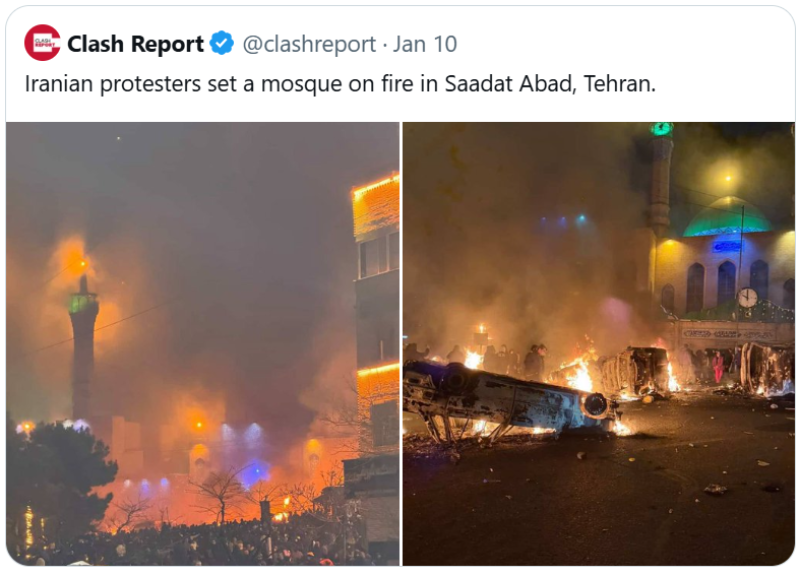
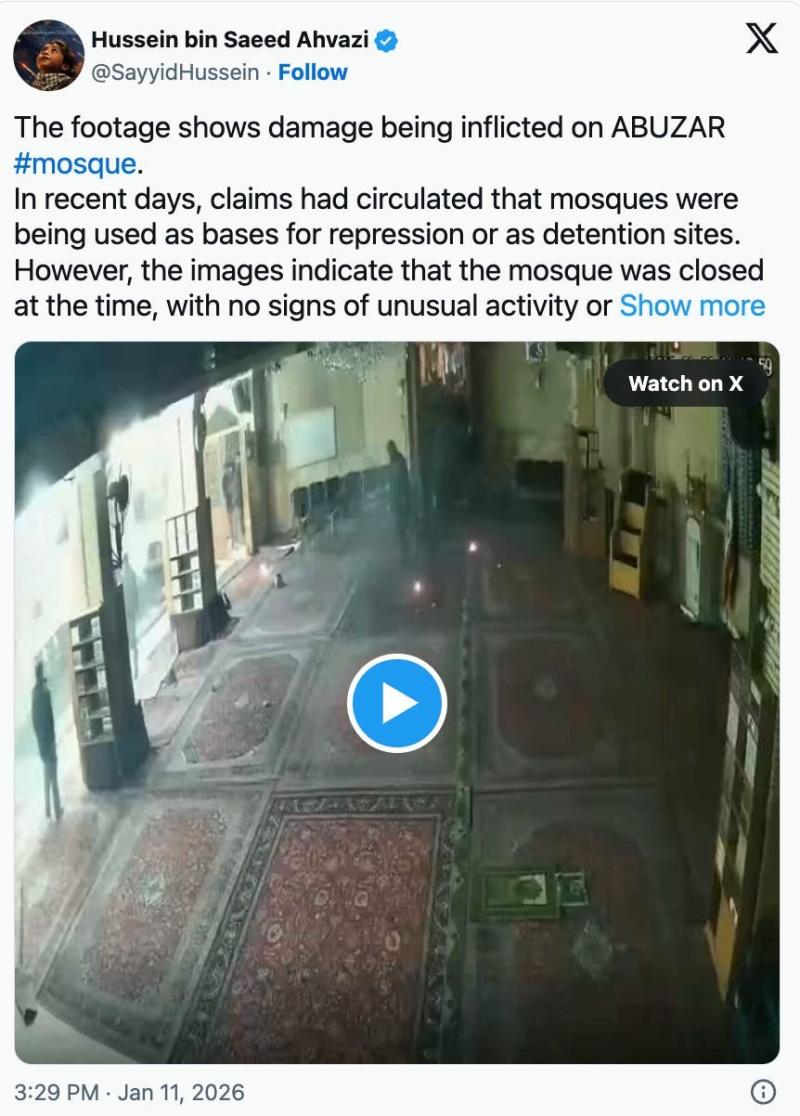
Footage from January 10 shows rioters setting fire to a public bus in a central Iranian city. In Tehran, groups attacked religious sites—including the Abazar Mosque, the Grand Mosque of Sarableh, and the shrine of Muhammad ibn Musa al-Kadhim—through arson and vandalism.
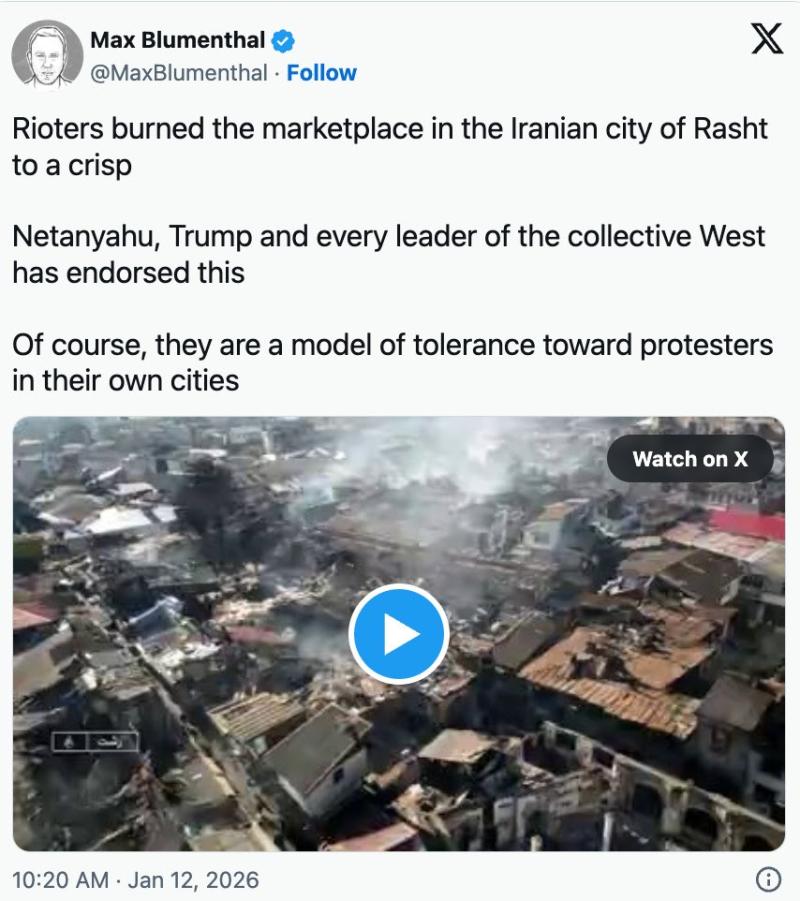
In Karaj, rioters burned down a major municipal building; in Rasht, part of the central marketplace was destroyed; and in Borujen, a historical library containing ancient texts was set ablaze.
Despite these incidents, Western media and governments largely remained silent—even after the Iranian Foreign Ministry provided foreign ambassadors with footage of the violence. The Iranian government reported that more than 100 police officers and security personnel were killed during the unrest. Two Washington-based Iranian NGOs funded by the US government, however, cite significantly lower figures and have become frequent sources for Western reporting.
Iran was not the “house of cards” the US and Israel believed it to be. Even Reuters noted during the unrest that the allegedly “corrupt regime” still had a “considerable following loyal to clerical rule.”
There were no significant defections from key groups—the bazaars, the Revolutionary Guard, or the military—and Israeli analysts of the Hebrew press conceded that there were no obvious cracks in the system. As for corruption, the CIA’s tactic of bribery—which had been successful in its recent regime-change operations in Venezuela and Syria—proved ineffective in Iran, where the political and military leaders are evidently not as corrupt as Western propaganda suggests.
In short, Iran's two powerful adversaries miscalculated, and the outcome was not in their favor.
Even the Financial Times, in an article titled "Report from Tehran" (roughly: "How Weak Iranians Rebelled Against the Regime"), described the daytime calm in Tehran (traffic, shopping, return to work), but noted overcrowded hospitals, police warnings to keep young people indoors, and fears of escalation in the evenings.
The protests were now described as "sporadic." Unusually, the article mentioned significant violence by the demonstrators—including armed attacks, arson, and beheadings—which shocked Iranians and fueled fears of civil war, drawing comparisons to Syria and Libya. Muhammad Saddak Javadi Hazar, a reformist politician from Mashhad, expressed horror at the mutual killings. This Financial Times report was particularly noteworthy because the mainstream media largely ignored this violence by the protesters.
As the protests subsided and Trump continued to urge demonstrators to proceed and "occupy institutions" while promising that "help is on the way," Iran began to ease restrictions on mobile and internet services.
The previous communications blackout had been remarkably sophisticated: authorities not only disabled mobile data and internet access, but also disrupted and blocked tens of thousands of illegal Starlink terminals. They even managed to identify and neutralize many users of the terminals controlled by foreign powers, which helped to end the violent activities after only a few days.
Only DropSite News reported that “For Iran Casualty Counts, Western Media Leaned Heavily on U.S.-Funded Iranian Rights Groups”—NGOs the U.S. government uses to promote its agenda.
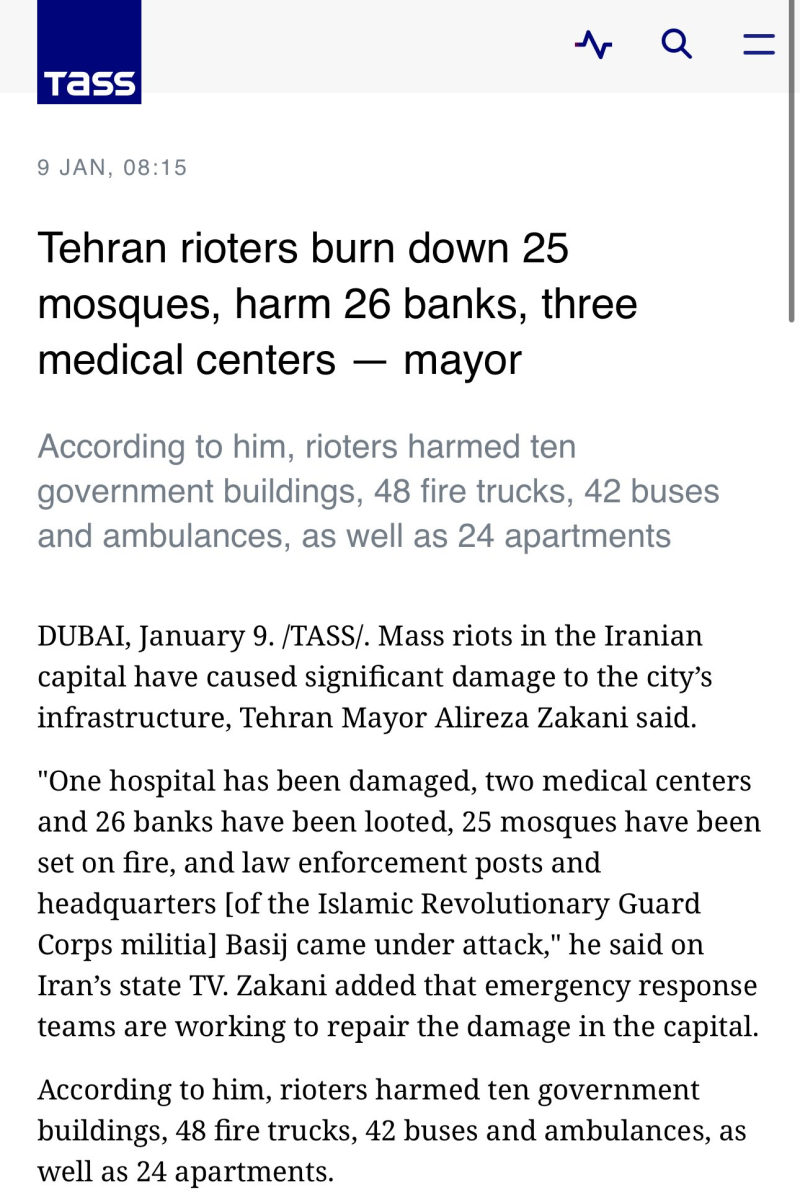
At the time of writing, rioters and terrorists had destroyed 10 government buildings, 48 fire trucks, 42 buses and ambulances, 24 apartments, looted 26 banks, and set fire to 25 mosques. Trump referred to these violent actors as “victims” and “his people.” Iranian police have arrested multiple individuals—including Indians and Afghans—for infrastructure destruction and spying for Israel as the riots expanded.
Also notable: As soon as the violence began, the media landscape was flooded with accusations of state violence against peaceful demonstrators, while other aspects of the conflict were conspicuously absent from Western reporting.
Western media relied primarily on casualty figures compiled by Iranian diaspora groups. These groups are funded by the National Endowment for Democracy (NED) – an organization founded by the CIA and a key instrument of the U.S. government for regime change, whose leadership is staffed with committed neoconservatives.
The NED has taken credit for advancing the “Woman, Life, Freedom” protests of 2023—which also featured gruesome acts of violence largely ignored by Western media and human rights NGOs. Today, the NED is far from alone among intelligence-aligned actors seeking to fuel chaos inside Iran.
The fact that dozens of mosques were burned, police stations systematically destroyed, countless ambulances torched, and more than 100 policemen killed by demonstrators remained largely unreported in Western media, which focused almost exclusively on violence attributed to the Iranian government.
Western Influencers Join the Propaganda War
Famous British novelist J.K. Rowling, author of the seven-book Harry Potter series—which has sold over 600 million copies worldwide, making it the best-selling book series of all time—condemned the “evil” Iranian regime on X (Twitter), sharing a poster based on a video allegedly showing a brave woman in Iran “defying the Mullahs.” Netizens quickly identified the real filming location: Toronto, Canada—not Iran.
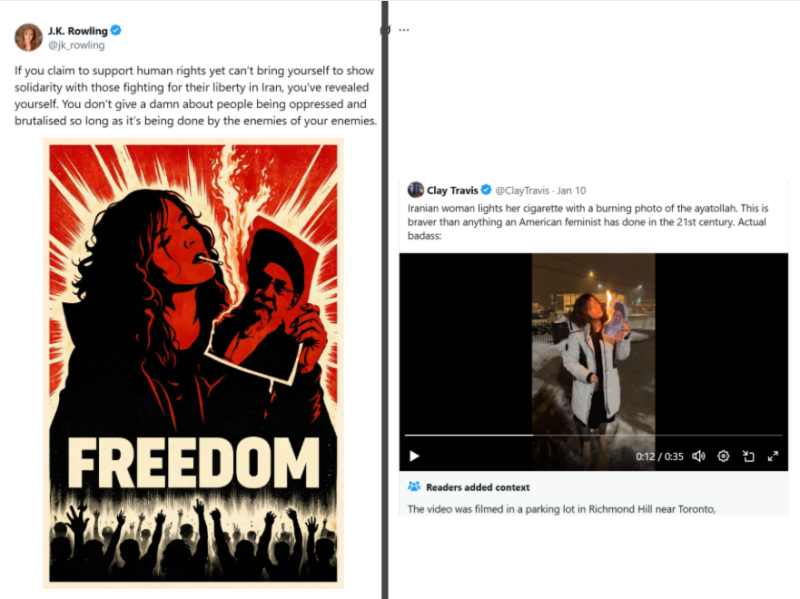
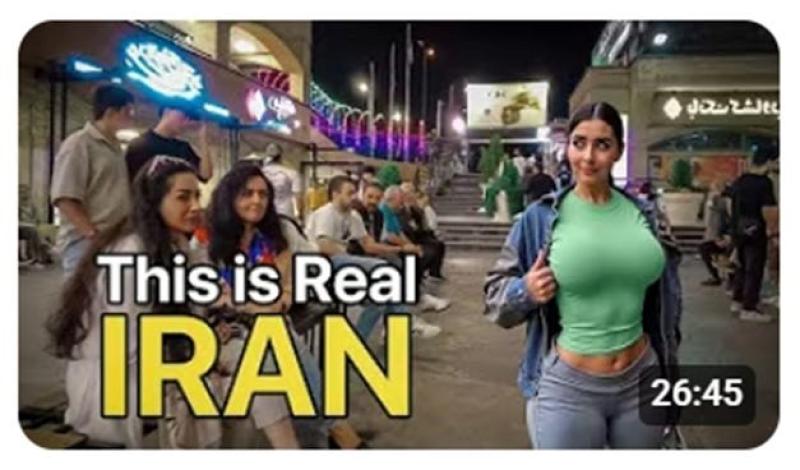
As the saying goes in the West, "Women are oppressed in Iran." Rowling never visited Tehran to experience the nightlife, where many young women enjoy themselves carefree without a hijab and in tight clothing.
Recently, foreign visitors to Iran have noted that there are very few armed police officers on the streets—far fewer than in American cities—that many women go without a hijab and are not harassed, and that the overall atmosphere is far less militarized than Western media portray.
Contrary to the image of “mad, misogynistic, and oppressive mullahs,” Iran has made remarkable progress in female education. As of 2026, female youth (ages 15–24) literacy stands at 98.93%—a dramatic rise from approximately 42% in 1976. Women now occupy approximately 60% of university seats and dominate several scientific and medical fields. Iran’s female STEM graduation rate (68–70%) substantially exceeds that of the United States (approximately 12.7% of STEM graduates) and European countries such as Germany (20–22% of engineering graduates).
Tuition in Iran is generally free, in stark contrast to the United States, where students face tens of thousands of dollars in debt.
Netizens closely examined Rowling’s social media for any comment on the genocide in Gaza, where tens of thousands of women and girls were killed by Israel—but found none. She offered no sympathy for the Palestinian victims.
A wider look at Western public figures reveals a striking pattern: the louder the expressions of solidarity with supposed victims of Iran’s regime, the quieter—or nonexistent—the concern for the real victims in Gaza.
No group demonstrates this pattern more clearly than German politicians and public figures, who condemned and vilified the Iranian government and its spiritual leader. The German-Israeli Society predictably called for the immediate expulsion of Iran’s ambassador.
As noted in this article, many German elites rank among the most anti-Semitic in Europe, openly supporting and justifying the genocide of Palestinians—a Semitic people—while lecturing the rest of the world on morality.
On social media, pro-Israel influencers have actively framed Iranian protests in a way that undermines solidarity with Palestinians, forcing audiences to choose between the two.
Contrary to claims by German Chancellor Friedrich Merz, Iran exhibits a more inclusive form of democracy in some respects than Israel—a state that, as Israeli historian Ilan Pappé points out, systematically denies equal rights and political representation to millions under its control.
In Iran, different political currents and ethnic groups are represented in parliament, including a reserved seat for the small but prospering Jewish community. Israel, by contrast, maintains a far-reaching system of control and exclusion: border walls, military checkpoints, roadblocks, and fortified zones severely restrict Palestinian freedom of movement—even reaching a hospital can become an hours-long ordeal.
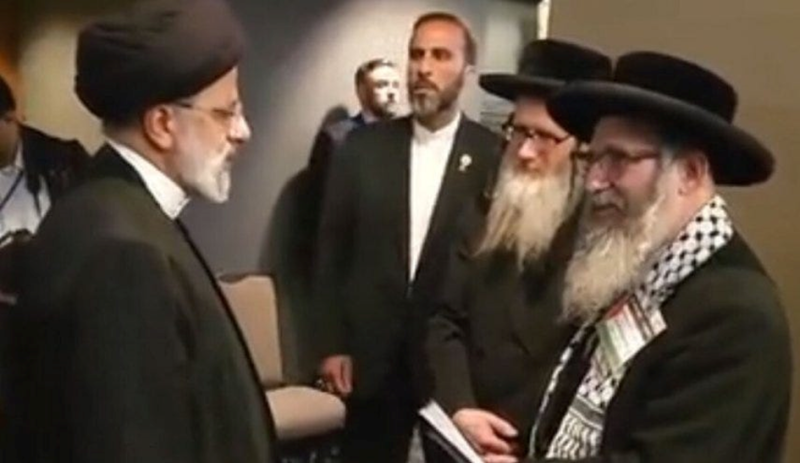
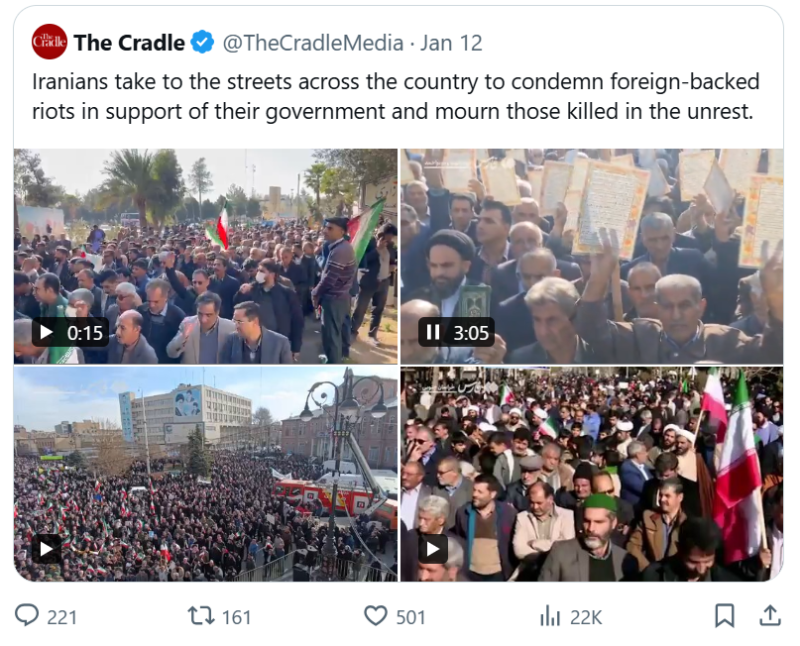
Iran is a large and diverse society with intense internal debates. Some citizens openly oppose the government, while others continue to support it—as evidenced by the recent mass pro-government demonstrations broadcast on state television.
Many Iranians express deep concern about the looming threat of civil war, fear that the country could become a second Syria, Iraq, or Libya, and anxiety about Balkanization by foreign powers. At the same time, Iranian civil society is broad and diverse, encompassing students, workers, women's groups, and activists who speak out against both state overreach and foreign intervention.
Western public figures and influencers with millions of followers, such as J.K. Rowling, who condemn the Iranian government are either credulous and unwittingly repeating false narratives, or they are deliberately aligning themselves with the prevailing opinion for opportunistic reasons. In either case, their statements—just like those of the mainstream media whose opinions they uncritically reproduce—deserve considerable skepticism.
Historical Patterns of Manufactured Pretexts for Regime Change
The United States and its allies have a long history of inventing justifications for military interventions, coups, and support for regime change, often relying on dramatic claims about threats, atrocities, or hidden plots. Most of these claims were later proven false, exaggerated, or misleading according to official investigations and historical research. Here are some striking examples:
1. Weapons of Mass Destruction (WMDs) Iraq (2003):
The U.S. and U.K. claimed Saddam Hussein possessed stockpiles of chemical, biological, and nuclear weapons. Post-invasion searches found none. Multiple official inquiries concluded the intelligence was deeply flawed or deliberately overstated—one of the most infamous cases of a war justified by false claims.
2. Imminent Massacres or Genocide Libya (2011):
NATO intervened after warnings that Gaddafi was preparing a massacre in Benghazi. Later analyses by the UK Parliament and U.S. Congressional Research Service found no solid evidence of an imminent atrocity at the described scale. The mission quickly shifted to regime change, beyond the original UN resolution’s authorization.
3. Human Rights Abuses (Fabricated or Inflated) Kuwait (1990–1991):
The widely repeated story claimed Iraqi soldiers removed babies from hospital incubators. Investigations later revealed the key witness had been coached by a PR firm, and the story was fabricated—yet it powerfully swayed support for the Gulf War.
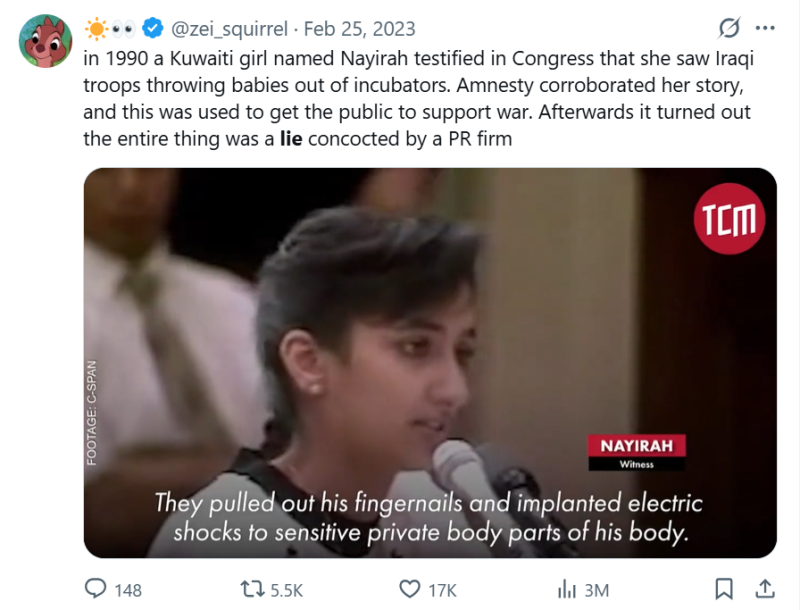
4. Terrorism Links or Foreign Plots Iraq & Al Qaeda (2003):
The U.S. administration suggested a collaborative relationship between Saddam Hussein and Al Qaeda. The bipartisan 9/11 Commission later found no such connection; the claim was widely dismissed.
5. Misreported Violence During Protests Syria (2011):
While abuses occurred, early reports presented the situation as entirely one-sided. UN investigators later noted armed groups were active early on, and incidents were misreported to vilify the government.
6. Ukraine (2014):
Deadly Maidan sniper shootings were used as a rallying point for regime-change narratives. Extensive research by Ukrainian-Canadian Professor Ivan Katchanovski, a political scientist, suggests elements of radical anti-government forces were involved, shooting at both policemen and protesters—a method now repeated in Iran.
7. “Defending Democracy” Iran (1953):
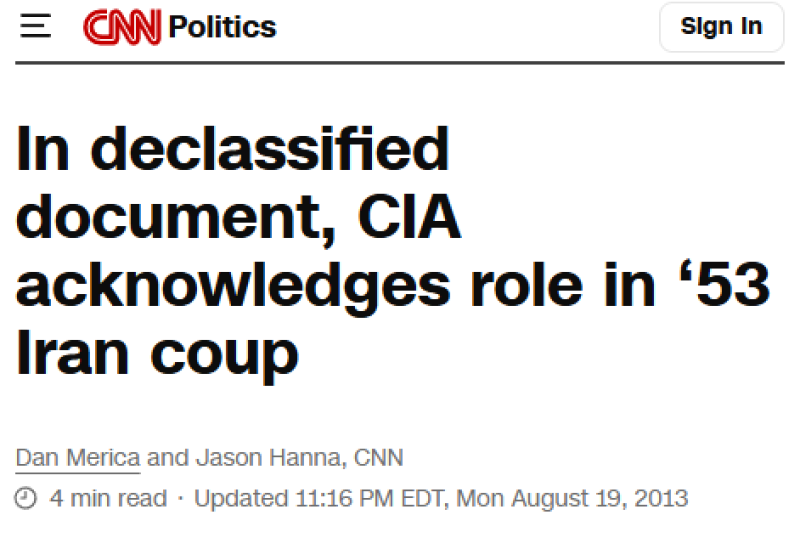
The U.S. and U.K. claimed Prime Minister Mohammad Mossadegh was pushing Iran toward communism. Declassified CIA files later confirmed the coup was motivated primarily by control over Iranian oil and geopolitical influence—not democratic values.
8. Protecting Regional Stability Guatemala (1954):
Portrayed as a communist threat, though the primary U.S. concern was land-reform policies affecting a major American corporation.
9. Panama (1989):
Justified partly on claims that Manuel Noriega threatened regional security—claims that were completely overstated.
10. Humanitarian Crises (Blamed Only on the Government) Venezuela (2019–present):
The humanitarian crisis is real, but economists widely note that U.S. sanctions played the decisive role in worsening it—yet this was used to push for recognizing a rival leader and external political change.
And just as the U.S. pressures Denmark into accepting regime change and ceding Greenland, a ridiculous and false claim has been circulated that China and Russia pose a threat to Greenland, and that the U.S. must ‘protect’ itself by annexing it.
Patterns to Notice
Across these cases, recurring themes include exaggerated claims of atrocities, nonexistent threats, selective reporting, simplified good-versus-evil narratives, hidden economic or strategic motives, manipulated intelligence, and emotionally charged stories designed to sway public opinion.
These patterns do not mean that every allegation of abuse is false – but they do show that the U.S. and its allies frequently make dramatic and misleading claims that can directly lead to war or regime change.
Atrocity Propaganda and Regime-Change Tactics
Western backing of mass protests and riots, combined with the spread of atrocity propaganda, has consistently been employed to advance regime-change agendas in adversarial countries. The following examples illustrate how this pattern recurs repeatedly.
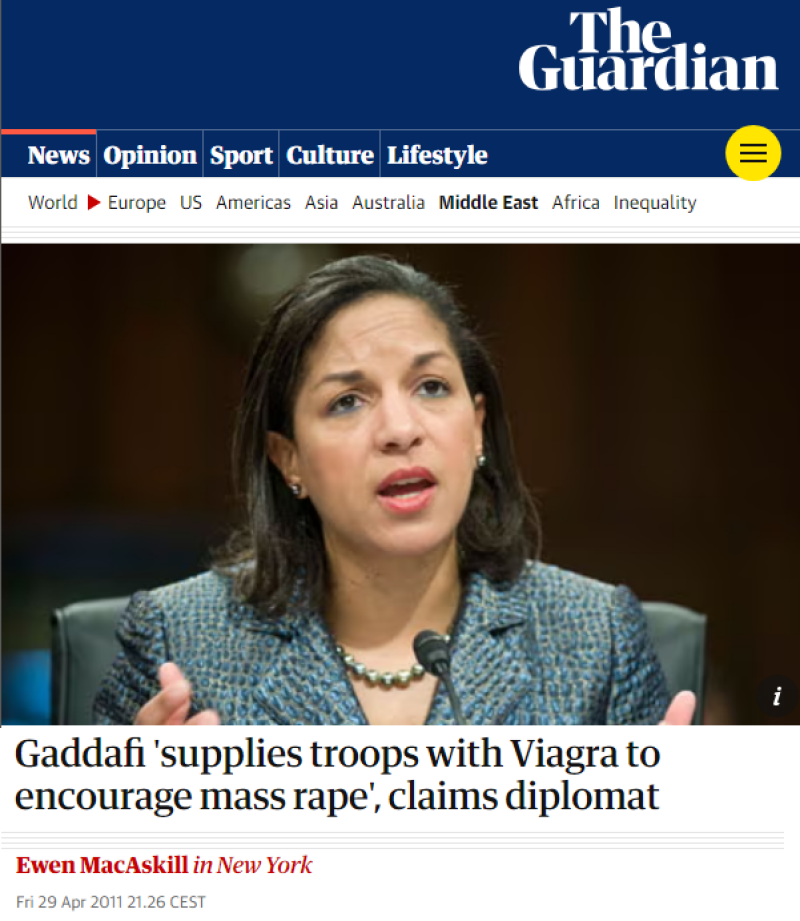
Infamous U.S. warmonger and regime-change advocate Victoria Nuland made unsubstantiated “mass rape” claims against Colonel Gaddafi to prepare the ground for war against Libya.
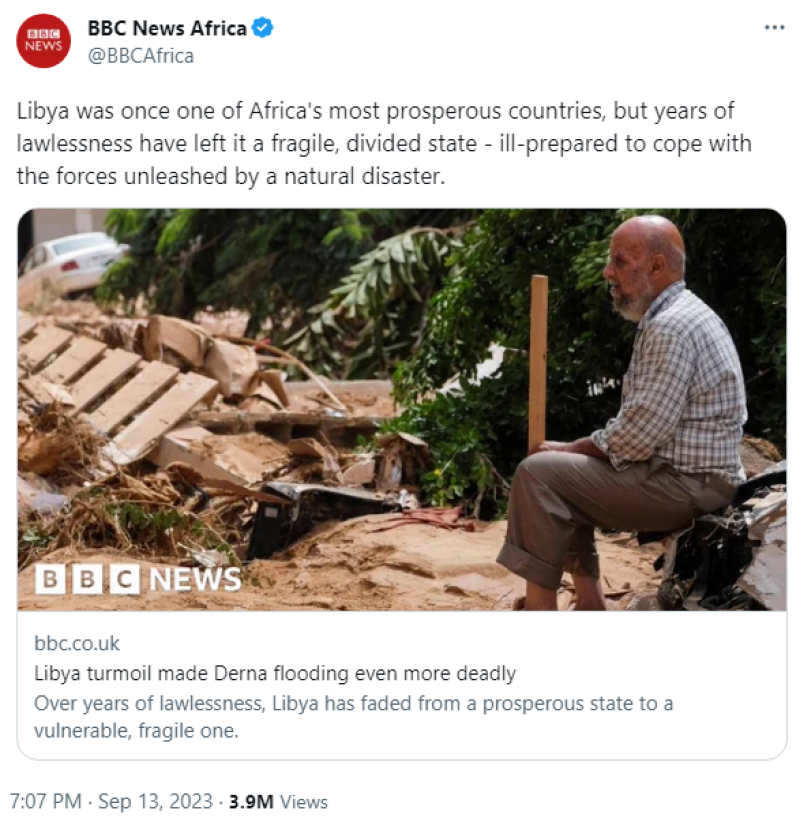
During Gaddafi’s leadership, girls were encouraged and enabled to attend university and become prosperous adults.
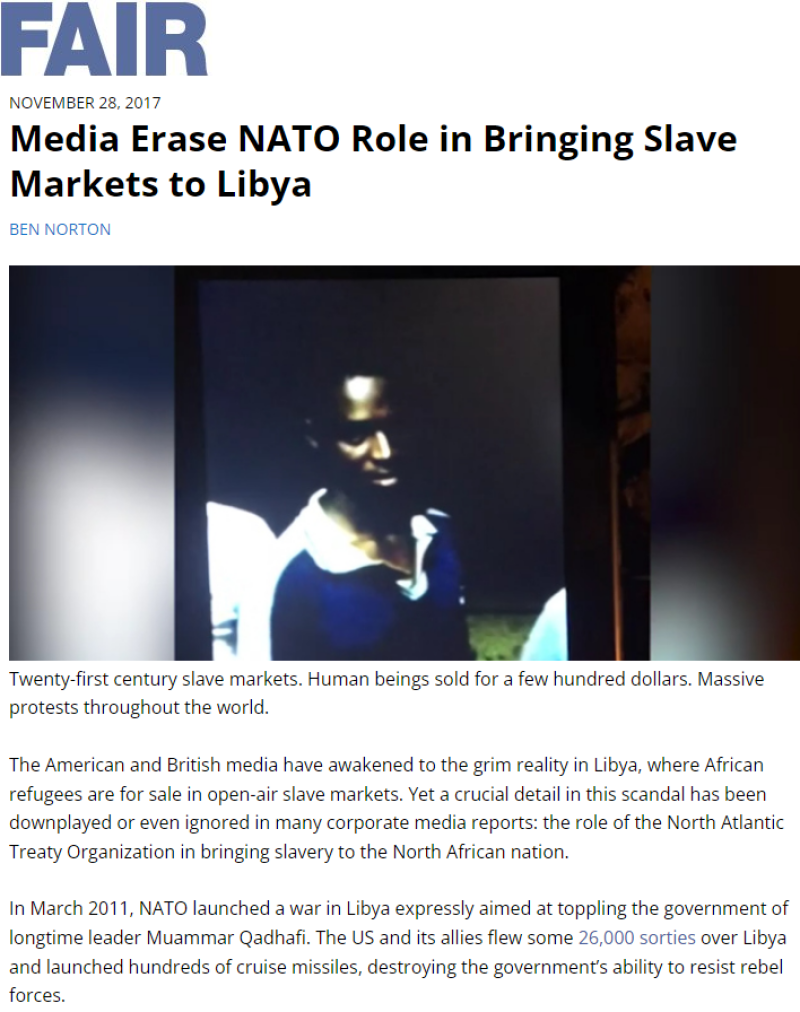
In the aftermath of the U.S.-led NATO war, conditions worsened dramatically: countless girls were sold in markets and forced into prostitution. This became the ‘price’ for the ‘freedom’ promised by the West.
The West similarly aimed to provoke regime change in Russia, working with the Kiev regime it brought to power in the 2014 coup against the democratically elected president, promoting unsubstantiated horror stories about Russia and even seeking to prosecute its president for alleged ‘war crimes.’ Among these claims was the assertion that Russia systematically used rape and sexual violence as a military strategy.
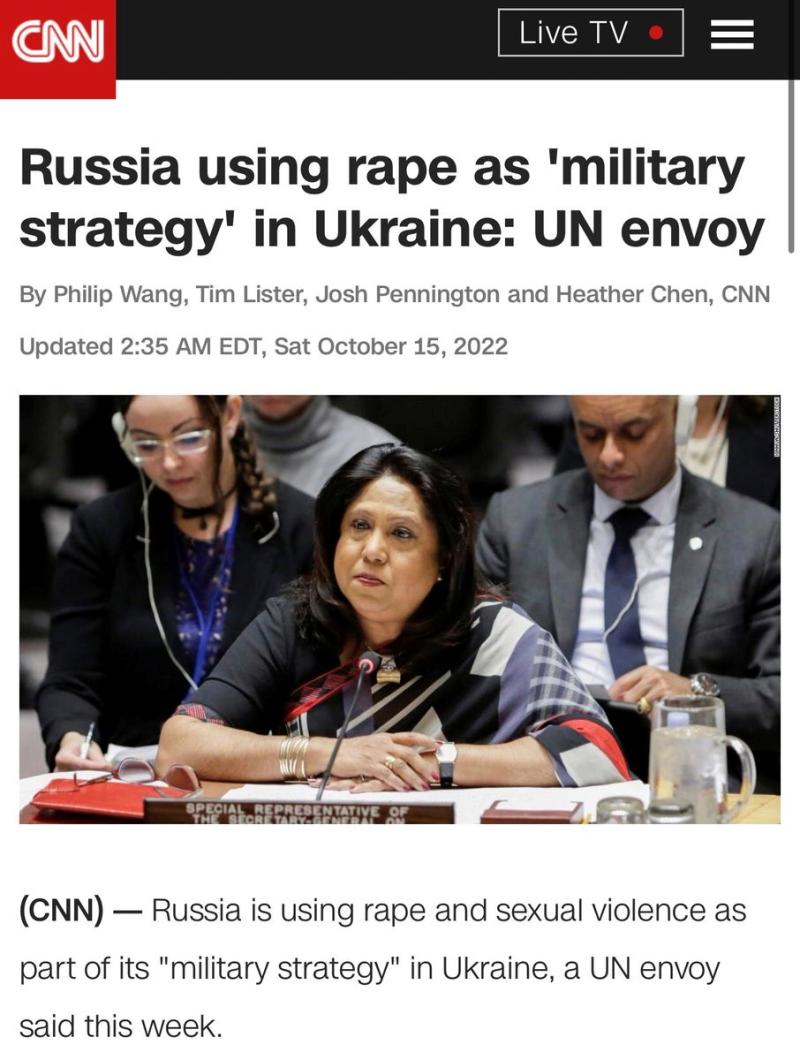
When the UN envoy (pictured) who made these accusations was questioned about her investigation, she responded that it was not within her mandate.
However, Westerners obsessed with alleged rapes by adversaries, conveniently overlook one particular country where this is actually and systematically practiced.
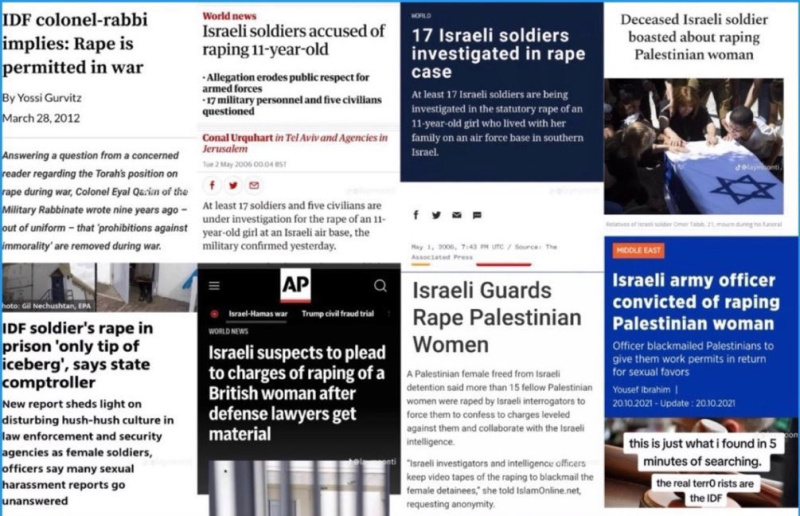
Western military interventions – often justified with exaggerated or fabricated human rights allegations – predominantly resulted in death, destruction and state collapse, as well as the emigration of millions of people to wealthier countries, particularly in Europe.
Ironically, these operations often constituted some of the most serious human rights violations, yet no one was ever held accountable; on the contrary, President Barack Obama even received the Nobel Peace Prize despite his extrajudicial drone wars that cost the lives of countless innocent civilians.
Operational Tactics and Historical Continuity
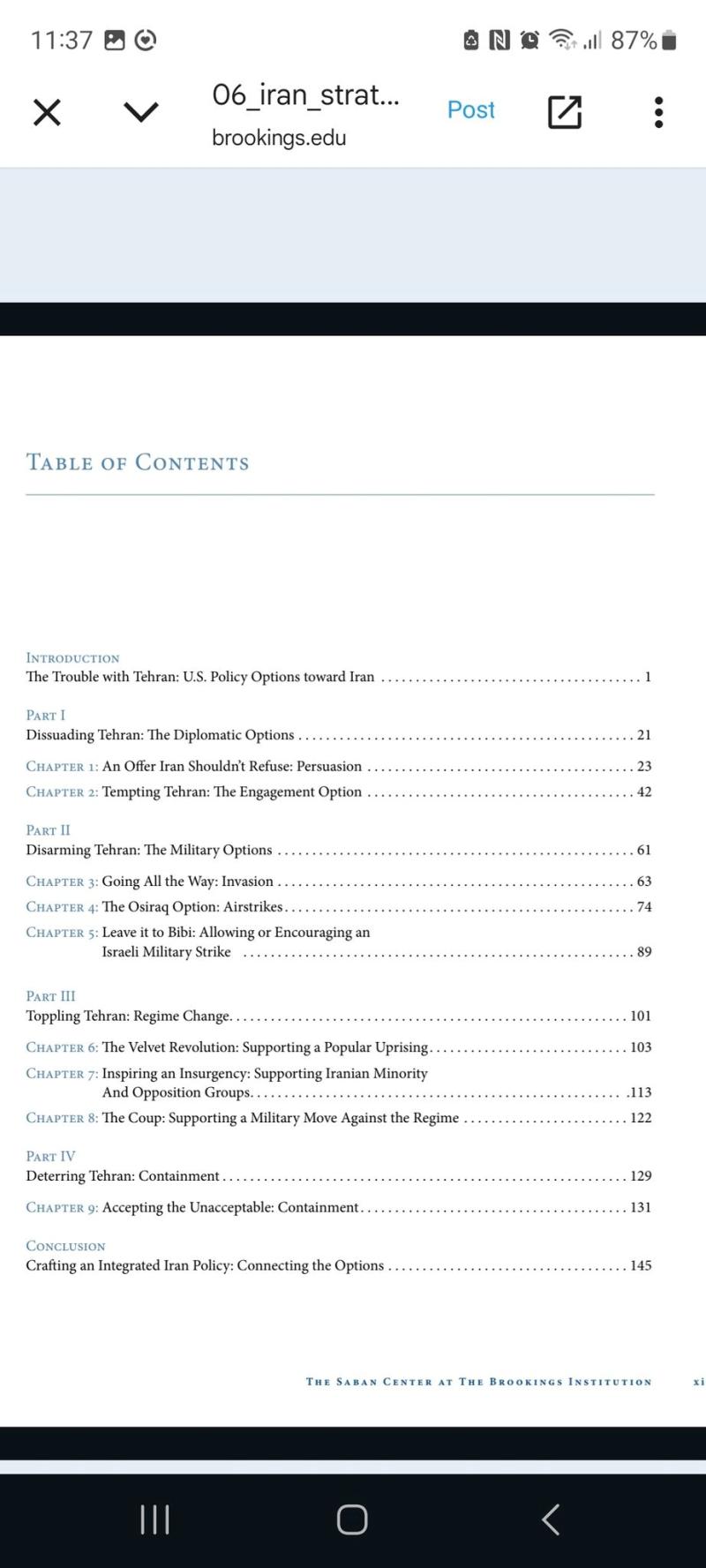
The process unfolding in Iran can be viewed as a modern application of the Washington-based Brookings Institution’s 2009 strategy paper “Which Path to Persia?” (updated in later iterations), which outlines a sequence for regime change:
1. Crippling sanctions to drive popular discontent.
2. Media influence and information operations to amplify dissent.
3. Support for opposition groups such as the MEK or monarchists aligned with exiled Prince Reza Pahlavi—despite their lack of internal legitimacy and support.
4. Public deception regarding government violence or nuclear threats to justify military strikes.
Unlimited Foreign Interference
As in many other countries that the US and Israel sought to bring down, foreign interference in Iran is blatant. Western and Israeli politicians openly support protesters, actively interfere in internal affairs, and aggressively push for a change of government in their favor.
Israeli political figures have admitted that their twelve-day war against Iran in June 2025 was designed to “decapitate” the nation and force regime change, using the alleged nuclear threat as a mere pretext for escalation.
For decades, Netanyahu has pushed the United States toward war with Iran, treating it as the last barrier to the ‘Greater Israel’ project—a scheme built on the dispossession of native populations. He has pulled the U.S. into conflicts across Iraq, Libya, and Syria. Israel seeks weak, fractured neighbors to cement its role as the uncontested regional hegemon.
Color Revolution: Shifting Strategy After Previous Failures
Having so far failed to dismantle Iran or turn it into another failed state in the region—despite the fact that the chaotic collapse of a country far larger than previous failed states would be far more dangerous—the strategy has shifted toward a “color revolution” driven by mass protests.
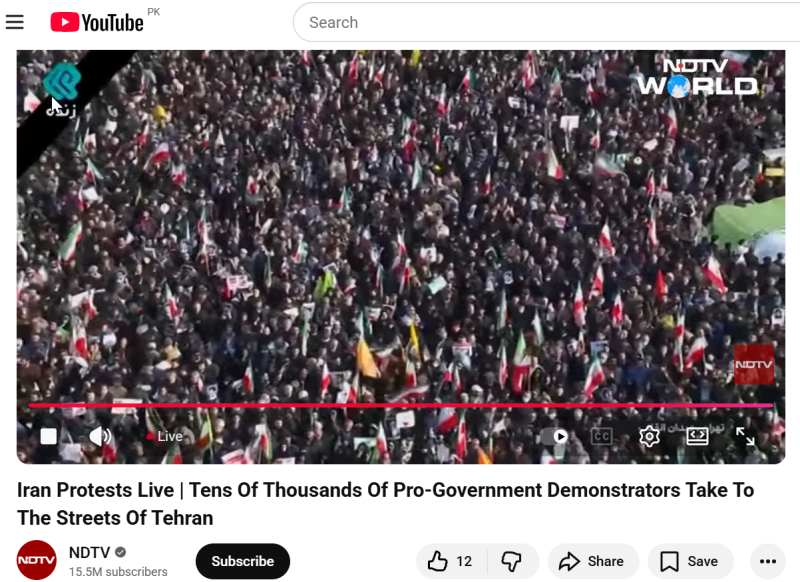
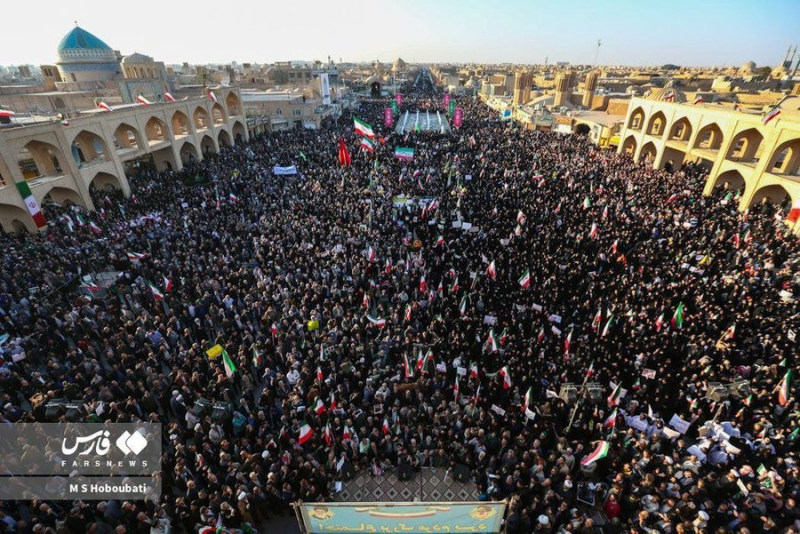
However, the Tehran government and its core base remain resilient: in response to the violence, millions of citizens have filled the streets in massive counter-demonstrations signaling strong support.
Iranian Resilience: Counter-Demonstrations and Communication Control
The protests reached a violent peak after about two weeks, but fizzled after the Iranian authorities imposed a near‑total communications blackout—cutting off domestic internet and mobile networks and deploying sophisticated measures to disrupt satellite connections such as Starlink, making it much harder for demonstrators as well as armed foreign assets to coordinate and share information.
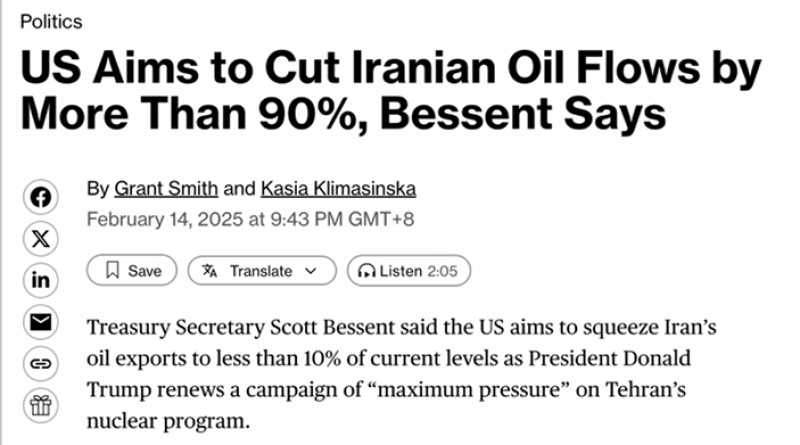
The “regime” is therefore not falling. It has endured 8,000 “maximum pressure” sanctions since 2017 (when Trump unilaterally withdrew from the Iran nuclear deal).
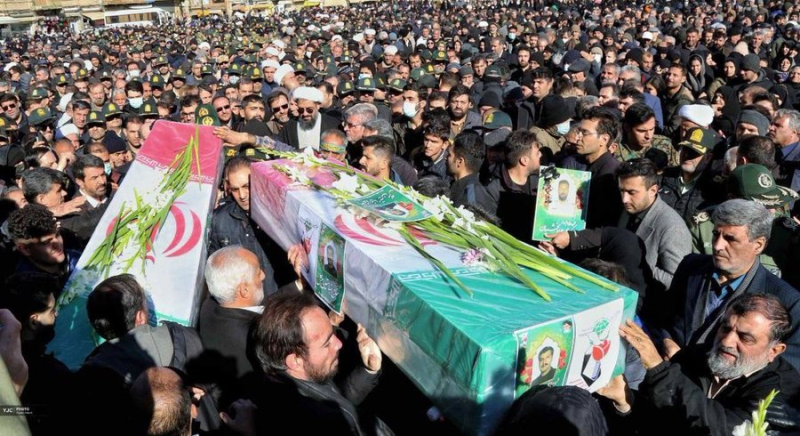
Massive pro-government rallies demonstrate a rather strong legitimacy, an organized constituency, and unprecedented size—Western media largely ignore them. Examples include pro-Islamic Republic rallies expressing indignation over murdered family members and public workers killed by rioters and gangs; these crowds have overwhelmingly outnumbered the opposition, with far greater energy, drive, and determination.
What if Iran’s government enjoys deeper popular support than the U.S. or German governments could ever claim? In those countries, criticism is constant—but it’s almost unheard of for millions to flood the streets in defense of their leaders.
Vested Interest by the U.S. and Israel in Escalating Protests
The emerging protests were only in their second day when Israeli Prime Minister Netanyahu met President Trump at Mar-a-Lago. Shortly afterward, both leaders began publicly championing the demonstrators: Netanyahu praised the “tremendous heroism” of Iranian citizens, while Trump warned Tehran of a “red line” regarding the killing of protesters.
Their meeting showcased clear strategic alignment on Iran, with Trump openly threatening renewed military action—a “Round Two” following the June 2025 twelve-day war of aggression—should Iran continue rebuilding its partly damaged missile or nuclear programs.
Regime Change in Iran: Historic Parallel
Violence and interference by the West in Iran is nothing new. In 1951–1953, democratically elected Prime Minister Mohammad Mossadegh nationalized Iran’s oil industry, previously controlled by the British-owned Anglo-Iranian Oil Company. His decision was overwhelmingly popular in Iran but triggered severe British retaliation, including sanctions and efforts to undermine his government.
In 1953, the U.S. CIA and British MI6 orchestrated a coup to crush Mossadegh and strengthen the Shah’s dictatorship. Mossadegh was arrested, tried for treason, jailed for three years, and spent the rest of his life under house arrest until his death in 1967. The Shah then ruled with an iron fist until the 1979 Iranian Revolution. Now, Israel is dragging his son into the same regime-change game.
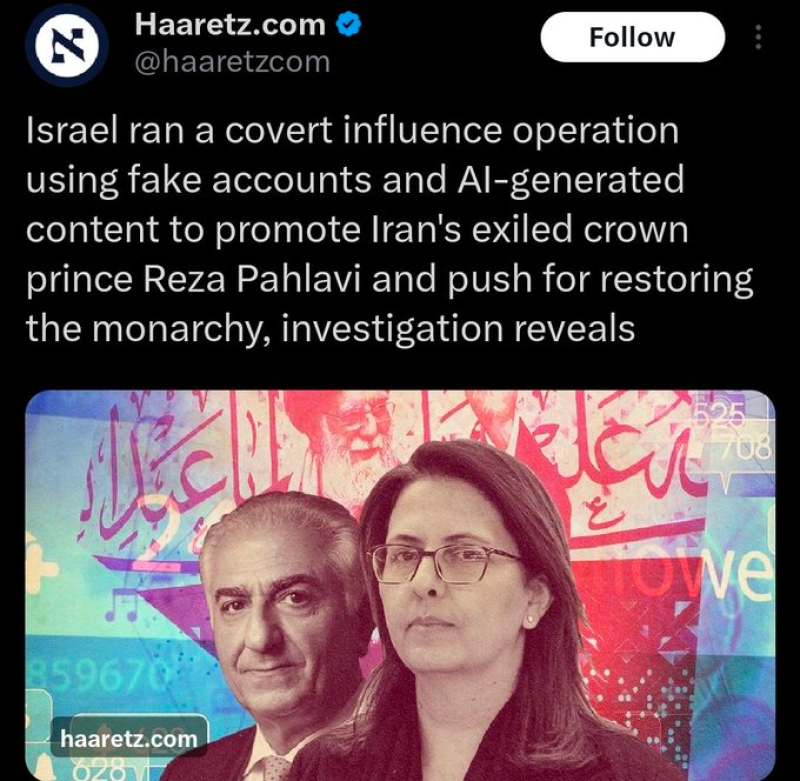
The Israeli newspaper Haaretz has revealed that Israel is conducting a covert influence operation to install Reza Pahlavi – the self-proclaimed “crown prince” and staunch supporter of the Zionist state – as its puppet in Tehran. Pahlavi has identified government officials and state media as “legitimate targets” for attacks.
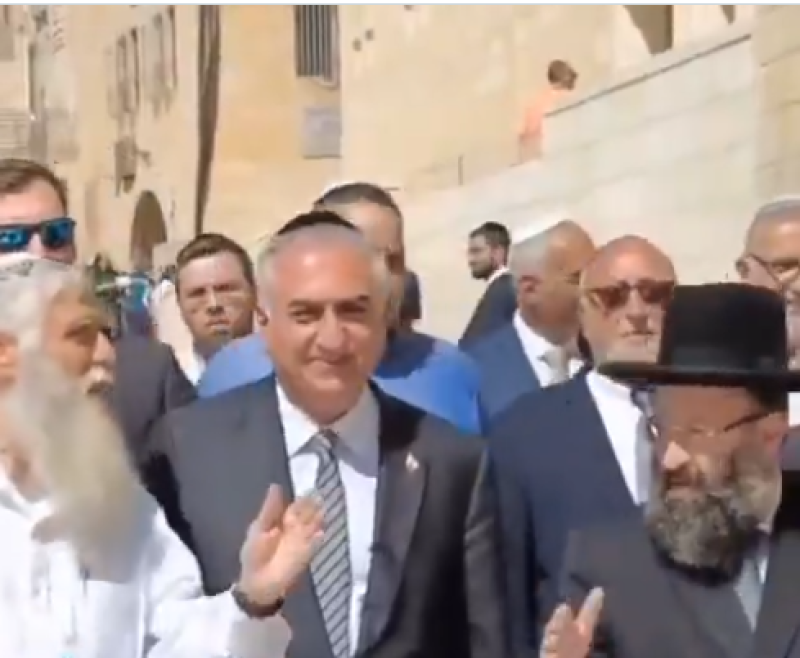
The plan envisions using the Shah's son—who has long lived a life of wealth and privilege in Washington—as a proxy after a regime change brought about by externally orchestrated protests or military action. He has no significant support within Iran, especially given his father's past, which involved torture and executions of the opposition, orchestrated by his SAVAK secret police.
But the plan has failed—at least for now—yet Israel has not given up, and further externally instigated violence is to be expected.
In its January 7 assessment, Stratfor—an advocacy tank and CIA contractor—characterized the unrest in Iran as a potential opportunity for war, noting: “While unlikely to topple the regime, the ongoing protests could enable Israel or the United States to pursue covert or overt measures to further destabilize the Iranian government, whether by supporting the demonstrations or through direct military action against its leaders.”
Rial Collapse and Regime-Change Risks: Iran’s Critical Crossroads
Returning to the rial collapse discussed earlier, it was driven largely by aggressive short-selling in Dubai, deliberately orchestrated as part of a renewed regime-change campaign targeting Tehran. The collapse could have been prevented, and a new attack on the rial remains avoidable. China had already signaled to Iranian authorities its readiness to provide emergency financial support if needed.
Stabilizing the rial could have been achieved with a relatively modest intervention—estimates suggest that as little as $100–200 million would have sufficed, far below the roughly $1 billion Iran might otherwise have requested formally. According to well-established economic intervention methods outlined by experts such as Jeffrey Sachs, a swift, targeted operation by China could not only have halted the freefall but even generated a profit for the intervening party through strategic currency-market operations.
Yet Iran’s leadership chose not to pursue this assistance. Instead, it attributed the crisis almost entirely to foreign sanctions and projected an image of helplessness, further undermining public confidence and accelerating the currency’s depreciation.
Iran is currently experiencing a brief and fragile stabilization. The country’s future trajectory will hinge on choices made in Tehran over the coming months: whether the government significantly improves domestic economic governance, deepens security and economic partnerships with Russia and China, and genuinely responds to legitimate criticism from its own population.
If these steps are taken decisively, the immediate threat of externally driven regime change could recede. If not, the next attempt—likely within months—will probably be better organized, more intense, and harder to contain.
▪ ▪ ▪
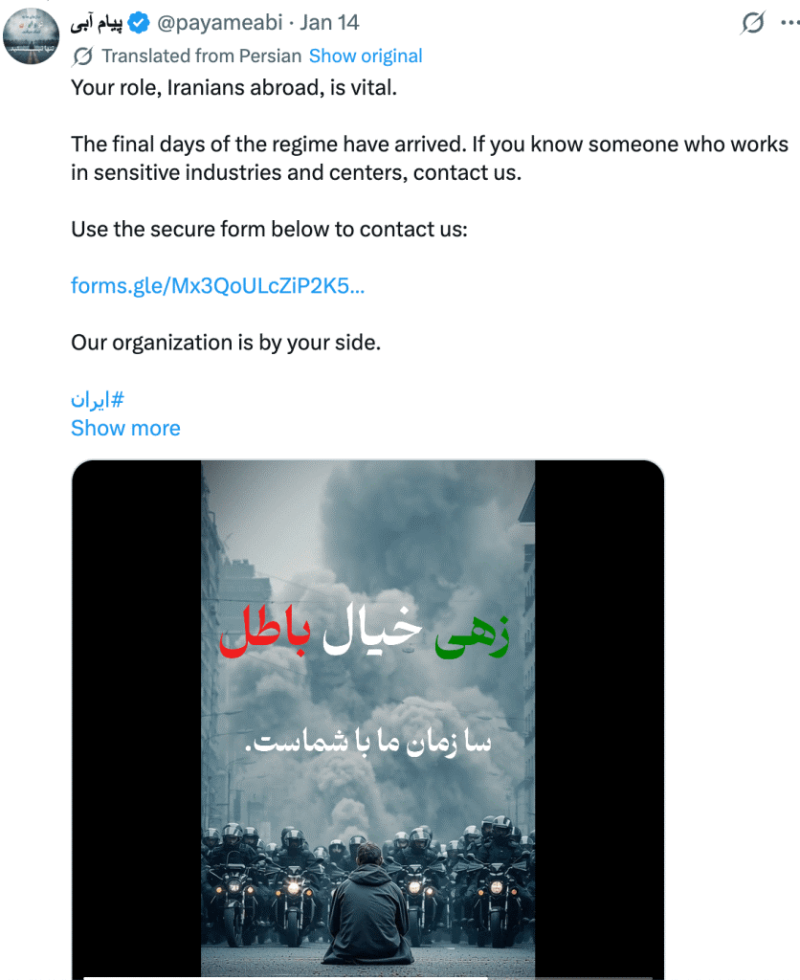
Iran and the Battle of Narratives: A Photo Compilation (Screenshots from X and YouTube):
There is no doubt that Israel and its supporters have won the propaganda war in the Iran conflict. This is hardly surprising, since both the American mainstream media and social media—which in turn shape many other media outlets around the world—are owned or controlled by individuals sympathetic to Israel. Even those that are not yet, such as CNBC or TikTok, are being acquired by figures like Oracle owner Larry Ellison, a Zionist billionaire known for his financial support of the Israeli military.
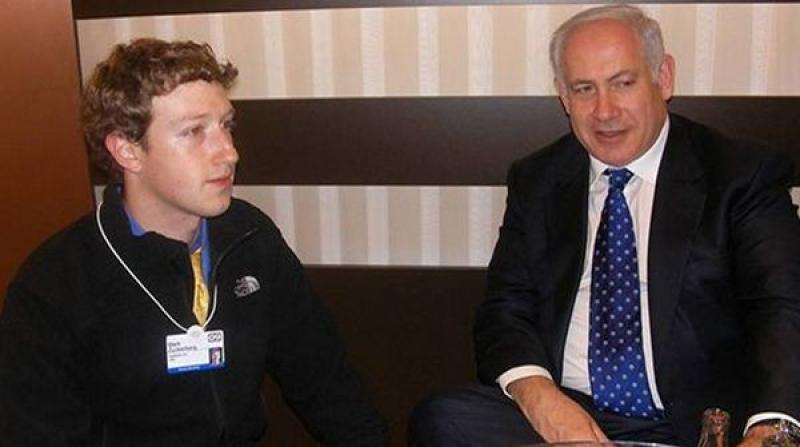
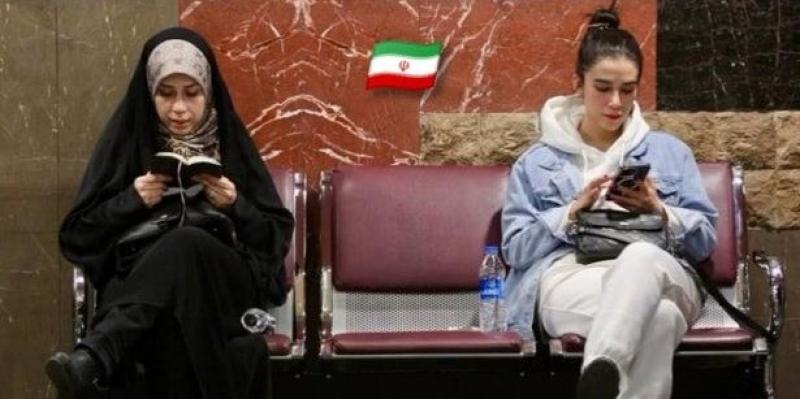
▪ ▪ ▪
Stay connected and informed—join me on Substack: https://felixabt.substack.com
«The Architecture of a Crisis Manufactured by Hostile Foreign Powers»