


Tibet — From Empire to the Present Day (Part I)






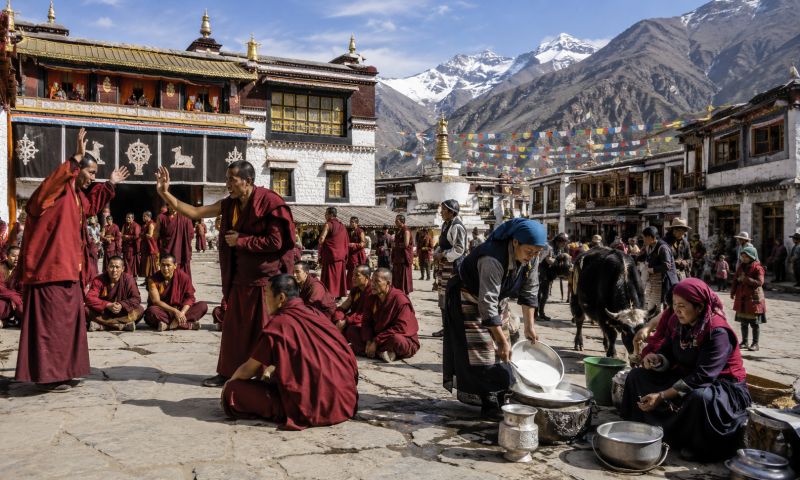
Far from the capital, deep in the remote countryside, a Tibetan woman invited me and my Vietnamese friends into her home. She lives with three husbands and is a mother of five. Her children are growing up bilingual, learning both Mandarin — the national language — and their native Tibetan tongue at school. This family, like most in the region, proudly preserves their religious and cultural heritage.
To anyone raised on Western media, this scene might seem surprising, given the widespread narrative that China is suppressing Tibetan culture. But before we explore this contradiction, let us go back to the very beginning and look at the history of Tibet, known in China as Xizang.
Early History: The Tibetan Empire (Tubo)
Songtsen Gampo founded the Tibetan Empire and ruled as the first King of Tubo in the 7th century (c. 618–649 CE). Under his reign, the Empire expanded significantly. He is also credited with introducing Buddhism to Tibet and establishing early diplomatic relations with China and Nepal.
Songtsen Gampo sent envoys to the Tang court to request a marriage alliance. Emperor Taizong initially refused, and only after negotiations did he agree to send a young noblewoman — Princess Wencheng — to marry him. She became a queen of Tibet through this political marriage and later a culturally significant, legendary figure in both Chinese and Tibetan histories. Her role as a "heqin" (peace-making) bride reflected a classical Confucian diplomatic strategy aimed at maintaining harmony through marriage alliances and cultural influence rather than military force.
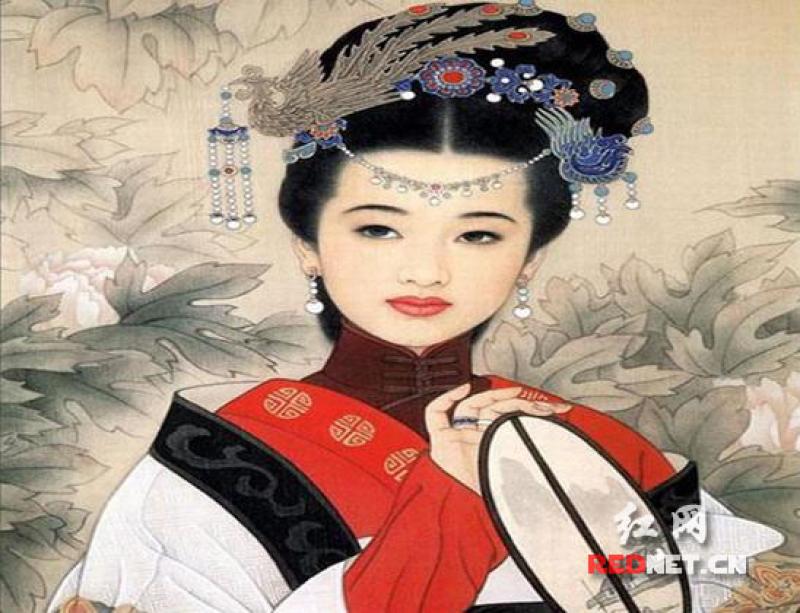
As a noblewoman educated in the Confucian tradition, Wencheng was raised with the belief that a ruler's primary duty is the welfare of the people. This is reflected in the gifts she brought to Tibet: farming techniques, weaving, medical knowledge, Buddhist sutras, statues, and monks. She combined practical Confucian tools with Buddhist compassion to address both material prosperity and spiritual concerns. Princess Wencheng lived in Tubo for nearly 40 years, outlived her husband, and remained in Tibet out of solidarity with its people, exerting lasting cultural influence.
The Era of Fragmentation (9th–10th Centuries)
The collapse of the mighty Tibetan Empire did not occur overnight, but the assassination of Emperor Langdarma in 842 CE delivered the final blow. With no clear heir, his sons plunged into a brutal civil war that shattered centuries of centralised imperial rule. The Tibetan Empire splintered into a chaotic mosaic of regional kingdoms, warlord fiefdoms, and competing clans. Central authority effectively disappeared. Organised Buddhism entered a dark age as state-supported monasteries were abandoned and monastic ordinations came to a halt — though the faith survived on the margins, particularly in Amdo and the remote western region of Ngari.
The Buddhist Revival (10th–13th Centuries)
By the late 10th century, Tibet began to emerge from its dark age. This recovery was sparked by a profound cultural and religious renaissance known as the Chidar, or the "Later Diffusion" of Buddhism. Unlike the first wave, which relied on royal decrees, this resurgence was a grassroots movement driven by fearless scholars and translators who braved treacherous mountain passes to exchange gold for sacred texts.
A defining catalyst occurred in 1042, when the venerable Indian master Atisha Dipamkara Shrijnana arrived in western Tibet. His seminal text, The Lamp for the Path to Enlightenment, established a new rigorous standard that anchored the Tibetan Buddhist worldview for centuries to come. This intellectual renaissance gave rise to four great schools: the Nyingma, the Kadam, the Kagyu, and the Sakya — each forming around charismatic masters, specific tantric lineages, and vast translation projects.
As these traditions expanded, monasteries rapidly evolved from isolated hermitages into sprawling, fortified complexes. Because the old centralised monarchy had collapsed, a political vacuum existed across the plateau — one that these monastic institutions quickly filled, armed with vast libraries, agricultural lands, and growing patron networks. They became the primary centres of wealth, education, and regional governance, laying the ground for a system where spiritual and secular power were inextricably intertwined.
Mongol Influence and Sakya Hegemony (13th–14th Centuries)
As the Mongol Empire expanded across Eurasia in the 13th century, Tibet faced the threat of invasion and destruction. Rather than resist militarily, Tibetan leaders pursued pragmatic diplomacy. In 1247, the Sakya master Sakya Pandita travelled to the Mongol court, establishing a unique Cho-Yon, or "priest–patron," relationship. Tibetan lamas provided spiritual legitimacy and religious guidance to the Mongol rulers; in return, the Khans offered military protection and political support. When Kublai Khan founded the Yuan Dynasty, he appointed Phagpa as a leading religious and administrative authority in Tibet — the first degree of political unification the plateau had experienced since the fall of the empire.
Rise of the Major Buddhist Schools (14th–16th Centuries)
The decline of the Yuan Dynasty in the mid-14th century fractured Tibet's fragile political unity, plunging the plateau into fresh internal fragmentation. Rival Tibetan dynasties — the Phagmodrupa, Rinpungpa, and Tsangpa — battled for dominance, each aligning itself with a competing Buddhist school. For nearly three centuries, Tibetan history was characterised by intense sectarian and regional rivalries, particularly between the Kagyu and Sakya factions.
Out of this chaotic instability rose one of the most transformative intellectual movements in Tibetan history. The scholar Je Tsongkhapa (1357–1419) founded the Gelug tradition, popularly known as the "Yellow Hat" school, enforcing a strict return to celibacy and monastic ethics paired with rigorous philosophical debate. The Gelug school established three legendary monastic universities near Lhasa — Ganden, Sera, and Drepung — collectively known as the "Three Great Seats," which drew thousands of monks from across the plateau.
Rise of the Dalai Lama Theocracy (16th–17th Centuries)
The lineage that would reshape the destiny of the plateau began with a historic encounter in 1578. Sonam Gyatso, a brilliant master of the expanding Gelug school, journeyed to meet the Tümed Mongol ruler Altan Khan, who bestowed upon him the title "Dalai" — the Mongolian word for "Ocean," signifying a mind of boundless wisdom. Sonam Gyatso applied this title retroactively to his two previous incarnations, formally initiating the Dalai Lama lineage.
The true geopolitical turning point arrived with Ngawang Lobsang Gyatso, the "Great 5th" Dalai Lama (1617–1682). Locked in a bitter civil war with the Kagyu-backed King of Tsang, he forged a military alliance with the Oirat Mongol chieftain Gushri Khan, whose cavalry crushed the rival factions. In 1642, Gushri Khan handed sovereign control of the plateau to the Great 5th, elevating the Dalai Lama to the dual role of spiritual and temporal ruler. To institutionalise this new reality, the 5th Dalai Lama established the Ganden Phodrang — a centralised theocratic government — and began construction of the Potala Palace, designed to stand as an architectural statement of supreme authority.
Qing Dynasty Influence (18th–19th Centuries)
The absolute sovereignty won by the Great 5th Dalai Lama proved short-lived. By the early 18th century, Tibet was plunged back into crisis by fractured successions, political assassinations, and devastating external invasions. After the Dzungar Mongols ransacked Lhasa, and later the Nepalese Gurkha kingdom plundered major monasteries, the Tibetan leadership turned to the Manchu-led Qing Empire for military aid. The Qing launched successful counter-offensives and asserted unprecedented imperial authority over the plateau.
The Qing court stationed two imperial residents — known as Ambans — directly in Lhasa, backed by a permanent military garrison. Following the Gurkha War, the Qianlong Emperor decreed the Golden Urn system in 1793, a lottery designed to select high-ranking reincarnations under the watchful eye of the Ambans. Yet this imperial shadow had its limits: while the Qing maintained a firm grip on geopolitical and symbolic affairs, the internal machinery of Tibet — its monastic estates, tax collection, legal codes, and civil administration — remained overwhelmingly under the independent control of the Ganden Phodrang government and the entrenched Tibetan nobility.
The Period of Independence (1912–1950)
The geopolitical landscape shifted radically in 1911 when the Xinhai Revolution toppled the Qing Dynasty, shattering Peking's imperial grip on the plateau. The 13th Dalai Lama moved decisively to reclaim total sovereignty, orchestrating the expulsion of all remaining Qing troops and Ambans from the capital. On February 13, 1913, he issued a landmark proclamation declaring Tibet a fully independent nation, formally dissolving the historic priest-and-patron relationship with the Chinese court.
For the next thirty-eight years, Tibet operated with the full autonomy of a sovereign nation. The Lhasa government issued passports, minted its own currency, ran a national postal service, maintained a small standing army, and hoisted its snow lion flag. However, this hard-won independence stood on shaky geopolitical ground, as no major foreign power offered formal diplomatic recognition. Powerful, conservative monastic elites fiercely opposed modernisation and foreign alliances, fearing they would dilute traditional Buddhist values and strip them of their privileges. Rather than securing vital international ties, Tibet turned inward, leaving itself exposed and deeply vulnerable.
Incorporation into the PRC (1950–1959)
The establishment of the People's Republic of China in 1949 fundamentally altered the regional order. In October 1950, the People's Liberation Army crossed the Jinsha River and defeated the Tibetan forces at Chamdo. In 1951, a Tibetan delegation in Beijing signed the 17-Point Agreement, which formalised Tibet's incorporation into the PRC while promising to preserve its traditional system, the position of the Dalai Lama, and religious freedoms.
Tensions soon escalated. Land reforms and the dismantling of the serfdom system provoked resistance, and armed conflict — supported by external actors, in particular the CIA — broke out. The Lhasa uprising was ultimately suppressed. Amid the chaos, the 14th Dalai Lama, along with thousands of followers, fled over the Himalayas into India.
Tibet from 1959 to Today
The geopolitical landscape shifted permanently after the 1959 uprising. The centuries-old traditional Tibetan government was dissolved, making way for the formal establishment of the Tibet Autonomous Region in 1965. This restructuring fundamentally upended the region's social hierarchy: former serfs were legally recognised as Chinese citizens and were invited, for the first time in history, to cast political ballots.
During the Cultural Revolution (1966–1976), monasteries, texts, and religious artefacts across the plateau were damaged or destroyed, as occurred throughout China. In the post-Mao era, the Chinese state undertook large-scale restoration efforts and invested heavily in infrastructure and development. The opening of the Qinghai–Tibet Railway in 2006 permanently connected Lhasa to China's national rail network, accelerating economic growth, urbanisation, and tourism.
Today, Tibet remains a focal point of international geopolitical debate. The Chinese government emphasises improvements in living standards, healthcare access, poverty reduction, and cultural heritage preservation — including restoration projects at sites such as the Potala Palace.
The Splendour of the Dalai Lamas and the Hardship of Ordinary Tibetans
The fact that the Potala Palace — former winter residence of several of the fourteen Dalai Lamas — is maintained with such meticulous care, and even featured as a prominent motif on the 50-yuan banknote, may come as a surprise to critics of China. What surprised me, however, were the golden treasures worth billions gleaming within its walls. The sight is breathtaking.
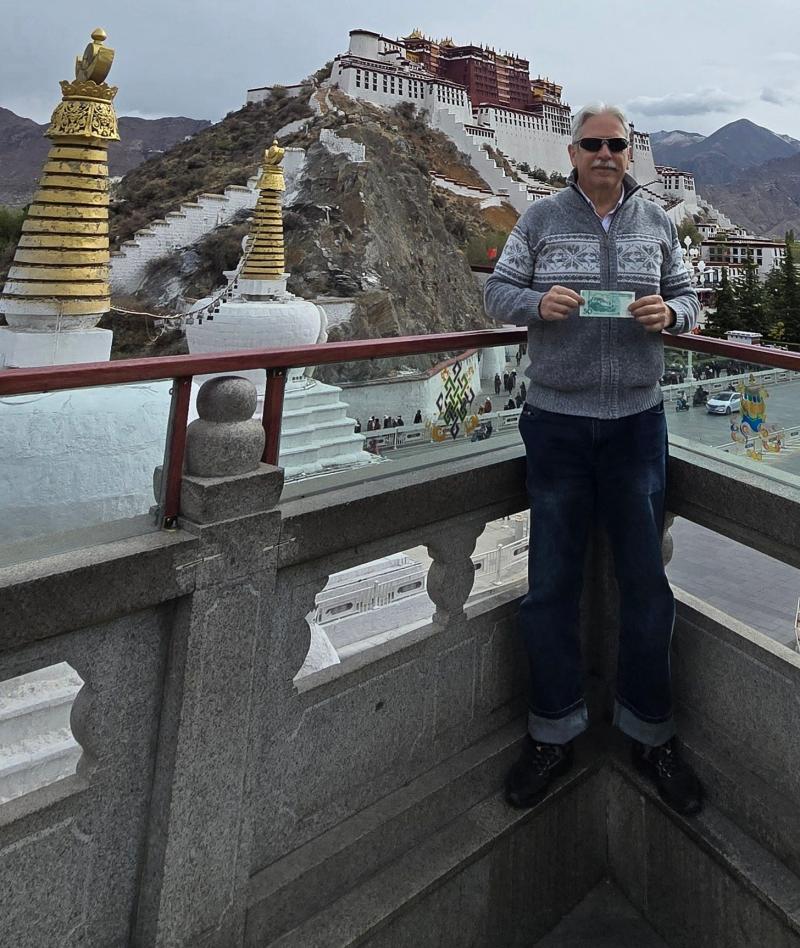
Yet a shadow falls upon the heart. Images from the history museum remain all too vivid: barefoot serfs whose lives, in the merciless cold, were deemed utterly worthless. These human beings could be bought, sold, and humiliated at their owners' whim. Between the sacred gold and the suffering of those people opens a chasm almost unbearable to contemplate. Depending on the source, the emergence of this feudal system is traced back to between the 10th and 17th centuries. Its classification remains highly contested among Chinese historians, Western academics, and Tibetan exile groups.
— — —
→ To be continued: Tibet — Daily Life, Faith, and Culture (Part II)
— — —
Felix Abt is a Swiss entrepreneur and writer who has lived and worked in some of the world’s most complex regions, including Africa, the Middle East, North Korea, and Vietnam. He regularly writes on his Substack blog about geopolitics, development, and the gap between Western narratives and on-the-ground realities, and publishes travelogues on his ‘Lixplore’ YouTube channel.
«Tibet — From Empire to the Present Day (Part I)»