


Tibet — Daily Life, Faith, and Culture (Part II)






To understand Tibet today, one must look beyond its turbulent history and enter its living reality — the homes, the monasteries, the schools, and the fields where daily existence unfolds at an altitude that puts the sky within reach. What follows is a traveller's account of a culture that is neither frozen in the past nor dissolved into the present, but actively, sometimes surprisingly, alive.
Family, Necessity, and the Practice of Polyandry in Rural Tibet
The woman with three husbands mentioned in the first part of this series is a good place to begin. Her household — five children, three fathers, a grandmother who minds the little ones while the adults work — is not an anomaly. It is an entry point into a world where pragmatism and tradition are inseparable, and where daily life unfolds according to logics that Western categories struggle to contain.
This form of fraternal polyandry is not encouraged by the Chinese government, yet officials recognise that such family structures arise from the realities of life in remote regions — realities that can be addressed only by improving living standards, not by imposing bans.

The family's story is one of pragmatic ingenuity. The family of the man who wished to marry her had to provide a dowry of twenty cows — an enormous burden for a modest farming household that also had other sons for whom they could no longer afford dowries. The compromise was practical: the family paid the twenty cows, but the bride married not only the eldest son, but also his two younger brothers. In this way, the household with three sons saved a total of forty cows while ensuring that all of them could marry and that the family line would continue. She is expected to give birth to a child within three years of the marriage; otherwise, she would be returned to her family, who would then send her to a monastery to live as a nun for the rest of her life.
The children call the eldest husband "father," and the two younger husbands "uncle." Each husband has his own bedroom, and the wife leaves her shoes outside the door of the husband she is with that night, so the others know not to disturb her. When I asked whether she knew which child belonged to which husband, she said she did not. Yet she emphasised that the family lives together in harmony. As the parents are often busy working, it is the grandmother who takes care of the children.
Necessity is the mother of invention: because the family does not have a refrigerator, they store milk in silver bowls, where it can be preserved for up to a week. These bowls, along with other silver items, were made by her husbands. The family has also turned this craftsmanship — alongside farming — into a new source of income driven by visitors' interest. A refrigerator and other modern comforts will likely not be far away.
From Small Farms to Industrial Parks: An Economy in Motion
Besides modest family farms, I also came across large, fully mechanised operations. The smaller farms may look simple at first glance, but they do not reflect desperate poverty; rather, they appear modest yet self-sufficient. The larger mechanised farms, by contrast, are unmistakably more prosperous, generating substantial wealth for their owners. Mechanisation is advancing rapidly, with tractors and other agricultural machinery now being adopted on a significant scale. New farming techniques are helping farmers transform land once considered difficult or impossible to cultivate into productive, green fields.
Alongside the visible growth of agriculture and trade, Tibet is also seeing the rise of small-scale manufacturing and new industrial parks. The Tibet Chunguang Food Co., Ltd.'s highland barley deep-processing base, located in the Dazi District Industrial Park, is one such example — a facility that takes a staple grain of the Tibetan diet and transforms it into a value-added product for wider markets. New residential areas are being developed in parallel, and bridges and power distribution lines can be seen even in the most remote and hard-to-access areas of the plateau. One gets the strong impression that the state is doing everything possible to improve living conditions and make life more comfortable for the local population.
The Architecture of Devotion: Buddhist Life on the High Plateau
Yet as striking as the changes in rural labour, industry, and housing were, what impressed me just as much — if not more — during my travels was something of an entirely different order: the profound depth of spiritual life that permeates everyday existence in Tibet. As someone who has travelled widely, I was struck by the deep religiosity of the Tibetan people — unlike anything I have encountered elsewhere.

Tibetan devotion is exceptionally intense because, for centuries, religion, the harsh alpine environment, and a theocratic form of governance fused into a single way of life. Rather than functioning as a separate domain, Buddhism forms the daily lens through which Tibetans interpret reality. Acts such as spinning prayer wheels, walking sacred circuits (kora), and performing full-body prostrations are not occasional displays of faith, but practices woven into the rhythm of everyday life. Elderly women circle temples for hours while whispering mantras; pilgrims trace long kora routes around mountains and monasteries as naturally as others might take a daily walk; devotees perform hundreds — sometimes thousands — of prostrations as a physical expression of humility and purification. Through repetition, these practices become a moving form of prayer, merging body, breath, and belief into a single devotional flow.
This spiritual intensity is further enriched by an ancient animist heritage that fills the landscape with deities and spirits believed to be actively present. The vibrant monasteries of Tibet are alive with sound, colour, and movement. Deep crimson robes move through sunlit courtyards, prayer flags ripple overhead, and the scent of incense drifts through stone corridors. Inside, golden statues glow in flickering butter lamp light, and murals stretch across walls like visual scriptures. Despite ongoing debates abroad about the region's religious climate, I did not observe any indication that the Chinese government was exerting pressure on these practices.
Philosophy as Performance: The Monks' Debate
For foreign observers like myself, the debates of Tibetan monks appeared almost like a form of shadow boxing. These animated exchanges, held in monastery courtyards, are a central pillar of monastic education. One monk stands and forcefully claps his hands while posing rapid-fire philosophical questions, while the seated monk must respond instantly, defending his position with logic and precision. The dramatic gestures — wide stances, sweeping arm movements, sharp claps — are not signs of aggression, but highly codified techniques designed to energise the debate, punctuate arguments, and symbolically "cut through" confusion.
Far from theatrical performance, these debates cultivate rigorous reasoning, deepen philosophical understanding, and train the mind toward clarity. At places such as Sera Monastery, philosophy truly becomes performance: monks engage in spirited debate, clapping hands, stepping forward with conviction, and testing each other's understanding of Buddhist teachings. Nearby, pilgrims circle sacred halls, spinning prayer wheels and offering silent prayers with every step, their devotion expressed through movement as much as through belief. Set against the backdrop of high plateau light and distant snow-capped peaks, these monasteries feel both timeless and immediate — centres of ancient wisdom still pulsing with daily life.
Two Languages, One Classroom: Education in Tibet
From conversations with Tibetan parents and schoolchildren, I learned that Mandarin — the national language — serves as the primary medium of instruction, alongside classes taught in Tibetan, the children's mother tongue. In practice, the two languages sit side by side in the classroom, reflecting a broader linguistic reality that extends far beyond the region.
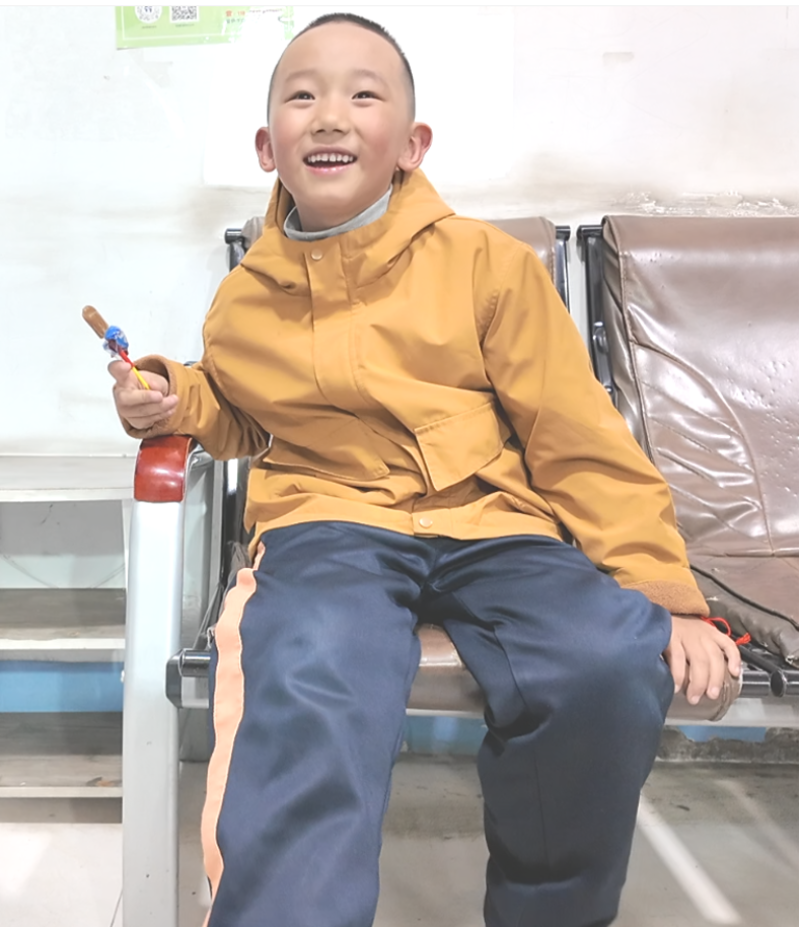
I chatted with a young boy about school, and he told me in Tibetan that he studies both Mandarin and Tibetan. His older sister, who also speaks some English learned at school, helped translate our conversation. Several locals pointed out that fluency in Mandarin can open doors — especially for ethnic minority citizens who leave their home regions in search of work elsewhere. Mandarin, I was reminded repeatedly, is not only essential for ethnic minority communities but also for the Han majority, who make up over 90% of China's population. The reason is simple but striking: regional dialects can differ so widely that people from distant parts of the country are sometimes unable to understand one another without a shared language.
At one of the schools we passed, I noticed bilingual motivational posters written in both Mandarin and Tibetan, their messages mirrored across two scripts. I also saw textbooks printed in Tibetan. The two languages coexist in daily learning. Together, these details offered a subtle but telling glimpse into a system where language, education, and identity are closely interwoven.
Everywhere I went — shops, restaurants, petrol stations, banks, post offices, and bus stops — bilingual signage was the norm. One exception that caught my eye was a Volkswagen showroom displaying signage only in Mandarin. Since bilingual requirements do not uniformly apply to all private or foreign companies, the absence of Tibetan in this case likely reflects corporate branding choices rather than local policy — and it may also suggest a lack of cultural sensitivity toward Tibetan customers.
A Living Culture: From the Monastery to the Medical University
The omnipresence of the Tibetan language and the strong practice of Tibetan Buddhism are not the whole story of cultural vitality in Tibet. Even scientific work here carries a distinct cultural imprint. At the Tibetan Medical University and its affiliated Tibetan Medicine Co., Ltd., a Tibetan doctor explained that the institution conducts specialised research into traditional Tibetan medicine and showed me samples of their work. Today, Tibetan medicine has expanded well beyond the region and is practised across many parts of China. The university has established a dedicated company to commercialise the therapies it has developed nationwide.
In people's faces one senses something precious: deep calm, quiet dignity, and a gentle contentment. This is a culture that is neither frozen nor suppressed — it is lived, daily and fully.
— — —
→ To be continued: Tibet — "Cultural Genocide" or Living Culture? (Part III)
— — —
Felix Abt is a Swiss entrepreneur and writer who has lived and worked in some of the world’s most complex regions, including Africa, the Middle East, North Korea, and Vietnam. He regularly writes on his Substack blog about geopolitics, development, and the gap between Western narratives and on-the-ground realities, and publishes travelogues on his ‘Lixplore’ YouTube channel.
«Tibet — Daily Life, Faith, and Culture (Part II)»