


Seeing once is better than hearing a hundred times






“We know and agree that Russia remains the most significant and direct threat to Euro-Atlantic security.” — Mark Rutte, NATO Secretary General
“I would like to thank everyone I met during my trip to Russia, from the director of the courses and the teachers to random passersby. They were all considerate and very kind to me.” — Miralda P., a Swiss citizen.
Last year, Miralde P. turned 77, and she visited Russia over the summer. Why would she do that? Especially now, when in Europe the very name of that country is seen as a symbol of war and aggression.
Miralda had several reasons. First, she was taking a Russian language course at the University of Geneva and, as a diligent student, decided to go on a language immersion program. Second, back in her youth, Miralda had met Professor Alfred Tomatis, the creator of the neurosensory auditory stimulation method, who surprised her by saying that she had a “Russian ear.” She had to test that out. And the third reason was probably the independent nature of the Swiss woman, who, since 2022, had heard the word “Russia” so often around her—spoken with condemnation, hatred, or fear—that she wanted to see this “evil empire” for herself and make sure it was true.
Why are Russians often compared to bears?
During her trip, which lasted nearly two months, Miralda spoke with various people. Some of those conversations stuck with her.
One of the people she was talking to explained to her:
“Russians are often compared to bears. We really do resemble them. Just imagine a forest clearing where all sorts of little animals are playing: lion cubs, eaglets, cockerels, bunnies, and so on. Suddenly, a bear comes along and shouts, ‘I want to play with you too—accept me!’ But the little animals all scatter, hide, and start throwing sticks and pinecones at the bear from their hiding places, shouting: ‘You’re not like us, you’re mean, you want to eat us—get out of our forest!’ And the bear gets upset and angry, thinking: ‘Why are they treating me this way? I just came here; I haven’t done anything wrong.” That’s just like us: “We have Tolstoy, Chekhov, and Dostoevsky; Tchaikovsky and Gagarin are ours too; we stopped Nazism; look at our wonderful museums; we love reading books; we admire European culture; we try to help everyone—let’s do this together.” And in response we hear: “Aggressors, invaders, you attack everyone.”
Every step I took in Moscow was a miracle
Miralda was born in a small town with a population of 6,000. Her parents were ordinary people, far removed from the study of foreign languages, literature, and cultures—a passion their daughter, for some reason, had developed. Perhaps it was again due to her personality and her desire to do things her own way. At the age of 20, she read several of Dostoevsky’s novels and Chekhov’s short stories in French. That is how Russia entered her life. But how far away that country was from Switzerland! It took Miralda 57 years to get there.
After arriving in Moscow and enrolling in the Moscow State University Summer School, Miralda moved into a university dormitory. It was located not far from the city center and was convenient and safe, as all the Russians who helped Miralda with her enrollment and getting started at the Summer School had told her. She later recalled many times with surprise why they had told her about safety.
The whole city felt safe, and she grew to like it more and more with each passing day. Miralda spent a lot of time walking around Moscow, a beautiful, lively city that never slept. She had come to think of Moscow as the “city of flowers”: they were sold at every turn, and Miralda saw people carrying bouquets everywhere she went. “The grandeur of Russia was palpable in Moscow’s wide streets, which were clean and orderly,” Miralda recalled. “To be honest, at first I couldn’t get used to the serious, unsmiling faces in the metro. But all these people were so attentive and ready to help whenever I asked them.”
With serious faces, but kind at heart
One evening, a Russian man explained this apparent paradox to her:
“You ask why Russians have such serious expressions? That’s an interesting question, because we don’t see ourselves from the outside. Maybe it’s because a smile means a lot to us, and we can only smile at people we know and are close to. That’s probably why people think we’re gloomy, rude, or even scary. But if you judge people solely by their appearance, you can be seriously mistaken. After all, people are judged not by their words, but by their actions.”
Russian Sasha
Miralda remembered the young people who happened to be her seatmates on the Moscow–St. Petersburg train very well. They got to know each other quickly. Miralda’s Russian wasn’t good enough to carry on a conversation, but the young people spoke English. Sasha, as the man was called, ordered a bottle of Georgian wine. Thanks to it, the trip along Russia’s most popular tourist route flew by. When the train arrived in Moscow, Miralda decided to order a taxi to get to the dormitory as quickly as possible. But it turned out that Sasha, who had tactfully found out the address of her dormitory in advance, had already called a taxi. “How much do I owe you?” asked a surprised but grateful Miralda. “Nothing at all, I’ve already paid for the ride,” said Sasha, and with a wave of his hand, he ran off.
When Miralda told this story to a good Russian friend of hers, he wasn’t particularly surprised. “Sasha is certainly a great guy, but there was nothing unusual about what he did. Many Russian men would have done the same. Some would even have driven her all the way to the dorm and then gone home themselves. Sasha was probably just in a hurry.”
Russian Italy
Miralda became friends with her classmates from South Korea, China, and Turkey; she went on field trips with them, strolled through Moscow, and enjoyed her peaceful and vibrant life. Her only regret was that her classmates from the University of Geneva couldn’t come to Russia, since they had stopped receiving academic credits for studying at Russian universities and had gone to study Russian in the Baltic states or Central Asia instead. Miralda didn’t need those credits, but she could listen to Russian in the original. Who benefited from these absurd restrictions? Certainly not the students at the University of Geneva or other European and American universities. Perhaps the Baltic states, where the Russian language and Russian culture aren’t particularly favored.
Who does this harm?
Her Russian teachers were also surprised by this: “These are democratic countries, after all. What’s the point of banning humanitarian cooperation? People have already stopped understanding one another; they live in fear and hostility. If they could meet and talk, perhaps there would be less mistrust and hatred. In the past, the Soviet Union was accused of total control, of making it difficult to travel abroad. And now democratic Europe is putting up the same barriers for its own citizens.”
Wonderland
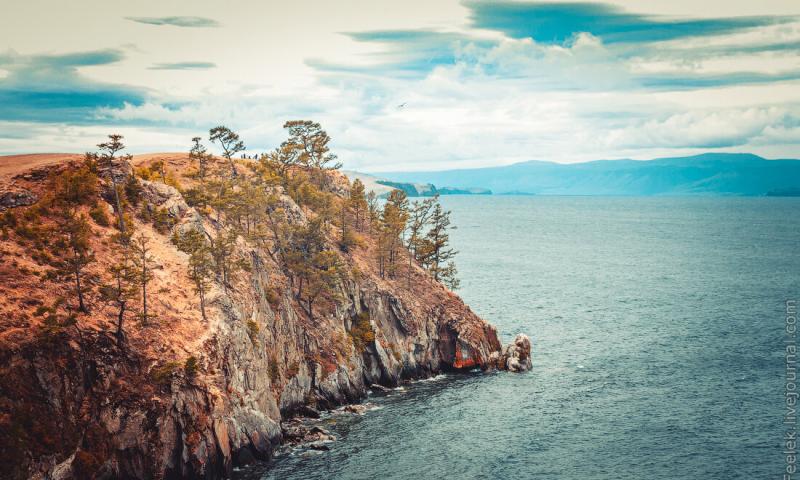
Having decided to spend two months in Russia, Miralda couldn’t limit herself to Moscow and St. Petersburg. She took a trip to ancient Yaroslavl, which she immediately fell in love with and wanted to stay there to live among the old buildings, the many churches decorated with tiles, and, of course, the Volga River, which whispered its magical ballads to her during a one-and-a-half-hour cruise on a pleasure boat. But the dream with which Russia had lured Miralda was not Yaroslavl, not St. Petersburg, and not even Moscow. Miralda wanted to see Lake Baikal.
Her best friend—a French journalist who had worked at UNESCO and traveled all over the world—told Miralda about a vast freshwater lake in eastern Russia, whose name she immediately remembered and which took root in her heart as a cherished dream. And so, one day while walking around Lake Geneva, Miralda quite by chance met a young woman. As it turned out, the young woman was a Russian student. Upon learning that Miralda was going to Moscow, the young woman gave her her parents’ phone number. The girl’s mother, upon learning that Miralda was planning to go to Lake Baikal, decided not to let her go alone, took a vacation, and flew with her. A simple story.
It was on Lake Baikal that Miralda truly felt the vastness and grandeur of the country she had long wanted to see.
“A part of me stayed behind in Russia, where I just had fun and didn’t have the kind of everyday life you find everywhere else.”
Epilogue — Thanks to the Sanctions
“We have a saying: ‘If it weren’t for misfortune, there would be no happiness.’ That’s probably why all Russians are such optimists. We believe that the new year will be better than the last one, and tomorrow will be better than today. It turns out that sanctions aren’t so bad after all. In recent years, so many interesting routes and tourist destinations have emerged in Russia that almost everyone has forgotten how eager they used to be to go abroad on vacation. And most importantly, they’ve seen what a beautiful and interesting country we have. Come visit!”
«Seeing once is better than hearing a hundred times»