


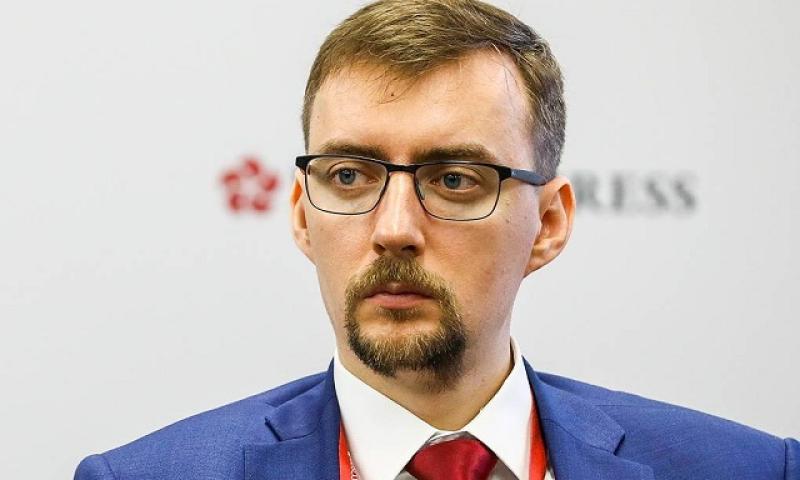
“The US allies will have to reassess their relationships, as their alliances may undermine their own security.” - Interview with Ivan Timofeev






Editor’s note: This article is published with the express permission of the author, Marco Fernandes (Brasil de Fato).
Despite Pakistan’s leading role in diplomatic mediation efforts between the US and Iran, Russia appears to be playing an important role behind the scenes. The visit by Russian Foreign Minister Sergei Lavrov (14-15 April) to Beijing– to whom many attribute the real driving force behind the negotiations in Islamabad – was accompanied by numerous telephone calls to his counterparts in Iran, the UAE, Turkey and Saudi Arabia. It could hardly be otherwise, given the strategic importance of the Russian-Iranian partnership, both being members of BRICS and the SCO.
Let us look at some examples: the Iranian nuclear programme, one of the main reasons cited by the US for attacking Iran, has had Russia as a major partner for years. Iran’s only nuclear power plant, in Bushehr – which was nearly destroyed by US attacks – was completed by the Russians. Currently, two more plants are under construction and four others are planned under an agreement already signed by both countries, worth tens of billions of dollars. More than 600 Russian nuclear engineers were working in Iran until the start of the war.
Moscow is financing the construction of the North-South International Transport Corridor, which links St Petersburg to Mumbai in India, with Iran as its central hub. This alternative trade route to the Suez Canal – controlled by the West – has the potential to revolutionise logistics in the region. In the military sector, Iran supplied drones to Russia at the start of the Special Military Operation in Ukraine, and there are official reports from Tehran regarding the acquisition of Russian Su-35 fighter jets, for example. At the same time, Russia maintains very good relations with the Gulf states, which have hosted US bases in the region for years and have become targets of Iranian retaliation.
On Monday, April 13, Brasil de Fato was received at the Moscow headquarters of the Russian International Affairs Council (RIAC) by its Director-General, Ivan Timofeev, for a discussion on the current state of the war, the prospects for the region’s future, and Russia’s position on the conflict, which could escalate again in the coming days. For Timofeev, who is also director of programme at the prestigious Valdai Club, “it is clear that Iran faces huge damage to its industry and economy. It will be very difficult to rebuild these capacities, which have been undermined by the US and Israel. But at the same time, Iran has demonstrated a high level of resilience”.
He agrees that, indirectly, Russia has made some short-term gains from the war, as it diverts attention – and potential resources – away from Ukraine, whilst “oil prices are favourable to Russia, and Russia has a chance to bolster its friendly countries such as India, China and ASEAN nations, which may suffer from shortages in the oil market”, but he warns that in the event of a prolonged war, a potential global economic recession could damage the Russian economy.
Still on the conflict in Ukraine, Timofeev believes that the prolongation of the war depends on the amount of resources Ukraine receives from the US and the EU, although he still believes that Trump is trying to find a way out, as “Mr. Trump regards Ukraine as something which is rather a liability than an asset in his foreign policy investment portfolio”. But for him, Russia will not “compromise our demands and compromise our major interests. There is no incentive for us to do this.”
Finally, the Director-General of RIAC – who recently published an article on the current legacy of Peter the Great – reflects on some challenges facing the modernisation of contemporary Russia and highlights an important lesson to be learnt from Chinese partners: “China managed to create its own industrial engineering school, which is increasingly independent of Western patents and technologies (…) they are quite sovereign and can make their own decisions”.
Read Ivan Timofeev’s interview with Brasil de Fato below.
The last article you wrote about Iran was published around after two weeks of war, March 10th. I felt it was a little bit pessimistic about the Iran’s situation and its chances in the war. Now we have more than 40 days, and according to many analysts, Iran now has the upper hand, even the ex-head of MI6 said this a couple of weeks ago. Do you agree with this evaluation that now Iran has the upper hand or not? What is your general assessment of the war?
First of all, the war is not over. It is clear that these negotiations represent only a temporary, interim pause in the broader military campaign against Iran, and it is highly likely that we will see another round of air and missile strikes against the country. I'm not sure if there will be a ground operation, but the military pressure against Iran will continue. The problem for the U.S. and for Israel is that the political results of this military pressure are still limited. It's clear that Iran faces huge damage to its industry and to its economy. It will be very uneasy to rebuild these capacities deteriorated by the U.S. and Israel. But at the same time, Iran demonstrated a high level of resilience despite the death of the Supreme Leader and many other top officials. The country continues to operate and counteract and counterattack. So, we'll see the level of this resilience in the future.
The U.S. is capable enough to run the war of attrition against Iran. So, Iran will have to deal with this threat in the long term, a long-term perspective. The situation around the Strait of Hormuz remains a kind of a stalemate. The U.S. just declared the naval blockade of this strait. But financial benefit from this transit is not the major motivation for Iran. The major motivation is political. So, if Iran continues to effectively preclude this transit via the Strait of Hormuz, then the situation will remain quite tense and Iran will continue to have leverage in this game.
It's clear that one of the most crippled actors are, of course, the monarchies of the Gulf. I mean, Qatar, Bahrain and United Arab Emirates and to some extent Saudi Arabia. Of course, Iraq. Iraq is not a monarchy, but still a major supplier of oil from Basra. They are the hostages of the situation. In a way, they have to take the situation as it is with few instruments to affect the situation in their favour.
Do you think the hegemony of the U.S. in the region is threatened? Because the bases were destroyed, the security was not provided.
The U.S. campaign is a problem for them [the Gulf countries]. They are not the part of this game, but at the same time, they are the target. And Iran continues attacks, including against the oil infrastructure, which are not ruined to a critical extent but still it is suffering of possible strikes. The region remains risky, unlike the situation before the war when it was a safe haven. Actually, Dubai is a major logistical centre, financial centre. Other emirates are also very prosperous. Saudi Arabia is a rich state. Others are also quite well off, including Qatar – which is very influential in the media. But now they are under huge pressure due to this situation. And this campaign against Iran has not increased their security. It has reduced their security. In my view, Iran is suffering the most. If we are talking about Iran, it is clearly bearing the heaviest burden: it is losing people, losing senior leaders, and losing material capabilities, among other things.
Recently, the Iranian Minister of Foreign Affairs, Abbas Araghchi, gave an interview to Al Jazeera. At some point, he says: “the security of our region can only be provided by ourselves, not by any foreign power. So, we have to work on that from now on”. When I listened to this, I understood he was diplomatically saying, guys, if you want to talk about security, talk to us. Because we can provide it, not US. What do you think about this assessment?
Well, actually, it's true that the security of the region must be provided by the regional players. This is something very reasonable and legitimate. At the same time, the U.S. cannot be neglected. The U.S. is a major player. It has military bases there. It has alliance relations with a number of countries in the region. So, this is the reality which cannot be rebuffed.
But do you think the bases will be rebuilt?
Yes, and I'm pretty sure that they are not damaged to the critical extent. So, the U.S. will remain in the region. It's pretty clear. However, it's better for Washington to have the relations with the region which are based on respect and trust. Due to many reasons. Respect and trust works better than force. Especially in the Islamic world. In any place in the world, everyone needs trust and respect and appreciates it much more than force. So, probably for a long-term game, it could be a wise strategy for the U.S. to better involve their allies into their planning. But the current situation is of course something which may significantly undermine this trust and respect.
Let’s talk a little bit about Russia now. Because of the war on Iran, the U.S. is spending a huge amount of resources, money, people, energy, everything. And at the same time, US has less resources to Ukraine, which was already not in the list of priorities. At the same time, with the high oil and gas prices, Russia is making a lot of money. There are some estimations, maybe almost a billion dollars more a day. So would you say that Russia is one of the beneficiaries of this war in an indirect way?
Well, of course, technically speaking, Russia has some gains. The overall focus is now shifted to Iran, though even before the war against Iran, Ukraine almost disappeared from the global agenda, so it's not 2022 and not 2023. Ukraine is much less covered by the global media, and there is a kind of fatigue from this issue. It cannot be constantly on the agenda. And this Iranian campaign, accelerated this process. Ukraine is not number one in the US foreign policy agenda, as it used to be under Biden. Now Middle East re- emerged as a major topic in the list. Of course, the allies in the Gulf will demand more supplies of equipment, and I'm pretty sure that the US will be able to satisfy these demands. However, Ukraine for some time may suffer from deficits. It's not clear what are the real numbers, but this is possible.
Of course, oil prices are favourable to Russia, and Russia has a chance to bolster its friendly countries like India, China, ASEAN countries, who may suffer from deficits on the oil market. And Russia can compensate these volumes in one way or another.
Especially now with the sanctions also lifted, right?
Well, they are not lifted, there are exemptions, they are not lifted as legal mechanisms. But at the end, these are tactical gains. There are some challenges, of course, strategic challenges at the same time. One of the challenges is that if the situation deteriorates for a long time, it may affect the global economy, the decline of the global economy may decrease the demand on oil and commodities, which may affect prices. So strategically, there are challenges for Russia, which should be taken into account seriously.
So talking about the challenges: Russia has a very, very important relationship with Iran, from military (Iran helped Russia at the beginning of the war with the drones) to logistical (with the building of the North-South Corridor); from BRICS and SCO to nuclear peaceful program (Russia is a key partner), and also financial cooperation (since both countries are in sanctions and excluded of SWIFT). How much do you think Russia would lose if eventually Iran were to be defeated by U.S. and Israel? Is Russia giving some help to Iran in some ways?
Russia voiced its absolute political support for Iran, calling things by their proper names: this is a military aggression. Russia is fully committed to the 2025 treaty with Iran. Russia does not support the enemies of Iran, and Russia does not deteriorate existing partnership with Iran due to the war. So Russia fully implements its commitment fixed in the treaty. This treaty does not imply alliance relations, so Russia is not obliged to get involved into the military action to defend Iran. We don't know the numbers and the substance of Russia-Iran military cooperation. This is something which is naturally under the fog of war. But all in all, Russia is the country which is an important neighbour of Iran, and which is an important partner of Iran. At the same time, Russia has good relations with the Gulf monarchies, with Saudi Arabia, with United Arab Emirates. They have never joined the Western sanctions against Russia. They are good friends, and actually they are not the enemies of Iran as well.
So they suffer from the conflict, but they are not going to join this campaign. In this sense, the war against Iran is not something which triggers Russia to spoil relations with the monarchies. These relations are fully safeguarded, they remain in good shape, and Russia is showing a high level of diplomatic part in maintaining these relations. I would say that even in relations with Israel, we have quite well-established relations. Of course, Russia criticises the attack against Iran, but tries to keep the relations with Israel on an acceptable level. Even in the case of the US, Russia-US talks and interaction on Ukraine continues. Still it hasn't brought any success, but Russia does not close the door. So all in all, Iran is a major partner of Russia.
So far the mediation efforts are publicly led by Pakistan, but a lot of people argue that it's actually China behind the scenes, because Pakistan went to China, they met there, and then they brought the five points. But do you think that if the current doesn't work, Russia could play a role in mediation, since it has good relations with everybody else involved?
I'm not sure. Mediation is a huge responsibility, and when a mediator starts its mission, it should have a sober assessment of the success of this mediation. And if the success is doomed, then it's simply not reasonable to run such a mediation. So I'm not sure if it is reasonable for Russia to be a mediator. Probably for Pakistan, it's a bit more comfortable, for one reason or another, but I'm not sure that Russia has a chance to be a successful mediator at this point.
But if Iran loses, how much do you think Russia would lose?
If Iran loses, this will be a big problem for the idea of sovereignty in general, for the idea of trust in international relations. So this will be a bad sign for diplomacy as an institution, globally speaking, due to the assassination of the national leaders, due to the attack during the negotiations. This is something which is not generating trust. On the other hand, losses for Russia will not be critical, though they may be sensitive in the way that Iran is a big neighbour. And on the South, Iran is a stakeholder in the North-South corridor, and if there is a change of power in Iran, we are not sure what would be the outcome for this project.
Same with nuclear programme?
Same with nuclear programme, same with trade, which accelerated in the recent four years. And then another question is what kind of power will emerge in Iran? Would it be some kind of a stable political system? I'm not sure, because a few countries may be stable under the control of a foreign country, especially such an ancient country as Iran, which is a civilisation in itself. So would it be stable under someone's external management? I'm not sure.
Russia is interested in a stable and prosperous Iran, where the political power is recognised and legitimised by its people. Of course, we know about internal problems in Iran, there have been protests, etc. But this is a sovereign issue for Iran, so Iranians should solve it themselves. If someone helps them, this won't be stable and sustainable.
You wrote recently an article that was published in Valdai Club website and at the same time was the first article of the new Valdai Club column in Brasil do Fato. It was about the Iranian crisis and lessons for Russia. So you said there's seven lessons. Could you summarise these lesson?
Well, there are several important lessons. One lesson is that diplomacy itself does not guarantee, does not preclude the war. The war may start at any moment, that leaders may be a target, that sanctions may be a precursor for war, that countries need not to find itself in a diplomatic solitude. When the war starts, there should be some security guarantees, not to stay alone. And the major lesson is that the balance of power remains the backbone of foreign policy. So if you want to be secure, you should balance a particular attack against you or particular hostile action, because when your opponent understands that you can balance, it is demotivated from attack. This old school logic re-emerging in the international relations. And unfortunately, we are getting back to the world of the balance of power.
Do you think that is it time for the Global Majority to start discussing or rediscussing military alliances as a way to counterbalance the aggressiveness of some countries?
I'm not sure if the Global Majority is ready for this, at this current point, to establish some military alliances, because the Global Majority is very diversified and very heterogeneous. However, small countries, medium countries, and even bigger countries, which are now in a kind of diplomatic solitude, they will have to think about this, about alliances and the sustainability of these alliances. On the other hand, the allies of the United States will also have to reconsider, to revisit their relations. Probably they will remain allies, but this is a lesson for them, that the alliance may bring not just security, it may bring insecurity, when strategic interdependence leads to the involvement, to the conflict, when it is not strived by these junior participants, like in the case of Gulf countries right now.
Now shifting to a little bit of the Ukraine situation. It's been around a year from the Anchorage meeting. It was a big hope at that point. Everybody was expecting a solution. But recently the Minister of Foreign Affairs of Russia Sergey Lavrov said that the Anchorage spirit is dead. What are your expectations regarding the directions of the SMO in thenext months? Are we closer now to a diplomatic resolution or closer to a prolongation of this war for some time yet?
It depends on the amount of aid, military and financial aid directed to Ukraine from the US and the European Union. If this aid remains stable then Ukraine has resources to continue its military efforts. Russia also can continue its military efforts. So both sides have resources to further fight and few incentives to make concessions. So the diplomatic result demands decisive military victory. If there is a decisive military victory then diplomacy will emerge at some point. At this current point the situation does not provide such an environment. I'm pretty sure that Mr. Trump regards Ukraine as something which is rather a liability than an asset in his foreign policy investment portfolio. So this is something which demands resources but does not bring profits. Probably he will continue the search for the ways to get rid of this burden. I'm not sure if he is successful. But at the end of the day what I see on the Russian side is that we are not going to compromise our demands and compromise our major interests. There is no incentive for us to do this.
One thing that is worrying me is to see the kind of narrative that has been built in Europe, especially in the last year, where now Russia is allegedly a threat of invasion of Europe. So therefore Europe must rearm. For instance, Germany approved a few months ago, in the Bundestag, a 900 billion euro budget of which arond 500 billion is for rearmament. Well, last time that Germany rearmed or built so much military power, we know the results. The humanity almost was swiped out. At the same time, you see many leaders in Western media, European media, saying that because of Russia, and because there is a need of rearmament, we can no longer afford the welfare state. We can no longer pay for health, education, pensions, because we have to defend from Russia. Are you worried that even with the resolution of the war in Ukraine, because “Russia threat” is a very useful narrative for some leaders in Europe, EU will still be a big problem for Russia because of these conditions?
We are in hostile relations with the European Union. These hostile relations will remain hostile as they are. The increase of military budget will be a matter of fact. Europe will reconstruct its military industry. However the question is about the transatlantic solidarity on the anti-Russian basis. There are towering contradictions inside NATO. I'm pretty sure that NATO will remain in place. It will not disappear. However the level of integrity of the Western coalition as it used to be in 2022 and in 2023-24 is not the same. And Russia is not the only reason. It's Greenland, it's China in a way. So there are differences on a number of issues. So again NATO will not vanish. But I'm not sure that Washington is going to run excessive risks for the sake of Europe in relations with Russia. And I do not see any rational idea for Europe to open the war with Russia. It's very dangerous for Europe taking into account Russian capabilities. And there is no similar rationality for Russia to attack Europe. What for? We have enough, right?
It's better to sell gas to Europe...
This is not just gas. We used to sell lots of goods to Europe. Different kinds, fertilisers, metals, even toilet paper. So it is now prohibited. The import of toilet paper from Russia is under sanctions. So even if you bring toilet paper with you, it is under exemptions now. But for personal use, you can bring it. But when it comes for the export, then it is restricted.
To me it feels that this narrative is only about, for one side is the dream of the European neoliberals to finish up with the welfare state. So it's good to have a threat. And at the same time, it looks like, in case of Germany, there is a hope that this could be a way of reindustrialise the country through military, because they are losing a lot because of the lack of cheap energy and they are deindustrializing. What do you think?
But that could make sense in 20th century. Now military industry is increasingly separate from the civil industry. So the distance is much higher. Civil industry is more specific. Of course, there are connections, there are dual use goods, there are many of them, which can be used both in military and in civil spheres. But, I mean, it's harder now to use civil industry for military needs as it used to be in 20th century.
You also just wrote a very interesting piece about the legacy of Peter the Great and this challenge of modernisation of Russia. First of all, it reminded me about a piece that Sergei Karaganov recently wrote, when he makes a provocation: if Peter the Great was alive today, he would build a capital in Asia and not in Europe. What do you think about it? And the second thing, it also reminded me that famous speech of Stalin in 1931, to the Industrial Association of Soviet Union, when he claimed “we have 10 years to catch up with Europe. If we don't do that, we're going to be smashed”. And it's amazing, because 1941 is the year of the invasion, so he was very precise on the deadline. But, fortunately, the Soviet Union was able to catch up and was able to defeat the fascists. Thinking about the present, do you believe Russia is at a similar crossroads? Given the rising global tensions and the deterioration of its relationship with the Global North, does Russia face a comparable challenge—namely, that if it fails to catch up within the next few years, it could face serious consequences in global geopolitics?
Well, Peter the Great dealt with the West, which was not politically unified. He had allies in the West, and when he started war with Sweden, he had Denmark as an ally, he had very good partnership relations with Netherlands and England. He had alliance with Poland, with Saxony, and he made a coalition, a robust coalition. The second important thing is that he learned a lot from his enemy, from Swedes. So, he adopted many tactical methods of Swedish army. He stimulated those captured by Russians to become instructors for Russian soldiers, and they were teaching us their methods of fighting. So, he was not embarrassed to learn a lot from his enemy. He learned a lot on the organisation of the Navy, on the metal industry, etc. He directly called Swedes as our teachers. He respected the enemy and learned a lot what he considered reasonable. So, in a way, I would say that what Peter tried to do is to build something in Russia comparable to what the enemy has. This is a smart strategy.
At the same time, he was trying to adopt the same from friendly countries. This strategy may work in current conditions, because we are dealing with friendly China, with friendly India, with friendly Brazil, in many domains, in many areas, like Peter the Great. He had much more constraints of dealing, for instance, with China due to the distances, due to this huge landmass. But taking into account these parts of the world which were in close proximity, he was running very diversified diplomacy, dealing with countries which were friendly to Russia. In a way, Peter the Great's strategies are still very relevant. Can we learn from our enemies? Yes, we can. Of course, because there are many examples when the US strategies are successful. In a number of ways they fails, but in other ways they are showing good results, like in industry, in science, in technologies. We can learn a lot from them and we should. The fact that someone is your enemy does not mean that one cannot learn best practises. And one can never be successful underestimating the competitor.
Americans are not as stupid as they portray. They also learn a lot. They are quite reflective. They are now facing towering pressure. They are facing the threat of getting back to a normal power, rather superpower. But this does not mean that their capacities should be underestimated. We should know that this is a serious competitor, a serious player. There are lessons which should be learned from the experience as well.
But in case of Russia currently, do you agree with this Karaganov provocation?
Well, provocation is the right word. I would say that Sergey Karaganov is a talented and prominent writer. But at the same time, there are many details and nuances about Peter the Great. And it's uneasy to compare 18th century and early 21st century. But still, Peter was a smart diplomat. And in current conditions, probably he, of course, would have relied on good relations with Asian countries. But I'm pretty sure that he would have learned lots of lessons from his force in the West.
And so let's say that eventually the war ends in three months, then Russia doesn't have the war to care about, has more resources, more labor power, etc., and can focus on other challenges, including the challenge of reindustrialization of the country. What do you think would be the main tasks for Russia in the next few years?
Modernisation remains a key challenge. It involves the implementation of artificial intelligence and the integration of digital technologies into industry, as well as the broader transformation of society. At the same time, it requires addressing the downsides of these new digital realities—where the digital environment can make people more capable in some ways, yet significantly less so in others. When young people are losing ability to read big texts, when their mental abilities are pressed by this digital technologies, when you don't have to use your brain, your brain is getting less capable. So the challenge is to use effectively new digital environment and to preclude the stupidization of people.
And how do you think that the strong partnership with China could help Russia to modernize?
China is a major partner of Russia. And one of the reasons for this is that China managed to create its own industrial engineering school, which is increasingly independent of the Western patents, technologies, etc. So they do not need to agree with the US Bureau of Industry and Security and other agencies when they want to supply something to Russia something. This is one of the major reasons why the trade is so extensive, because they are quite sovereign and they can decide on their own.
«“The US allies will have to reassess their relationships, as their alliances may undermine their own security.” - Interview with Ivan Timofeev»