


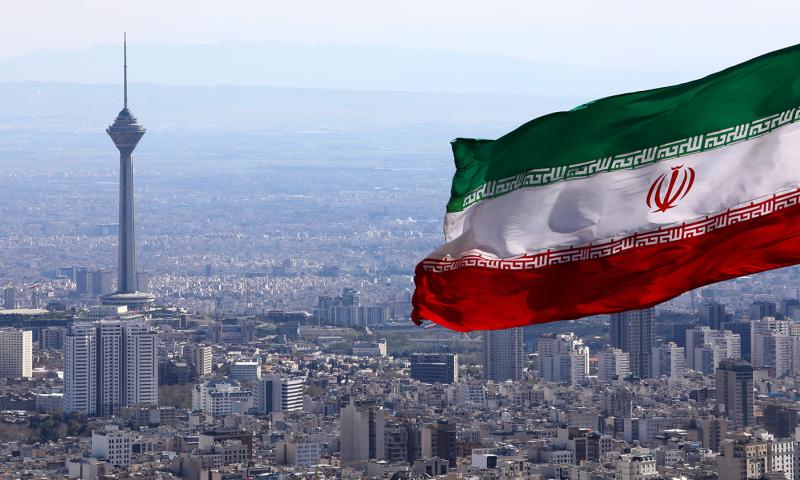
“The West has completely lost its soul, but the Iranians are searching for theirs” — Interview with Alastair Crooke (Part III)






In the third part of his exclusive interview with Brasil de Fato, Alastair Crooke – a former MI6 agent and former EU adviser on West Asia, as well as founder and director of the Beirut-based Conflicts Forum – offers his reflections on the nature of the Islamic revolution and the history of Shi'ism, highlighting a radical critique of the West's 'postmodern nihilism'. This is exemplified in a summary Crooke heard during his first visit to Iran many years ago, from a cleric who has since become an Ayatollah, who told him that 'the problem we have with the West is not ideology, it is their way of thinking – and their way of thinking is as harmful to the world as a whole'.
Whilst starting from a profound critique of the West, many leading figures of the Islamic Revolution were encouraged to embrace the canons of modern Western thought, as well as its Marxist-inflected self-criticism – exemplified by movements such as the Frankfurt School – whilst also grounding themselves in the classics of Islamic and Shi'ite philosophy. As Crooke points out, this reflected something Imam Khomeini himself insisted upon: 'that one must study Western philosophy alongside Islamic philosophy'.
Our interviewee expresses concern over the possible use of nuclear weapons by the Zionist regime in Israel as a last resort, arguing that 'we must understand Israel not through secular rationalism, but in an eschatological manner.' This means that a scenario of 'total war', with serious regional and even global consequences, would be something actively desired by certain leaders in Tel Aviv and Washington alike, who are 'calling the war on Iran a holy war' – a framing that, as Crooke notes, 'came from the evangelicals'. Yet Crooke also sees this conflict as an opportunity for 'creative destruction', from which a new world could emerge: 'I think Iran has triggered this, because we will likely enter an economic crisis on a scale for which the West is unprepared. But that is part of the catharsis.'
Read the final part of Alastair Crooke’s interview with Brasil de Fato (click here for the first part and here for the second):
Contemporary Iranian leaders — such as Ali Larijani, an expert on [Immanuel] Kant [18th-century German philosopher] — and Foreign Minister Abbas Araghchi — who completed his PhD under the renowned Marxist scholar David McLellan — possess a level of intellectual depth rarely encountered among Western leaders today. Do you believe that this mastery of Western philosophy gives Iran a kind of cognitive advantage, endowing its leaders with what the Germans would call a broader Weltanschauung [worldview], and enabling them to deconstruct Washington's liberal narratives using the very logical tools the West has itself produced?
Yes, I do. And, by the way, you mentioned Ali Larijani and his specialism, his expertise in Kant, the Western philosopher. However, he was also an expert on Suhrawardi [Persian philosopher (1154–1191), founder of the Philosophy of Illumination, a fundamental pillar of Islamic and Shi’ite philosophy, which seeks a balance between rationalist logic and mystical intuition]. Therefore, one must understand the balance that is established. And he can discuss at length the complexities about which Suhrawardi wrote before his martyrdom, I believe in 1190 [Suhrawardi was executed in Aleppo for his ideas, which were considered heretical at the time]. This is one of the components of Irfan [gnostic or mystical knowledge, which seeks an understanding of the ‘layers of consciousness’ and the spiritual world]. There is no exact word to describe it, but it is also a kind of form of Shi’ite Sufism. It is a turning away from the rational and material world to understand that there are different layers of consciousness. And Suhrawardi spoke, I believe, of the tenth layer of consciousness, and of how you write it. This is not exclusively Iranian, because this was the ancient religion. It is also present in Egypt, in the thought of the Hermetic texts — or at least partially referenced — in the texts that were discovered in the late 1400s by the ruler of Florence [Cosimo de’ Medici] and translated by Marsilio Ficino. So, this was something that Imam Khomeini insisted on, that one must study Western philosophy alongside Islamic philosophy. And, of course, this provides an insight into Western thought. And I remember when I made my first trips to Iran, I went to Qom and spoke to a man, I think he is now an Ayatollah. But he told me that the problem they have with the West is not the ideology, it is their way of thinking. And their way of thinking is so harmful to the world as a whole. And he explained this in great detail. And, quite clearly, in our interactions, this had a great effect on me; I find this description of the problem fascinating.
This dialogue is described at the beginning of your book Resistance: The Essence of the Islamic Revolution, isn’t it?
Yes, there was a reference to that discussion in the introduction. So, how does the West emerge from its postmodern nihilism? Or how does the world move beyond its excessive, rationalist, materialist and hedonistic way of being? Well, when you go to Iran, that is the reality, and always has been. But this is also expressed in the ability to move beyond this way of thinking, beyond a very negative nihilistic consciousness, to reach different and higher levels of understanding, compatible with one’s level of consciousness. How does one get there? It is obviously something that takes time and learning to reach that level. This was also an ancient concept, which is why Iran also has this special connection with the pre-Socratic world that existed before, and which was overshadowed by the works of Aristotle and Plato. And so curious things emerge, such as the fact that one of the major influences on Imam Khomeini, alongside figures like Mullah Sadr, Ibn Sina and Ibn Arami, was Plotinus, a non-Islamic thinker. Plotinus always drew on earlier forms of thought and reflection.
So, I think Iran really does have the tools and is thinking about the next stage. They know they need to find a way to bring the revolution into this age of technology, of TikToks and everything else. How to bring it and reinvent it for today and for today’s young people? And when I was in Tehran, it was very interesting. I asked some of my interlocutors: how do you make the ideas of justice from the Iranian revolution applicable? How do you bring them into the present day? And they said: “Well, we have plans regarding that. We’re thinking about it.” And so I think it’s the beginning of something that’s changing. And it was about how to introduce new thinking into a system that has lost its vitality. The Western system has completely lost—I don’t know the right word—but it has lost its ‘soul’. But the Iranians are searching, and, to a certain extent, the same thing is happening in Russia.
And in China too, I would say. I lived in China for five and a half years before moving to Moscow. And after nearly five decades of reform and opening up, and a deep connection with the West, the Chinese are engaging in self-criticism of their Westernisation, rediscovering their deep cultural roots, speaking of the ‘civilisational state’, and young people enjoy wearing clothes from a thousand or two thousand years ago, whilst the Party led by Xi Jinping reaffirms Marxism as its theoretical guide. Meanwhile, in Russia, we see a self-criticism of its post-Soviet Westernisation, a revival of its so-called ‘traditional values’ and an attempt to synthesise its imperial historical legacy – spanning over a thousand years – with the successes of the Soviet planned economy. So the three pillars of the current anti-imperialist front – Brzezinski’s ‘nightmare’ – seem to be undergoing similar processes: criticism (and self-criticism) of the world’s Westernisation and a return to their millennia-old traditions, in search of a new synthesis.
Well, I was fascinated because we’re also talking about the influence of Taoism. And when I was in Russia last time, I went to a film fair. There were several Chinese production companies present, showcasing their films on religious themes, not all of which were about Confucianism, but rather about Taoism. And, in some way, the Iranians seemed to feel that Taoism had something to contribute. I don’t want to exaggerate; not everyone is reading these classics. And in Russia, a friend of ours is working on how to make Buddhism part of the Russian identity. Not to suppress it and force it to become some sort of artificial ‘Russicism’, but to allow it to reinvigorate the idea of what it means to be Russian. And I found that very interesting. It’s a great project. So, these things are happening. We don’t see them, because they aren’t visible through the usual platforms and the like. But they are happening. And I’m very confident. I have always said that what we are going through now is a process of catharsis. We have to witness the kind of creative destruction of the nihilistic, postmodern world of Ayn Rand [a writer and philosopher of Russian origin, naturalised American, whose work has had a profound influence on Western conservative and libertarian thought] and her ideas that the greatest quality of the human being is selfishness. And to do that, one must have the capacity to ascend a rung on the ladder of consciousness. How to achieve this with people as a whole is a truly difficult question. So, you’ve asked me the most difficult question. Because, of course, the Imam achieved this by speaking of [the Battle of] Karbala [in 680, in present-day Iraq, a founding event of Shi’ite subjectivity, in which Imam Hussein – grandson of the Prophet Muhammad – was martyred amidst a dispute over the Prophet’s succession] and the Mahdi [in Shi’ism, is the ‘Hidden Imam’ who will return to establish final justice on Earth], and he managed to raise consciousness. And he insisted that people should have an active mind. And that is certainly not the case in the West. And that is why he insisted on Western philosophy and, at the very least, on moving forward together, something you wouldn’t find in the West. So, I think something will emerge from this. And I think it is necessary because, as I say, we are going through a catharsis. We have to go through a creative destruction before we can move forward onto a creative and positive path. It is going to be painful. I think Iran has triggered this, because we will probably enter an economic crisis on a scale for which the West is not prepared. But that is part of the catharsis, I believe. And we cannot see the green shoots, but they are certainly there somewhere. And it is better that we do not see them, because if they were visible, someone would come and trample them as soon as they appeared. At this stage, we must wait until they are strong enough.
Could this be the dawn of a new era?
Yes, we are in a new era. It is a very dangerous year. And everything could go very wrong.
I mean, Israel is playing a game of nerves with the nuclear facilities. And who knows, if they lose this war badly, what will they do? Because the whole Israeli narrative has shifted to: ‘we won’t achieve regime change’. I gave an interview on Friday and said that the Israelis are telling the Americans: ‘Look, the United States has to take the lead and control the straits. And if you don’t do that, we’ll have no choice but to use tactical nuclear weapons.” That is, I believe, the message they are sending to the United States, indirectly through these attacks. And, of all places, Bushehr, which is a [nuclear] plant shared with the Russians. The Russians have already withdrawn all their personnel, I believe, except for a handful of them [to keep the plant running] from Bushehr, given the circumstances. This is a joint project with Russia under the full supervision of the IAEA [International Atomic Energy Agency]. The only reason the IAEA is allowed into Iran is because the Russians want it, for their own purposes. In Russia, they want Bushehr to be monitored by the IAEA. But the IAEA was not welcome in Iran in the past. But Bushehr is a fully compliant plant, shared with Russia. And there have been two attacks: one near-miss and another very dangerous one. That is frightening.
Are you saying that the Israelis are now talking about using nuclear weapons, and the US almost struck a nuclear power plant full of Russians? Aren’t these people playing with fire and risking opening a sort of Pandora’s box – a nuclear war – for all of humanity?
We need to understand Israel not through secular rationalism. We must understand it in an eschatological way. It is no use saying: ‘What Itamar Ben-Gvir says [Israel’s Minister of National Security, a far-right politician notorious for his deeply racist and anti-Palestinian views] makes no sense; it is not in their interest to have a war’. We have to understand that, if we think about this through Talmudic theology and also go back even further, to the messianic component of the Jewish faith, then you understand that they want Armageddon [a war of massive proportions that would hasten the ‘end times’, the return of the Messiah and Israel’s dominion over the world] as part of the plan. So, we must understand that there is also an eschatological element in the United States. We are seeing this very clearly. The United States is calling the war in Iran a ‘holy war’. This came from the evangelicals. And this is drawn from an understanding of the messianic component of religions. And the messianic component is so powerful.
Finally, could you briefly talk about your diplomatic and political career, and your important work in West Asia?
I was a member of the diplomatic service and was seconded to the European Union to work for High Representative Solana. I coordinated five ceasefire attempts (all of which failed) between the Islamic Resistance forces (Hamas and Islamic Jihad), Fatah’s Tanzim and Israel — including the siege of the Church of the Nativity in Bethlehem. I was also involved in encouraging Hamas to take part in the elections, which they eventually won, in 2006. I was then seconded to the US government to serve on Senator [George] Mitchell’s fact-finding commission regarding the second ceasefire. I started in Northern Ireland and, later, in Afghanistan, I was responsible for liaising with the Mujahideen leadership on behalf of the US and the UK, as the Americans were not actually supposed to meet with them. And the Conflict Forum was established in 2004. It is a non-profit organisation focused on West Asia. Essentially, it provides crucial channels of communication and allows us to listen and try to help people understand what was actually being said and what that might mean.
«“The West has completely lost its soul, but the Iranians are searching for theirs” — Interview with Alastair Crooke (Part III)»