



The Flawless Surface: A Fact-Finding Mission into Japan’s Social Decay






The Loneliness Factory: Japan’s Blueprint for a Dying Society
In 2018, a news article went viral on the internet about a 38-year-old Japanese man paying $17,341 to wed a hologram. People laughed, saying he was “crazy.” Few considered what questions that raised. Why did Japan create a society where someone is willing to pay that much money to be married to a robot?
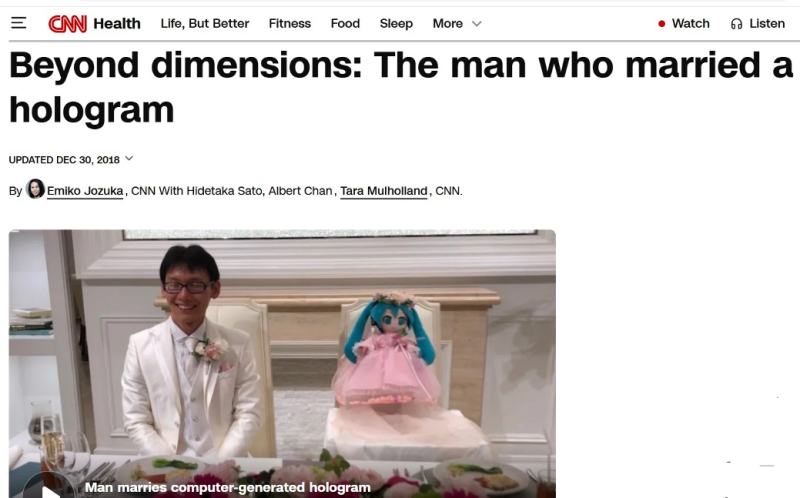
This wasn’t just an isolated case of desperation. It’s a clear sign of Japan’s societal collapse. Japan is experiencing a massive demographic shift: By the end of the century, the population will decrease by half. Millions of people are isolating themselves from others, some towns go years without anyone being born.
Corporations are profiting off this loneliness, providing a subscription service for people to buy companionship.
The following is the story of how a single nation engineered their society to revolve entirely around work, stopped learning how to do anything else, and created a model for other nations to follow in the process.
Post-War Japan: A Rebuilding of Sacrifice
In 1945, Japan was left in tatters. The atomic bombings and the fire bombing had reduced most of its cities to rubble, and Japan’s economy was only producing 26 percent of its pre-war capacity.
The man tasked with rebuilding Japan was Prime Minister Shigaru Yoshida. His goal was to rebuild Japan as quickly as humanly possible. The doctrine he put forward is known today as the “Yoshida Doctrine.” It was based on two principles: The United States would defend Japan militarily, while Japan would dedicate all of its energy towards economic growth.
Yoshida’s tool of choice was the Japanese worker. He negotiated with large corporations to provide lifetime employment. In exchange for this security, employees agreed to be extremely loyal to the company. They would work overtime, never complain, and prioritize the company over their families, their health, or even their lives.
This system was successful because it had to be. Japan was in dire need of help. The results were immense: From 1960 through 1969, Japan’s economy grew at an annual rate of 9.7%, and by the 1980s, it had become the world’s second largest economy.
The world dubbed it the “Japanese economic miracle.”
The Hidden Price: The Salaryman Culture
The price of this miracle, however, was high. Yoshida’s creation of salaryman culture didn’t have an off-switch. What started as a necessity soon became an identity. The idea of working yourself to exhaustion was not just expected, but celebrated. As Professor of Sociology Teppei Sekimizu points out, “Whereas in European countries, the importance of the individual is emphasized, in Japan, we emphasize common rules.” Individuals gain worth by abiding by these rules. It was shame and guilt that kept the system in place. You worked late not because you wanted to, but because if you were the first one out, you might have been perceived as someone who didn’t fit in, or worse, wasn’t up to the job.
On YouTube, I’ve seen young Japanese creators take the time to discuss the reality of working in such a brutal environment. But, for doing so, they’re deemed unpatriotic and un-Japanese by some of their fellow citizens, subjected to criticism like, “Are you Japanese?” Or, “If you’re so unhappy, why don’t you just leave the country?”
A Tokyo salaryman, 23, who works 15-hour days summed up this feeling in one of those videos: “What we’re driven by isn’t passion. It’s fear. We’re afraid of getting left behind. We’re afraid of disappointing people. We’re afraid of getting out of the circle and never getting back in.”
The Corporate Gauntlet: From School to Overwork
This starts even before the workplace, in schools. As I’ve discussed here in relation to China and Korea, in Japan, children study grueling hours and their prospects of entering a top university, which will largely determine the career and standard of living of themselves and their families, depend heavily on those efforts.
But unlike in China and Korea, most companies hire new graduates en masse once a year, immediately upon graduating from university. If you miss that window, you’ll be relegated to non-regular worker status, being lower-paid employees without many benefits and virtually no possibility of promotion. Given this one-chance-only structure, there’s huge pressure from middle school. Once hired, fresh-faced newcomers are taught some fundamental tenets of office life: Don’t cause trouble. Read the air and do what everyone else is doing.
That translates into, say, staying late even when your work is done, because everyone else is still there. In Japan, despite workers’ legal entitlement to paid leave, they often feel guilty and apologizing for taking it. In 2022, Japanese workers took only 62 percent of their legally granted paid leave.
Or, it translates into going along with nomikai, which are mandatory after-work drinking sessions that often last until the wee hours and are key to career advancement.
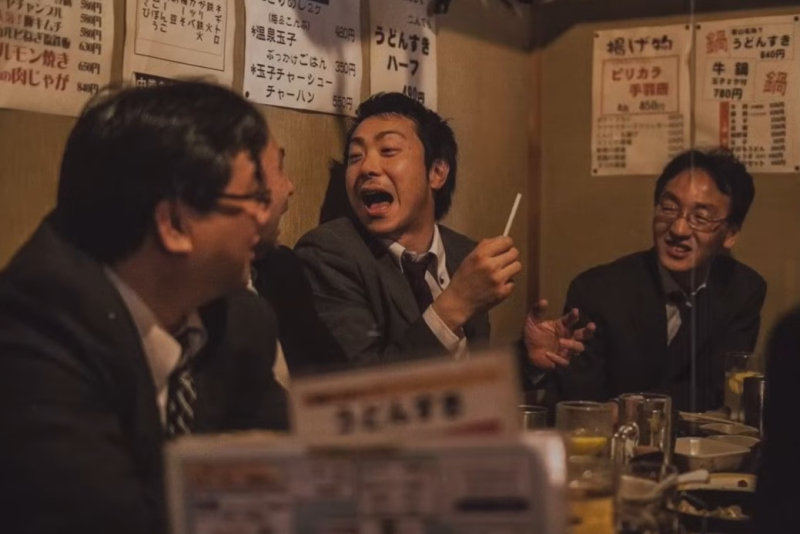
Juniors are expected to keep seniors’ glasses full, but never pour drinks for themselves. This is all without any explicit command from the boss, as it is more like orders from the air in the room, as one salaryman puts it, being the invisible boss.
“As long as that invisible boss exists, it’s extremely hard for Japanese people to choose their own way of working,” a Japanese salaryman and YouTuber says. There’s also the economic factor. A new graduate in Tokyo makes, on average, $1,100 a month. After paying basic expenses, he or she may save as little as $20 per month. Overtime isn’t an opportunity to earn more money. It’s a matter of keeping the rent paid. Working such long hours for years turns someone into a job title. Quitting means losing their very identity.
The Toll: Karoshi and the Breaking Point
The daily grind is relentless. Commutes can take three hours a day, with trains packed like "oversized cans of sardines," where silence is maintained out of courtesy for those trying to nap. But even in a Shinkansen bullet train where nobody was napping when I was riding it, there is silence, almost like in a graveyard, something you would never experience outside Japan.
Nearly a quarter of Japanese companies have employees working over 80 hours of overtime per month, often unpaid. When Panasonic offered a 4-day work week, only 0.24% of its 63,000 employees accepted, fearing that rest would be seen as weakness.
The human cost is stark. Documentary filmmaker Allegra Pacheco observed men in suits collapsed on sidewalks in Tokyo, having worked until their bodies gave out. Clinics even advertise IV drips for recovering from after-work drinking sessions, normalizing the cycle of exhaustion and social obligation.
The term karoshi, meaning "death from overwork," is casually understood by most Japanese people. Official data reports 400 karoshi-related deaths annually, but experts believe the real number could be closer to 20,000. In Japan unpleasant things are not supposed to appear in statistics, just like the Japanese tour guide will never show a foreigner a Japanese slum.
Tragic cases that sometimes become known like Matsuri Takahashi, a 24-year-old who committed suicide after clocking 130 hours of overtime a month at Japan's largest advertising agency, Dentsu, highlight the systemic failure. Her death led to reforms, but a similar death occurred at the same company 24 years earlier, showing how little truly changes. As one salaryman put it, "Karoshi becomes something you just see on the news sometimes, say that's sad, and then go back to work."

The Lost Decades and a Shrinking Future
The economic miracle began to unravel in 1991 when Japan's economic bubble burst, leading to "the lost decades" of stagnation. Property values collapsed, banks failed, and millions lost savings and jobs. Yet, the work culture only intensified, with companies squeezing harder due to less money and more fear.
Among G7 countries, Japan is the only one where salaries have grown just 5% in 30 years. The median wage for a young Japanese worker is between $17,000 and $20,000 annually, barely covering rising living costs. This financial strain makes starting a family nearly impossible, with childcare costs for two children eating up almost half a mother's annual income.
The result is a demographic crisis. In 2024, Japan recorded its lowest number of births since 1899, roughly one-quarter of the post-war baby boom. Deaths now outnumber births by over 900,000 annually. Japan's fertility rate is 1.15, far below the 2.1 needed for population stability. Former Prime Minister Fumio Kishida warned in 2023, "Japan is standing on the verge of whether we can continue to function as a society."
This crisis is visible at the local level. Over 700 of Japan's municipalities are at risk of disappearing by 2050. The village of Nagoro, for example, once had 300 residents; today, only 25 remain, and no child has been born there in over 20 years. One resident, Sukimi Ayano, has filled the village with over 350 life-sized dolls, each modeled after a person who died or moved away, just "so it doesn't feel so quiet."
Japan has become a “super solo society.” Solitude living, also known as “oitoi sama” or party of one, has become so deeply ingrained into Japanese culture that businesses have been creating products specifically targeted at single consumers. It’s been projected that 50% of the population in Japan who are 15 years of age or older will be living in a single-person household by 2040.
The "Super Solo Society" and Hidden Isolation
Being alone can be seen as a positive aspect of Japanese society, serving as an escape from the pressures of group obligation and conformity. However, it’s becoming increasingly difficult to separate between people who choose to be solo versus those who are being isolated against their wills. Tens of thousands of people flock to one kara (solo karaoke) every month, providing individuals with the option to relieve stress through karaoke without the pressure of performing in front of others. Similarly, Japan’s popular ramen chain Ichiran has booths that can be closed off to protect privacy.
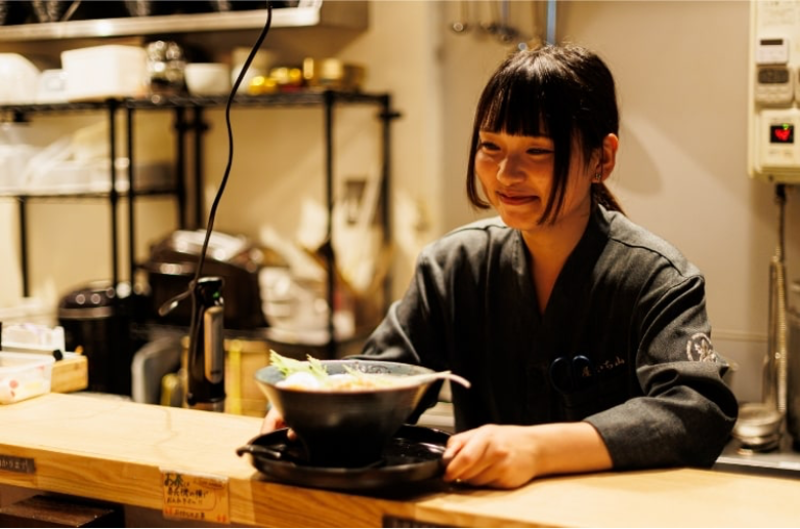
There is no human contact with employees needed as one orders their meal via a vending machine. Other businesses include travel agencies offering solo weddings where individuals can rent a dress and take pictures.
Hikikomori: The Vanished Millions
Another type of person that Japan has been losing is those with a condition called hikikomori. Hikikomori first became common in the late 1990s and has been growing ever since. In 2016, the Japanese government estimated that there are around 1.15 million hikikomori in Japan, which they confirmed with another survey in 2019. Some have estimated the number to be as high as 1.5 million.
In order to escape the pressures of society, recluses live full lives behind computer screens while their bodies wither away. Some stay in their rooms, avoiding society at all costs. Once an individual has been hikikomori for three years, returning to society becomes rare, as hikikomori becomes their identity.
Some organizations are trying to get hikikomori back into society. “New Start”, for example, sends out “Rental Sisters” that knock on the door of the recluse and attempt to engage them in conversation. After months of talking through a closed door, if a Rental Sister is lucky, she will gain their trust and be invited into the house.
Another method called Hito Refresh Camp groups hikikomori and puts them in a camp where they live in dorms and participate in farm labor. By putting hikikomori in a setting where they must interact with others, they are attempting to reunite hikikomori with the world.
Ironically, as our world advances, it makes it easier than ever for people to vanish.
The Loneliness Industry: Monetizing Connection
AI companionship is nothing new. However, due to technological improvements, tools like Character AI and Replika have been getting a lot of attention lately.
Akihiko Kondo is one of the individuals that developed a deep emotional attachment to an AI. Kondo fell in love with Hatsune Miku and spent $17,000 on a wedding with her. He used a Gatebox which is a projection machine that allowed him to interact with a full-sized hologram of Miku in his home. For a couple of years, Miku texted Kondo cheerful messages to start off her days and was there when Kondo needed someone to talk to. However, when Gatebox ended its software support for its machines, Kondo was broken-hearted to discover that Miku’s projection would be replaced with a prompt that reads: “network error.”
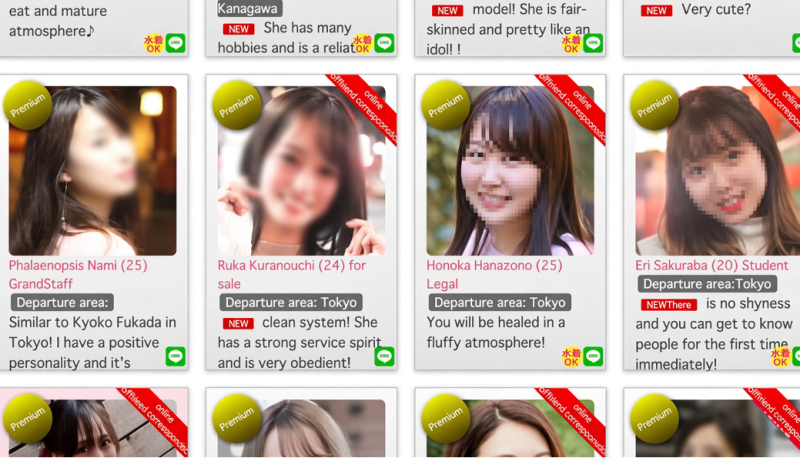
Japan’s conformist and high-pressure society makes an AI companion a crucial outlet for those who use them. However, it’s important to note that companies create these applications with the goal of making their users emotionally dependent on them. Sociological researcher Kawashima argues that users are locked into their ecosystems. In doing so, companies are making a profit off people’s loneliness by charging monthly fees for love and intimacy.
Japan’s Work Ethic Has Gone Digital—and America Has Adopted It
Amazon tracks its workers to the second. Its surveillance system records everything, including computer keystrokes, screen activity, and bathroom breaks. When workers fall short of quotas, they are fired. There’s no human in the loop to review performance; it’s automated. It’s called the “Adapt system.” It’s what many of us feared Japan’s work ethic had become, except it’s Amazon. And it’s in America.
A Global Blueprint: Japan's Warning to the World
Many of the challenges facing Japan are challenges we face elsewhere. In many ways, Japan is a blueprint for what’s to come elsewhere. And it’s not just in the realm of labor.
Our built environments are changing. Homes are designed for individuals. Food is delivered to your home. Work is increasingly taking place remotely, and in-person collaboration—what used to be called teamwork—is becoming ever rarer. Community is increasingly simulated. Our cities and towns lack places to gather, “third places.” Everything points towards isolation. Some call it “isolation infrastructure.”
So it isn’t a problem confined to Japan. In fact, Japan’s hikikomori is the canary in the coal mine when it comes to a global phenomenon.
In South Korea, for instance, more than 340,000 young adults have withdrawn from society. The government pays some of them to come out of their bedrooms—a monthly stipend to get them out the door. In Italy, which used to have strong traditions of family and community, Hikikomori Italia estimates that as many as 200,000 Italian adolescents have shut themselves away due to social and academic anxiety, though the group stresses that those figures aren’t official. In the US, millions of prime-age men have fallen out of the workforce and are connecting with reality mainly through a screen. In all, severe isolation affects already about 8% of people worldwide, according to one global analysis.
The infrastructure that facilitates hikikomori—the idea that Japan had built an “isolation infrastructure”—is everywhere. Technology and capitalism have come together in such a way that you can now live your entire life inside your home, interacting with others only online. Modern life no longer just provides infrastructure to ease commuting to the office. Now, capitalism caters to our ability to live in grim digital isolation. Modern life both facilitates and profits off of the hikikomori lifestyle.
And many of these young adults see what’s expected of them. The rat race is rigged. Work is soulless. Surveillance is oppressive. It’s exhausting. Many of them say: “No thanks.” And opt-out. Japan’s hikikomori phenomenon isn’t some Japanese curse. It’s not some Japanese quirk. It’s a warning to us all.
The Illusion of Solutions: Superficial Fixes for Deep-Rooted Issues
As I write this, I’m on a metro train in Osaka. The carriage is crowded, standing room only. There is a sign I am pointing to; it indicates that, at certain times, this is a women-only carriage.
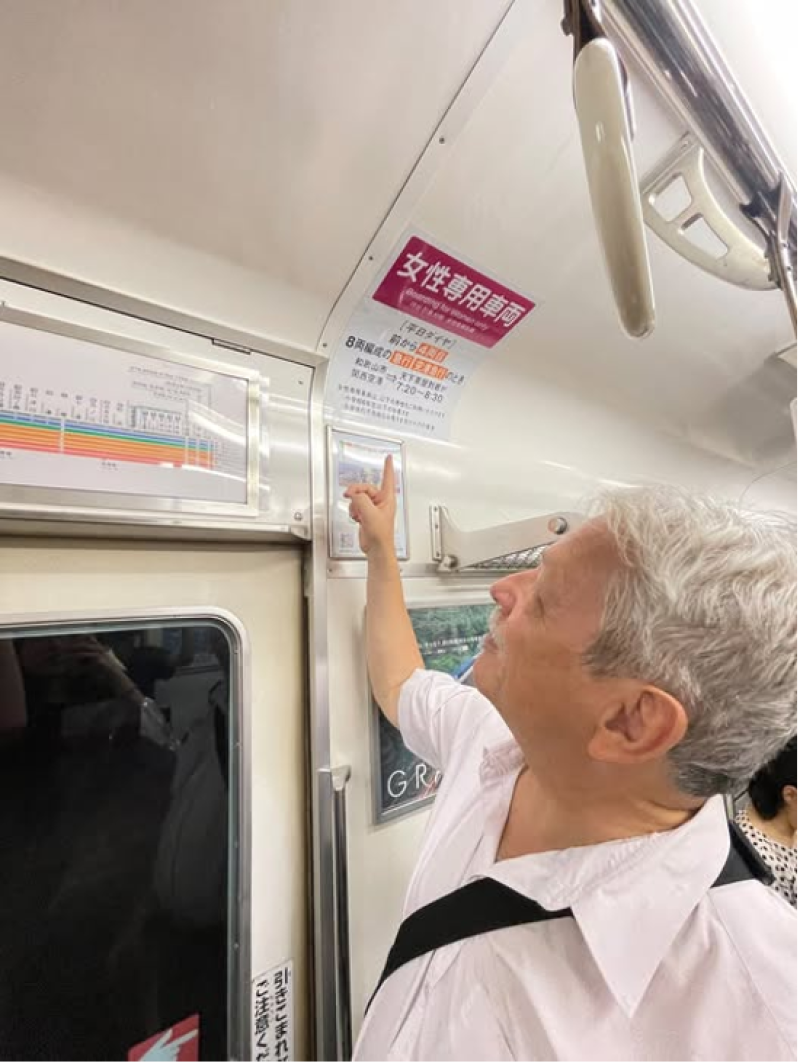
Many women report harassment on public transportation. Groping, unwanted touching, surveys show it’s widespread. Official reports recognize it as an issue. Men use the cover of crowds and anonymity. Designated women’s only carriages are meant to give women a sense of security. To feel comfortable. To breathe. But there’s not enough women’s only carriages for women to feel comfortable for most of their journey. The solution doesn’t come close to addressing the issue. It’s a band-aid on a bullet hole.
Amazon’s automated firing system may seem outrageous. But the fact that California had to pass a law explicitly protecting workers' right to use the bathroom tells a chilling story. Many of the problems we face are systemic. Many of the solutions offered are not up to the challenge.
The future may well belong to AI. But what happens to countries, other than Japan, who have at least partly bought into its cult of productivity? Will they start marrying AI as well?
Japan is a country in crisis. Countless people in their teens and thirties are dying alone. The position of minister for loneliness was created, but hasn’t made much of a dent. By 2050, 44.3% of households are predicted to consist of a single person and 10.8 million elderly people will be living alone.
Reclaiming Connection
Japan’s extreme focus on productivity has its origins in the post-war reconstruction era—a time when individuals’ private lives were regularly sacrificed for the sake of hard work and rapid economic growth.
This relentless pressure has created a landscape of severe burnout and profound isolation. Loneliness has become so acute that human warmth is increasingly being replaced by synthetic alternatives. We see this in the case of Akihiko Kondo, who curls up every night beside the cold, inert plastic body of a virtual pop star. We see it in Urina Naguchi, who chose to marry an artificial intelligence. "In my case, it just happened to be an AI," she says—a poignant reminder that, for a growing number of people, a digital echo is better than the silence of an empty room.
Japan’s A.I.-spouses are becoming more than just quirky, funny tidbits, however. Rather, they serve as a cautionary tale for other societies that fail to emphasize the value of human beings beyond what they produce. The convergence of isolation and immersive technology poses a threat that should set alarm bells ringing.
— — —
This is part one of my two-part "Japan Fact-Finding Mission." Check out part two, “Economic Warfare, the Lost Decades, and the End of Cheap Japanese Money for the World,” published here.
For more analysis and updates, be sure to subscribe to my Substack and follow my travel vlog.
«The Flawless Surface: A Fact-Finding Mission into Japan’s Social Decay»