


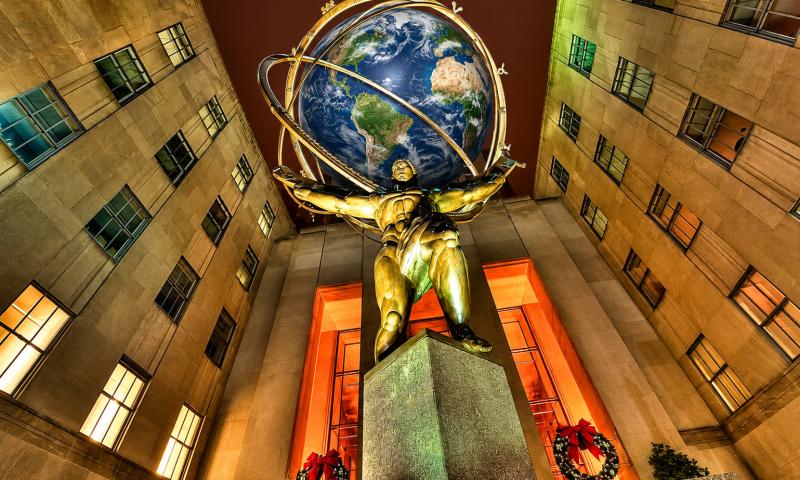
How the International Financial Oligarchy Continues to Rule the World


Benjamin Disraeli, 1846: “The world is governed by very different personages from what is imagined by those who are not behind the scenes.”

A Conversation Among Experts
On October 12, 2026, Pascal Lottaz and Alex Krainer spoke on Pascal Lottaz’s YouTube channel, Neutrality Studies.
The discussion centered on the enduring influence of the supposedly defunct British Empire. Krainer’s thesis is that while the British Empire did indeed come to an end as a territorial colonial empire, However, finance-driven Great Britain—the City of London—has never truly lost power. As a power structure with its transnational elites, it has by no means disappeared. Rather, it has transformed from an openly imperial form of rule into a largely invisible system comprising financial capital, political networks, intelligence agencies, strategic think tanks, and international institutions, which skillfully conceals its role.
Krainer refers to this entity as the “undead British Empire.” What he means is a power that, formally and in the public’s perception, is no longer alive, but whose fundamental interests, ways of thinking, and methods of rule persist like a very active zombie.
Neocolonialism
The decisive shift, he argues, lies in the fact that this still-imperial power no longer needs to be exercised primarily through the direct occupation of foreign territories. It is sufficient to control the economic and political conditions under which other states make their decisions.
Whoever grants loans, defines property rights, controls raw material concessions, influences political elites, and organizes military dependencies can dominate states without officially colonizing them. The proceeds largely end up in the pockets of the financial oligarchy through interest and direct business profits, with the companies operating directly in the respective countries functioning as conveyor belt stations through which the countries’ wealth is transported to the vaults of the City of London and Wall Street.
Nation-States and Corporations as Tools for the Transfer of Wealth
According to this view, the Empire is less a territorial entity than an international system of domination that uses nation-states and international corporations as instruments of its interests. The City of London and Wall Street appear as central hubs of a single global network of finance and power.
The United States is not really the sovereign successor to the British Empire. Rather—just like the rest of the collective West—it is also a tool in the hands of the aforementioned system of domination, which exploits the economic and military power of the U.S. for itself and exclusively in its own interest. Accordingly, different forces are said to be competing within the U.S.: on the one hand, the advocates of American national sovereignty; on the other, established networks such as the so-called “Deep State,” which Krainer attributes to a transnational imperial elite.
In this context, the term “British” therefore does not refer to the British population or the government in London—although that government diligently and submissively carries out the business of its masters, as is also the case throughout the rest of Europe. Rather, this geographical designation reflects the fact that a large part of the aforementioned system of domination has its roots and seat in Britain.
The crucial question in world politics, then, is not which state officially holds the greatest power, but who, through their financial power, controls the political, financial, and institutional structures through which that power is exercised.
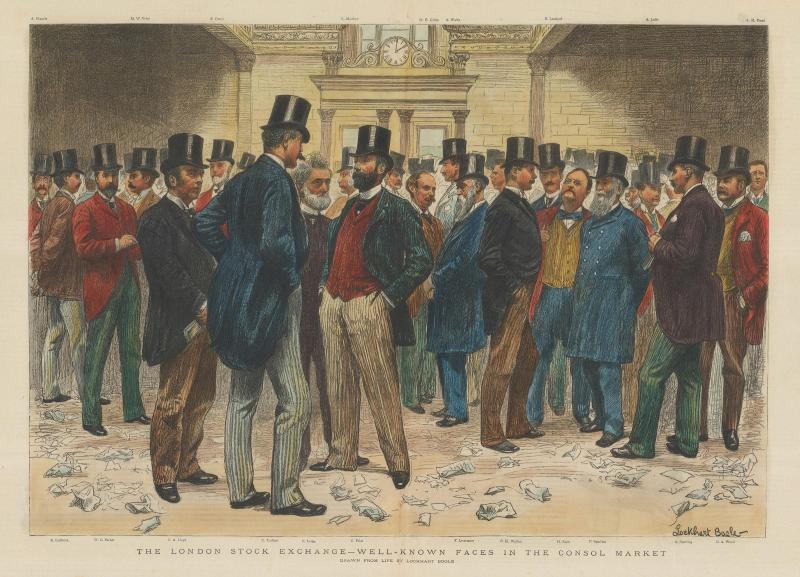
Conventional historical narratives—which we all learn in school in the West—take a completely different view: If we understand empires exclusively as states with colonies, we overlook those power structures that have outlasted the collapse of formal colonial rule and continue to operate under new names and similar structures—structures that are largely controlled by a financial empire coordinated across generations.
And while we're on the subject:
An Ancient Cartel
In the 1880s, the famous oil price war of that era broke out between the Rockefellers and the Rothschild family. The powerful Rothschild family had entered the Russian oil business and had granted the Nobel brothers loans for oil drilling and transportation infrastructure to export oil to European and global markets. John D. Rockefeller saw this as a serious threat to the global dominance of his Standard Oil. In 1892, the price war forced Rockefeller to invite the head of the French branch of the Rothschild family, Baron Alphonse de Rothschild, to a meeting in New York. The negotiations ended with a truce, in which the rival families formed an alliance (see, for example, Ron Chernow, Titan: The Life of John D. Rockefeller, Sr., New York 1998, p. 556). These close ties endured and significantly influenced the economic and political developments of the 20th century.
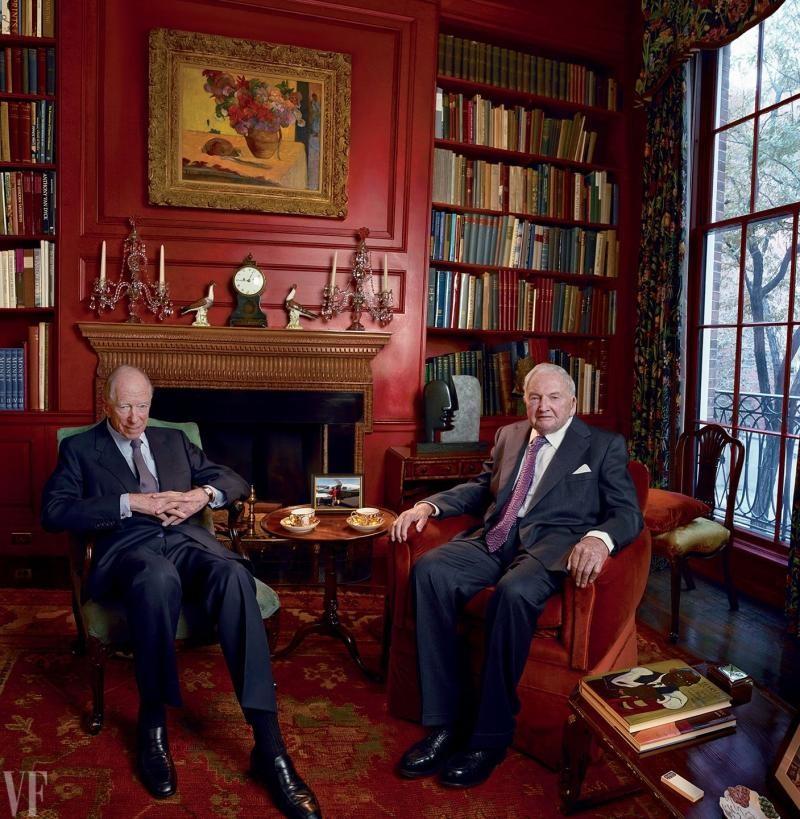
The biographies of these families belong in every family library.
Yugoslavia: How a Society Becomes a Theater of War
Krainer explains what has driven him for decades to analyze these connections. As a young man in his 20s, he had uncritically accepted the narrative about the alleged reasons for the war in what was then Yugoslavia and enlisted as a volunteer soldier. Afterward, however, he was very confused and asked himself: “How could this war have broken out at all?” That question never left him.
“If you had asked anyone in the former Yugoslavia—in Croatia, Serbia, or any of the other republics—about the war just a week before it broke out, 99% of the people would have told you that it was impossible. The war would never happen.”
Alex Krainer
His mother is Serbian and his father is Croatian.
“Many people were in the same situation. They were of mixed heritage. We didn’t even really know who was who, because it didn’t matter. People looked completely normal. Even the Muslim minority—when you talked to them, they looked just like me. There was no Wahhabism. There was no extremism, and so on.”
Alex Krainer
Not a War of Ethnicities or Religions
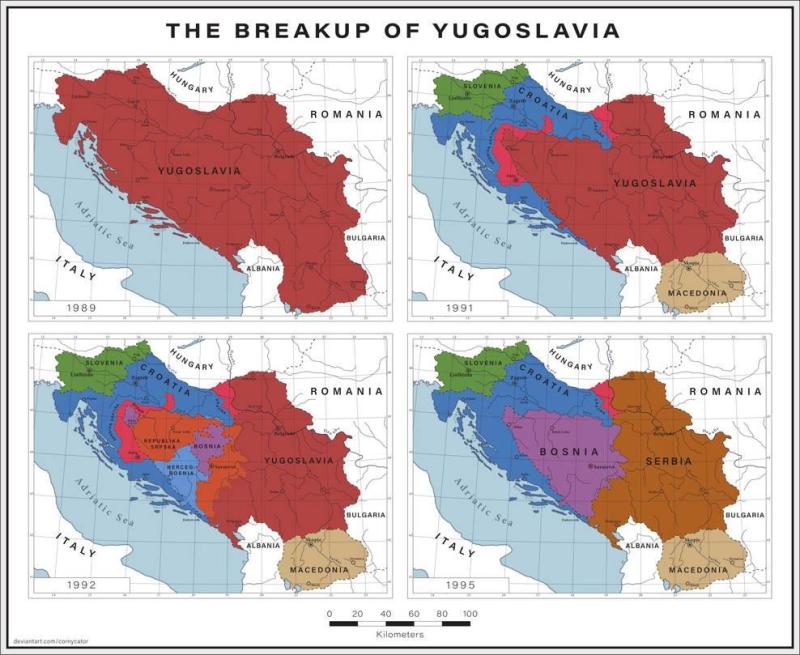
He describes a society in which people of different religious and ethnic backgrounds lived peacefully together throughout the country, formed families, and in their daily lives did not define themselves in any way by their national affiliations. How could such a peaceful society disintegrate into a violent conflict within a relatively short period of time?
He illustrates his answer using the modern myth of red and black ants in a jar: As long as the ants in the jar live side by side undisturbed, they do not fight each other. However, if the jar is shaken violently, they panic and begin to attack one another. They suddenly perceive the other ants as a threat, even though nothing about their fundamental nature has changed. It’s a powerful image, though biologists don’t exactly confirm it.
The point, however, is this: Ethnic and religious differences do not necessarily lead to war. They can, however, be exploited for political purposes, reinterpreted as existential threats, and whipped into a frenzy. As soon as people come to believe that the other group wants to attack or even destroy them, fear, defensiveness, and ultimately violence arise.
Cause of the War: Geopolitical Ambitions of the International Financial Oligarchy
This war was therefore not the result of internal collapse, age-old enmities, religious differences, or an allegedly inevitable ethnic disintegration. Rather, it arose from political decisions, propaganda, institutional power struggles, and the intensification of perceived threats that were deliberately instigated from outside. Krainer is convinced that the “undead” British Empire played a key role in driving this region into war at that time.
The intended goal: the weakening of Russia
As in the First and Second World Wars and the Cold War, the aim was to weaken Russia as much as possible. That is why they set out to turn Yugoslavia into a powder keg and then light the fuse. The parallel to the war in Ukraine is striking. A central state like Ukraine or Yugoslavia is encouraged to combat the independence and secessionist efforts of constituent republics or regions that wish to break away from the central government or, at the very least, no longer wish to be governed by it. Belgrade under Slobodan Milošević, just like Kyiv under Volodymyr Zelenskyy, was instrumentalized to drive Russia into a war in the region and thereby weaken it.
The British financial oligarchy is said to have played a decisive role in exacerbating the conflicts in the former Yugoslavia and steering the country’s disintegration in a specific direction. Initially, they supported a centralized Yugoslav state structure under Belgrade’s leadership, even though this policy was bound to provoke resistance from those republics seeking independence. At the same time, Western arms embargoes made it more difficult for the breakaway republics to defend themselves militarily. For the Soviet Union, the West’s growing influence over Belgrade and the centralization of its power constituted a concrete threat—knowing full well that the City of London had been working for decades to dismantle Russia. It therefore circumvented the Western arms embargo against the constituent republics of Yugoslavia and sold weapons to Croatia, for example.
Corrupt Leaders as Scapegoats
Krainer emphasizes that he does not view the Serbian leadership of that time under Slobodan Milošević as selfless representatives of the Serbian people. Milošević himself was one of those highly amoral apparatchiks who did not truly have the Serbian people’s best interests at heart. Rather, he was following orders. He was sent to New York for four years by the family clan that ran the National Bank of Serbia at the time to serve as a representative of one of the largest banks in the former Yugoslavia. After returning from New York, he was suddenly appointed chairman of the Serbian Communist Party and began laying the groundwork for a takeover of power in order to centralize Yugoslavia under Belgrade’s rule. In doing so, he enjoyed the consistent support of Western power structures. The freedoms of the individual republics were curtailed, thereby shaking the ant hill.
Misinterpretation of History
Krainer opposes an interpretation of history that explains conflicts primarily through local ethnic tensions and treats external influences merely as subsequent interference. His counter-model is as follows: While local conflicts provide the fuel, external power interests determine when and how they escalate into a full-scale conflagration.
The Geopolitical Significance of the Balkans: A Regional Conflict as a Potential Trigger for a Major War
The Balkans are of particular importance for global power strategies. Krainer points to the region’s strategic location between the Mediterranean and Eastern Europe. The Balkans lie at the intersection of major transportation routes, economic zones, and military spheres of influence. Furthermore, the region has historically served as the starting point for major European conflicts on multiple occasions. It is no coincidence that the immediate cause of World War I originated there. A renewed crisis in the Balkans could permanently tie down and weaken Russia. In this context, the region itself is not the actual target, but rather a geopolitical lever against Russia. As the war in Ukraine demonstrates, the aim is to keep Russia under pressure through a chain of regional crises stretching from the Baltic Sea through the Balkans to the eastern Mediterranean and on to East Asia.
The Continuity of an Imperial Strategy
In this context, Krainer refers to the British geographer and geopolitician Halford Mackinder, who, at the beginning of the 20th century, emphasized the importance of the Eurasian Heartland for the global balance of power.
Mackinder’s ideas are among the classic theories of geopolitics, and today’s politics reflect an ongoing imperial agenda: the maritime powers should surround the Eurasian heartland with strategic spheres of influence and hotspots so that no continental power can attain a dominant position.
The central target here is Russia, which—due to its territorial extent, its natural resources, and its geographic location—is viewed as a potential rival to Western maritime powers.
From this perspective, today’s geopolitics does not appear as a series of crises independent of one another. Rather, it consists of various theaters of a long-term struggle for control of the Eurasian space.
Bosnia and Herzegovina: Deliberately Preserved Instability
Krainer’s argument becomes particularly clear when examining the example of Bosnia and Herzegovina. He describes the country’s state structure as a political construct that, following the 1995 Dayton Agreement, ended the war but at the same time preserved institutional tensions. The country is characterized by a complex distribution of power among Bosniaks, Serbs, and Croats, as well as among different levels of government. This system is not merely a difficult compromise between population groups with differing interests, but rather a structure that could be pushed toward escalation at any time.
This is evident in the Republika Srpska, the Serb-dominated entity within Bosnia and Herzegovina. According to his account, international interference, political measures taken by state-level institutions, and pressure on the leadership of the Republika Srpska have significantly exacerbated tensions. British policy, he argued, had provoked the Serbian leadership and fostered a situation in which secession, countermeasures by the central government, and armed conflict appeared increasingly likely—all as an attempt to open another front in the confrontation between the West and Russia in the Balkans.
Trump’s Inauguration as a Turning Point: Partial Cooperation with Moscow
According to Krainer, the situation changed fundamentally in early 2025 with Donald Trump’s inauguration. The threat of war in Bosnia and Herzegovina suddenly diminished dramatically. The Trump administration sided with the leadership of the Republika Srpska and, together with Moscow, worked to postpone a planned referendum on secession and initiated talks between the parties to the conflict.
Washington thereby thwarted a British strategy of escalation. The Americans did not simply control the situation through military superiority, but by altering the political conditions that could have led to an escalation. The decisive step was to eliminate the immediate trigger for a potential confrontation.
This development illustrates that the U.S. and the U.K. by no means always pursue the same interests.
The West Is Not a Unified Actor: The Conflict Between Washington and London
Krainer points out that a seemingly unified “West” is in reality also shaped by competing centers of power. A government in Washington could very well pursue a policy that runs counter to the interests of influential circles in London. Here, too, a distinction must be made between the American government and a transnational network of finance and power that has been—and continues to be—significantly shaped by British interests.
Krainer points out that the United States originally emerged as a counter-model to the British Empire.
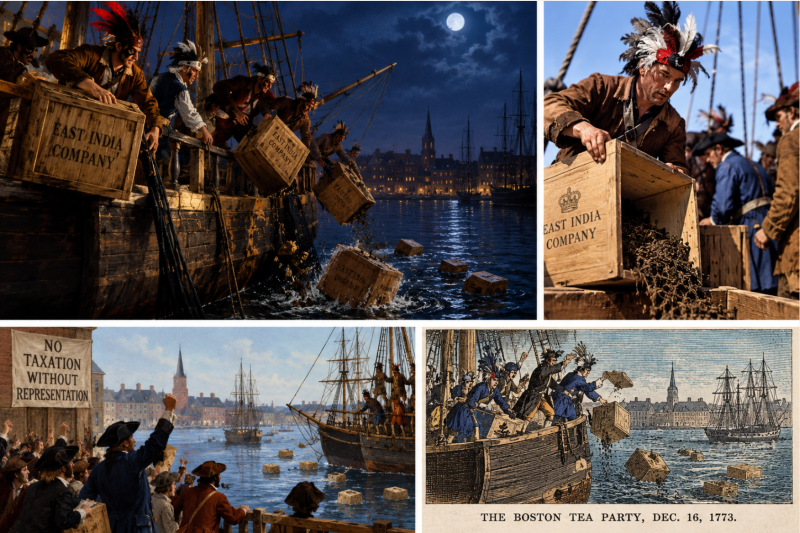
The Declaration of Independence of 1776 marked the successful end of formal rule exercised from London over the American continent.
In Krainer’s view, however, this relationship was later partially reversed: Although the U.S. had risen to become the leading military power, it continued to be influenced in certain foreign policy matters—and especially with regard to the dominance of the financial oligarchy—by structures that do not primarily serve American interests. He describes these structures as a network of political officials, intelligence connections, think tanks, and influential social circles. Accordingly, parts of the American state apparatus are not exclusively bound by the Constitution and national sovereignty, but rather by a transnational power structure.
Krainer uses the term “Deep State” to describe this. By this, he does not simply mean the existence of a professional, permanently functioning bureaucracy, but rather an informal power structure that influences political decisions, limits the scope of action of the democratically elected government, and has access to virtually inexhaustible financial resources. Trump’s inauguration was originally also seen as an expression of domestic American resistance to the existing distribution of power. Krainer interprets the partial confrontation between the Trump administration and the British financial empire, in a certain sense, as an escalation of this conflict.
The True Power of Financial Capital: Domination Through Debt Rather Than Occupation
The economic core of the interview lies in Krainer’s thesis that modern imperial power is exercised primarily through the financial system. Military force is important, he argues, but it is not the actual driving force behind the system. What is decisive, he says, is the ability to place other countries in long-term financial dependence and to control the resulting cash flows.
Krainer describes the business model of the “undead British Empire” as a triad of debt, raw materials, and asset extraction.
The role of banks: “Conveyor belt of asset extraction”
However, the company that actually extracts the raw material is not necessarily the biggest winner. An oil company must employ staff, build facilities, provide energy, manage technical risks, and organize production. It is part of the real-economy production chain.
Banks, on the other hand, can profit from the financing structures without having to extract or transport oil themselves. Their revenues come from loan receivables, interest, fees, and other financial transactions.

Krainer therefore posits the theory that real power does not necessarily lie with the visible industrial companies, but rather with those financial institutions that determine the terms of their financing.
The image Krainer uses is a conveyor belt: on one side are raw materials, labor, and real economic output. On the other side are claims, interest payments, and investment income. The conveyor belt transports a portion of the value added created in the developing country to the international financial centers.
Enrico Mattei: The Counter-Model of a Nationally Oriented Economic Policy
As a counterexample to his model of finance-dominated imperialism, Krainer cites the Italian industrial executive Enrico Mattei.

After World War II, Mattei built up the Italian energy conglomerate Eni and sought to make Italy less dependent on the established international oil companies.
His strategy was to enter into direct, mutually beneficial agreements with resource-rich countries. Italy would obtain energy, while the partner countries would receive investment, infrastructure, industrial development, and employment opportunities.
In this model, economic cooperation was not primarily aimed at accumulating as large a financial claim as possible against a weaker partner. Instead, both sides were to benefit through tangible economic contributions.
There were extensive cooperative arrangements with North African countries and the Soviet Union. Italy, for example, was able to supply industrial products and steel pipes while receiving oil in return. Such agreements made it possible to put pressure on established oil companies regarding pricing. Mattei did not subordinate his country’s economic development to the interests of international financial institutions. Italy was to have its own industrial capacities, its own companies, and its own economic policy autonomy.
Mattei was eliminated for reasons similar to those behind Alfred Herrhausen’s death, because he had challenged the geopolitical model of power exercised by the aforementioned empire—in his case, including the major oil companies and their financing structures. Mattei died in a plane crash in 1962—a targeted assassination for which the CIA, acting on behalf of the Deep State, was responsible.
Mattei is therefore one of many examples of influential people who were eliminated because they sought to make an alternative economic model a success.
Systemic Coercion of Capitalism—Is Imperialism a Conscious Choice or a Structural Necessity?
In the conversation, Pascal Lottaz introduces an important theoretical contrast: Is the system described the result of deliberate decisions by individual financial actors—is it, in other words, intentional—or does it arise from the internal laws of capitalism—is it, in other words, systemic?
This question touches on a fundamental dispute between different theories of political economy.
The systemic explanation of imperialism offered by Karl Marx and, above all, by Vladimir Ilyich Lenin (“Imperialism, the Highest Stage of Capitalism,” 1916) posits that capitalist competition and the imperative of capital accumulation, by their very logic, generate interests in economic expansion that must be secured through state power—hence the division of the world among the great powers.
Such a structural explanation argues that, under certain competitive conditions, companies and financial institutions are inevitably (by the nature of the system) compelled to seek higher returns, new markets, more favorable production conditions, and secure investments.
Krainer rejects a purely systemic explanation. He emphasizes that this development is highly intentional. The system does not simply consist of anonymous market forces. It is shaped by people who make decisions, represent interests, finance institutions, and influence political processes.
In his view, the actors involved do have some discretion regarding their goals. They attempt to shape economic and political conditions in such a way that their interests are secured in the long term. Krainer adopts the idea that capital interests can contribute to the expansion of relations of domination and dependency. However, he goes a step further: Behind the observed patterns, he sees a deliberately coordinated strategy by international elites to maintain their own power.
What is unique about Krainer’s argument is that he does not view these five assumptions as independent phenomena. For him, they form a cycle: financial interests influence politics; political power creates economic dependencies; geopolitical conflicts alter the balance of power; technological developments expand the possibilities for control; and public perception plays a decisive role in determining whether these conditions are accepted or challenged.
The model is certainly fruitful as a starting point for a discussion of power, capitalism, and foreign policy. Its weakness lies in the fact that it sometimes links very different processes into a single, comprehensive explanatory framework. Where concrete evidence is lacking, a plausible critique of the system’s structure can become an interpretation that is virtually irrefutable: every development—even a contradictory one—then appears as further evidence of the system’s power.
Outlook
In our Geopolitica forum, we have already pointed out on several occasions the current systemic competition between the real economy and the financial sector. Under the title “An Epochal Upheaval Is on the Horizon,” for example, we have shown that the international financial oligarchy is fundamentally dependent on finding states or their leaders who are willing to take on long-term debt on the “money market”—as Germany is currently doing with its so-called “special funds.”
But when major nations begin to establish a sovereign (i.e., one that is not permanently dependent on foreign debt) real economy to provide for their respective populations, this cuts the ground from under the loan sharks’ feet. Here, then, we see what is arguably the most important reason for the wars both in Ukraine and now against Iran: Russia, China, and Iran are off-limits to the bloodsuckers. So they are to be forced into submission before their policies—geared toward a sovereign real economy—spread worldwide. Or at the very least, this moment is to be postponed as far into the future as possible.
The Global South, the BRICS nations, and many others, however, are consistently pursuing their path toward sovereignty. If this prevails worldwide, the financial power of the “undead zombie” described by Krainer will come to an end. Against this backdrop, it becomes clear why the current world war is being waged so bitterly and irreconcilably, and why there is no possibility for diplomatic solutions: it is the death throes of neocolonialism. The parasite dies out when it can no longer find a host—and you cannot negotiate with it.
______________________________
The Interviewees:
Alex Krainer is a Croatia-born market analyst, author, and former hedge fund manager based in Monaco, known for his expertise in commodity trading and geopolitical economic analysis. He is the founder of KRAINER ANALYTICS and I-System Trend Following, and the author of: “Alex Krainer’s Trend-Following Bible,” “Mastering Uncertainty,” and “Grand Deception” (banned). He also publishes regularly on Alex Krainer’s Substack. More information about his background can be found here.
Dr. Pascal Lottaz is an associate professor at Kyoto University, where he studies neutrality in international relations and leads the research network neutralitystudies.com. He received his master’s degree and Ph.D. from the National Graduate Institute for Policy Studies (GRIPS) in Tokyo and has previously conducted research and taught at Waseda University and Temple University (Japan Campus). His most recent books include Sweden, Japan, and the Long Second World War (Routledge, 2022), Neutral Beyond the Cold: Neutral States and the International System after the Cold War (Lexington Books, 2022), and Notions of Neutralities (Lexington Books, 2019). He has also authored articles on “Neutrality Studies” for the Oxford Encyclopedia and “The Politics and Diplomacy of Neutrality” for the Oxford Bibliography.
Here you will find a list of his recent articles. His YouTube channel, Neutrality Studies, regularly features highly informative interviews. It’s also worth checking out Pascal Lottaz’s Substack.
«How the International Financial Oligarchy Continues to Rule the World»