


A Capitalist in Pyongyang and the New Multipolar World






Editor’s Note: This article is published with the express permission of the author, Pablo Sanz (Frontiere).
Felix Abt (Switzerland, 1955) does not fit the traditional mould of Western diplomacy or that of an armchair geopolitical analyst. Trained in global corporate management at multinational giants such as the ABB Group and F. Hoffmann-La Roche, in 2002 he made a decision that would redefine his life: to move to North Korea.
Initially, he worked there as ABB's country director until the ABB Group withdrew from the country due to increasing political pressure from its main Western markets. He played a pioneering role in establishing the Pyongyang Business School, co-founded and chaired the first foreign chamber of commerce (European Business Association), and was thus one of the few Westerners with direct access to the industrial, governmental, and social structures of the isolated regime.
Felix has appeared and been interviewed by numerous media outlets, including CNN, FOX News, ABC, BBC, Le Monde, Handelsblatt, Frankfurter Allgemeine Zeitung, AFP, Businessweek, The Financial Times and Bloomberg.com, and has provided advice to various business associations.
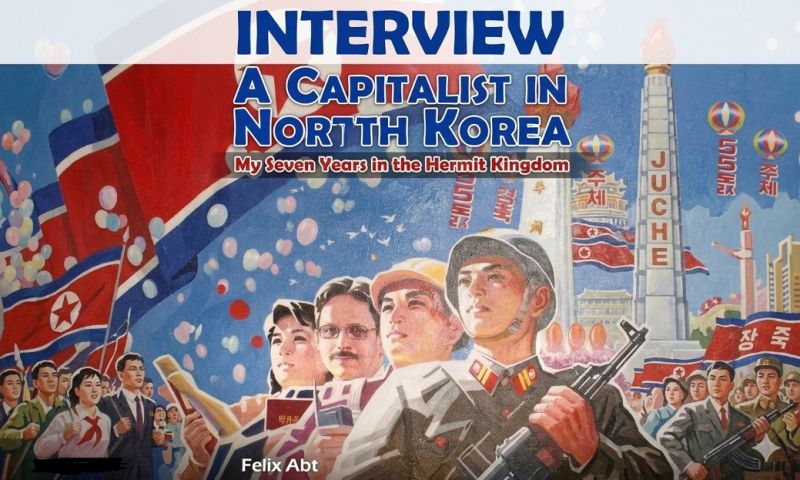
His seminal book, A Capitalist in North Korea: My Seven Years in the Hermit Kingdom (2014), paints a picture of North Korean society that is far removed from the monolithic caricature portrayed by the Western media.
After witnessing how UN sanctions were progressively strangling his joint ventures in the pharmaceutical and software sectors, Abt moved to Vietnam where he set up other businesses. From there, he closely observes the economic take-off of South-East Asia, promotes a multipolar vision of the world order and dissects the reality of Asia through independent analysis and platforms such as his personal blog on Substack.
Read the full interview
Pablo Sanz: Felix, thank you very much for agreeing to this interview. You were born and began your professional career in Switzerland, a country historically defined by its strict political neutrality and commercial pragmatism. How has this Swiss mindset influenced your approach to doing business in complex global markets?
Felix Abt: Switzerland’s currently high standard of living may distract from the fact that this small country of about 10 million people is wealthy precisely because it has had to be resourceful. It is landlocked, with no access to the sea, and has few natural resources such as metals, minerals, or energy. Like North Korea, it is also mountainous, with only a relatively small portion of its territory suitable for agriculture. Switzerland therefore cannot feed its population and has to import a substantial share of its food.
The country could survive only by creating and specializing in high-value niche products and services, exporting much of what it produces to earn the hard currency needed to pay for its many imports—from food and energy to metals and minerals. Switzerland consequently exports almost 80% of its GDP.
Against this macroeconomic backdrop, it was logical that my professional career commenced within smaller, export-driven Swiss enterprises. One firm specialized in the manufacture of packaging machinery, while the other produced roller shutters integrated with electronic security systems. Having entered the field as an export specialist, I subsequently transitioned into the role of export manager, directing the company’s global trade operations.
Personally, I was fascinated by the history and cultures of the countries I dealt with. Switzerland’s neutrality and lack of a colonial history—something I have always been grateful for—shaped my mindset. I believed it was important to listen to and learn from the countries I did business with rather than pass judgment on them. I also believed that the people of sovereign countries should, without foreign interference, be free to decide their own fate.
I never considered myself merely a salesperson, but rather a problem solver: someone who helped customers overcome challenges, advance their businesses, and become more prosperous. In a genuine win-win situation, their success also contributed to the growth and prosperity of the companies I worked for.
Pablo Sanz: Before your arrival in Pyongyang, you held senior management positions with multinationals in Africa, Europe and other parts of Asia. During those years of global expansion in the 1990s, when did you first begin to sense that the world’s macroeconomic centre of gravity was shifting from the West to the East?
Felix Abt: I sensed the beginning of this shift in the 1980s, with the emergence of the so-called Asian Tigers: Singapore, Malaysia, Thailand, Indonesia, and Taiwan. These rapidly developing Asian economies successfully pursued export-led growth, capturing an increasing share of the global manufacturing base—well before China joined the process after undertaking far-reaching economic reforms of its own. And remember, China’s accession to the WTO, which proved particularly important, came only in 2001.
The Asian model emphasized exceptionally high savings and investment rates, education, infrastructure, and industrial capacity. I watched how investment, domestic savings, education, urbanization, abundant labor, trade, and foreign investment became the major drivers of this transformation.
Initially, the East grew by manufacturing for the West, as Western companies transferred production capacity to Asia in search of lower production costs and access to potentially enormous emerging consumer markets.
Then the East became a huge consumer market in its own right. And now, increasingly, Asia is not merely producing and consuming—it is generating capital, technology, infrastructure, companies, and innovation.
To me, there was a particularly interesting historical parallel: the export-oriented mindset that had been almost existential for a small, resource-poor country like Switzerland increasingly became characteristic of the emerging Asian economies as well. They built prosperity by specializing, exporting, accumulating capital, and continuously moving into higher-value products.
In 2002, you arrived in North Korea with the task of leading projects for ABB. In your book, you detail surprising milestones that contradict the narrative of total isolation, such as the introduction of Western-style menus, debit cards and the first business schools. How did the North Korean technocracy react to free-market concepts such as cost optimisation or advertising?
When I arrived in North Korea, the country was just emerging from a deep crisis that had begun in the 1990s. The Soviet Union, its largest trading partner and benefactor—providing, among other things, subsidized energy—collapsed in the early 1990s. Parts of the DPRK economy had been well integrated into the broader economic system it shared with the Soviet bloc, and the collapse of that system caused a severe economic contraction.
In the second half of the 1990s, catastrophic droughts and floods compounded the crisis. These natural disasters not only deepened the economic contraction but also triggered a severe food security crisis. Harvests were devastated, leaving the country unable to feed its population. A famine ensued, though the death toll was likely in the hundreds of thousands rather than the millions frequently cited in Western media.
What is less well known is that the mountainous North has historically suffered from periodic famines. The flatter, warmer South had traditionally served as the agricultural "rice bowl" for the entire peninsula. When U.S. officials arbitrarily drew a line across the map to divide North and South Korea at the end of World War II, the North was permanently severed from its primary food supply. This vulnerability was brutally exploited during the Korean War, during which the U.S. Air Force systematically bombed dams and flooded fields, inducing widespread starvation. They targeted virtually everything that moved; as one elderly North Korean woman who survived the horror told me, even livestock like pigs and chickens were bombed. The commander of the U.S. Strategic Air Command at the time later admitted that their campaign had killed roughly 20 percent of the North Korean population—an act of destruction on a genocidal scale.
The dominant Western narrative, however, goes beyond inflating the casualty figures of the famine in the 1990s. It frequently asserts that the North Korean leadership was indifferent to the suffering, or even deliberately weaponized the starvation. My firsthand experience contradicted this claim. The leadership was not indifferent to the plight of its citizens; rather, it actively and repeatedly appealed to international organizations and foreign governments for urgent food and medical assistance.
When I arrived in Pyongyang and settled there, there were still many foreigners working for UN aid organizations and NGOs. North Koreans had become accustomed to receiving humanitarian assistance, and at one point the government itself publicly acknowledged that the prolonged flow of aid had created a culture of dependency.
Initially, the North Koreans I dealt with assumed that I, too, represented some kind of charity. This led to interesting discussions when I explained that I represented investors who were prepared to establish a modern factory—but on the condition that it would operate profitably and generate sufficient returns to repay the investment within a reasonable period.
I also argued that such an enterprise could prosper only if the necessary market mechanisms were created: the company needed to be able to promote its products, find customers, compete in the marketplace, and advertise—something that was still illegal when I arrived.
You co-founded the Pyongyang Business School. What was the profile and ambition of the North Korean executives attending your classes? Did they genuinely believe in a hybrid model similar to that of China’s ‘Special Economic Zones’?
This shifting macroeconomic environment meant that factories and other businesses were increasingly left to operate on their own. The centrally planned economy was beginning to transition, at least in part, toward a mixed economy in which factory managers were no longer simply given orders specifying what to produce and in what quantities. They increasingly had to identify customers, determine what products those customers wanted, and produce them profitably.
Managers of state-owned companies therefore had to acquire the skills necessary to ensure that their businesses could survive and prosper—and ideally, in the not-too-distant future, follow their East Asian counterparts and successfully export part of their production.
Their training focused on several core pillars. First, they required a firm handle on finance, controlling, and accounting to make data-driven decisions. Second, supply-chain management skills were needed to source inputs and keep production cost-effective. Third, they had to master human resource management to unlock the talent of their workforce. And fourth, they needed modern marketing skills to understand consumer demand and actively build markets for their products.
This real-world need drove my decision to found the Pyongyang Business School for postgraduate business executives and senior economic officials. I was frustrated by watching highly paid aid workers perpetuate a cycle of handouts that actively prevented necessary reforms. I believed a better approach was to give factory managers the actual skills to get the economy back on a growth track, creating real jobs and sustainable income for millions.
At the time, the North Koreans did appear to believe that a hybrid economic model, drawing in part on China’s experience with Special Economic Zones (SEZs), could provide a way to introduce market mechanisms without abandoning the broader state-directed system.
China’s SEZs had offered a particularly interesting example: rather than liberalizing the entire economy at once, Beijing created geographically limited areas where foreign investment, market-oriented management, international trade, and other economic reforms could be tested under preferential rules. The World Bank has described these zones as important testing grounds for market institutions, foreign investment, technology transfer, and modern management practices.
North Korea pursued a functionally comparable strategy in 1991 via the creation of the Rason Special Economic Zone, located at the geopolitical juncture of the northeastern border with China. Under this initiative, Rajin and Sonbong were designated as an experimental jurisdiction designed to facilitate foreign direct investment and transnational commerce. The macroeconomic objective was to establish a liberalized economic enclave that could absorb foreign capital and technology, generate hard currency reserves, and catalyze trade, thereby fostering localized development while maintaining the integrity of the broader state-planned economy.
For me, Rason was significant because it demonstrated that the thinking in Pyongyang was not necessarily limited to preserving the existing system unchanged. There was an awareness that elements of the East Asian development experience—particularly export-oriented manufacturing, foreign investment, and market-based business practices—could potentially be introduced selectively and experimentally. In that sense, the concept resembled the logic behind China’s gradualist approach: rather than changing everything at once, create limited spaces in which new economic rules can be tested, learn from the results, and potentially expand what works.
The crucial difference, of course, was that China’s SEZs became powerful engines of a much broader transformation, whereas North Korea didn’t allow its experiments to develop into a comparable nationwide reform process.
In the mid-2010s, legitimate joint ventures in which you were involved — specialising in essential medicines such as Pyongsu, software and textiles — went bankrupt due to international UN sanctions backed by the US administration. Do they hinder internal reform or further isolate the civilian population?
The sanctions—particularly those imposed after North Korea’s first nuclear test in 2006—severely affected both domestic companies and foreign-invested joint ventures like the ones I was running. While these enterprises did not necessarily go bankrupt, many gradually deteriorated, limping along without the means to maintain normal production, quality, or safety standards. They could no longer reliably import spare parts, modern machinery, or even essential raw materials.
The consequences were particularly troubling in industries where product safety depended on regular laboratory analysis. Pharmaceutical and food-processing factories, for example, required laboratories to test raw materials and finished goods for contamination and other safety risks. Yet, North Korea stood alone as the world's only country facing the enormous hurdle of being completely barred from importing the essential chemical reagents and laboratory supplies needed to conduct these routine tests—procedures that constitute standard practice virtually everywhere else in the world.
The resulting paradox was striking: sanctions intended to pressure the political leadership instead undermined the ability of ordinary companies to maintain basic manufacturing and safety controls. Consequently, pharmaceutical and food manufacturers were stripped of the tools necessary to verify the safety of their products, exposing ordinary North Korean patients and consumers to severe, entirely avoidable health risks.
Your second book, A Land of Prison Camps, Starving Slaves and Nuclear Bombs? (2022), directly challenges the lenses through which the West judges certain countries. Why do you think the major international media tend to overlook the commercial dynamics or the everyday life of societies under socialist or non western regimes?
The Huffington Post was a notable exception among major media outlets. Its headline, “Business As Reform in North Korea,” captured the argument I was making. In my interview with the paper, I explained that foreign businesses could expose North Koreans to new ideas, international standards, and alternative ways of doing business.
Much of the mainstream media took an intellectually lazy—and fundamentally dishonest—route, writing off business people like me as regime enablers. They never bothered to ask a basic question: how much tax did we actually pay to the DPRK? Had they asked, the answer would have exposed the flaw in their logic: it wasn't even enough to buy a rocket, let alone fund a nuclear weapon.
On your blog and in online opinion pieces, you are often very incisive in the criticism of what you call the ‘hypocrisy of US hegemony’. What fundamental differences do you see between the projection of US power and China’s geopolitical influence at a commercial level?
In a recent Financial Times article, investor and billionaire Ray Dalio claimed that China is reviving a tributary system in Asia, suggesting that Beijing uses economic coercion to bring its neighbors into line.
However, Dalio and other Western commentators, who are largely uneducated in Chinese history, often portray the historical tribute system as something similar to medieval European feudalism: smaller states paid tribute to China in exchange for protection, while China exercised political hegemony, supposedly supported by coercive force.
This constructed image is false.
The traditional system was based less on extracting wealth than on exchanging recognition for material benefits. Tributary states presented largely symbolic gifts, while the Chinese court often rewarded them with goods, payments and valuable trading privileges. The underlying logic was captured by the concepts 得名 (dé míng)—China gained prestige and legitimacy—and 得实 (dé shí)—tributary states gained tangible economic benefits.
Under the Ming, this principle was expressed as 厚往薄来 (hòu wǎng bó lái): “Give generously, receive modestly.” China deliberately gave more than it received because the objective was not profit maximization but the maintenance of a stable regional order centered on China.
The system could be remarkably lucrative for participants. Envoys presented local specialties and symbolic gifts and received silk, porcelain, tea, silver and other valuable goods in return. More importantly, tribute missions provided access to trade and, at times, to markets that were otherwise heavily restricted. So valuable were these privileges that people attempted to exploit the system by inventing countries, forging credentials, or obtaining foreign titles and posing as overseas envoys.
Japan provides a particularly revealing example. Rival Japanese factions competed fiercely for the right to conduct official trade with China, eventually contributing to the violent Ningbo Incident of 1523. The dispute was not over who would submit to China, but over who would control access to the highly profitable Chinese market.
This matters when considering the modern analogy.
China today certainly uses its enormous economic weight to influence other countries through trade, investment and market access. It can also withdraw or restrict those benefits when political relations deteriorate. But that is different from assuming that China is simply recreating a supposed coercive imperial hierarchy.
The historical system worked largely because participation was rewarding. Its most important “stick” was not military conquest but exclusion from the benefits of access to China.
The modern equivalent could therefore be summarized simply: The carrot is access to trade and investment. The stick is taking away the carrot.
This also explains why China's domestic consumption matters strategically. If China's economic relationships are to remain attractive, its partners must continue to see tangible benefits from engaging with its economy. Persistent trade imbalances can eventually undermine that attraction.
So if there is a modern “tributary system” emerging in Asia, I would describe it less as an empire forcing neighbors into submission than as economic gravity pulling countries toward the world's largest market and manufacturing power.
And this is precisely why I think the historical analogy is worth examining more carefully. Rather than simply asking whether China is coercing its neighbors, we should ask how Chinese statecraft has historically responded to external pressure—and why its strategic behavior can sometimes appear very different from Western expectations.
I explore that deeper historical pattern in my article, “Under Siege, the Turtle Hardens Its Shell: China’s Strategy of Calculated Retreat and Future Rise—A Civilizational Reflex Forged Over 4,000 Years.”
You currently live in Vietnam, a country that has managed to combine a one-party system with formidable economic growth and highly pragmatic diplomacy. What are your thoughts on Vietnam’s thriving economy? Is the Vietnamese model the example Pyongyang should follow in order to integrate into the global economy?
Western democracies present themselves as paragons of political freedom and popular representation. Yet behind this façade lies a sobering reality: power is increasingly concentrated in the hands of a small, ultra-wealthy elite—an arrangement more accurately described as oligarchy or plutocracy.
Political processes are heavily influenced by powerful lobby groups, major corporations, and the media networks intertwined with them. Consequently, many citizens feel politically alienated and powerless. For instance, while a majority of the population rejects endless wars—preferring to see those trillions invested in infrastructure, education, and affordable healthcare—their concerns fall on deaf ears. Despite a formal freedom of choice, trust in public institutions is dwindling as social inequality continues to widen. While China has seen the emergence of the world’s largest middle class, middle classes in the West are eroding, leaving millions of Americans and Europeans struggling to make ends meet and put food on the table.
In contrast, countries such as Vietnam and China pursue a style of government that is less focused on formal procedures and more on concrete results for the general population. Both states—led by formally communist parties—rely on hybrid systems that combine elements of a market economy with strategic state planning. Competition is actively encouraged, while cartels and monopolies are regulated to safeguard consumers and foster innovation.
State planning focuses on key areas such as infrastructure, research and development, education, and healthcare, with positive spillover effects for the private sector. Companies benefit from modern infrastructure, a better-qualified workforce, and lower healthcare costs, which further boosts economic efficiency.
Sure, these countries also have to struggle with corruption and the undue protection of powerful individuals, which contravenes the laws that are supposed to serve justice for all. But even these pales in comparison with the “legalized” corruption of the American political system, where wealthy individuals and corporations can exert enormous influence over politicians through political action committees and virtually unlimited campaign spending.
The result in China and Vietnam has been economic and social progress that stands out internationally for its speed and inclusiveness. Hundreds of millions of people have been lifted out of poverty, and the foundations for sustainable growth have been systematically strengthened—not through deregulation and market fundamentalism, which has contributed to a huge shift of wealth in the United States away from the lower classes and toward the 0.001%, but through governance focused on the common good.
Ultimately, emulating the Sino-Vietnamese model would provide North Korea with a powerful blueprint for rapid development and long-term prosperity.
With the rise of the BRICS bloc, the gradual de-dollarisation and the consolidation of China’s Belt and Road Initiative, the transition towards a multipolar world seems undeniable. How do you assess the West’s efforts to adapt to this new global context?
The importance of the BRICS bloc appears to be overstated. Just like the European Union—which was a promising project when it focused on creating an economic union, before evolving into an increasingly dysfunctional economic-political-military behemoth—BRICS is a heterogeneous group of nations with vastly different, and increasingly diverging, interests and political systems.
Today, the EU is largely glued together by the Ukraine project—a campaign calculated to isolate, weaken, or destroy Russia. Kaja Kallas, the EU’s top diplomat, even went so far as to suggest that a true victory should involve breaking up Russia into smaller nations. It is a profound irony: Europe has alienated its largest and most critical neighbor, a country whose affordable energy fed European industrial growth for decades until political elites chose to cut the lifeline. Today’s leaders are simply walking a route mapped out by the old grand strategies of Halford Mackinder, Lord Ismay, and Zbigniew Brzezinski.
The playbook is indeed over a century old. Mackinder warned that Russia sat atop the "Heartland" of global power and had to be contained at all costs. Lord Ismay, NATO’s first secretary general, sharpened this into NATO’s founding mission: "to keep the Russians out, the Americans in, and the Germans down." By the late 1990s, Brzezinski—having advised five U.S. presidents—updated this chessboard for the modern era. In his book The Grand Chessboard, he delivered the ultimate directive: weaponize Ukraine as a geopolitical pivot to keep Russia down.
In doing so, the current European leaders are simply executing an old Anglo-American playbook. They act not just out of ideological blind spots, but as direct war beneficiaries—all at the expense of the wealth and well-being of ordinary European citizens, who have no say in the matter.
BRICS faces its own problems. Its diversity makes it difficult to turn into a cohesive political or economic bloc, while Western interests are also working to exploit its internal differences and prevent it from developing into an effective counterweight to US global hegemony and its system of US-aligned vassal states.
Nevertheless, the trend toward de-dollarization cannot easily be stopped. Even so-called American allies have realized that Washington can and will use the dollar’s status as the world’s reserve currency as a weapon against them if they do not “behave.” Although the US is doing everything it can to prevent a multipolar world from emerging, its financialized economy, with much of its industrial base hollowed out, is facing growing constraints. One manifestation is its declining ability to produce sufficient arms and ammunition to support multiple conflicts simultaneously, as demonstrated by its inability to adequately supply the wars in Ukraine and the Middle East with air-defense systems, weapons systems, and ammunition.
The rivalry between the United States and China has also evolved beyond economics and geopolitics. It is increasingly a contest between competing visions of political order—between Chinese meritocracy and Western oligarchy or plutocracy. Unlike the United States, whose foreign policy has often been characterized by efforts to promote or impose its political and economic model internationally, China presents itself as an advocate of national sovereignty, civilizational diversity, and the right of every nation to choose its own path of development without external interference.
Through its Belt and Road Initiative, which helps countries develop modern infrastructure and opens new trade opportunities, China backs this approach with investments worth billions of dollars.
The outcome of this contest will not only determine which model enjoys greater international legitimacy but will also shape the character of the emerging world order. Given the economic growth of the Global Majority and the waning political influence of the West, this order is likely to shift away from the dominance of a single hegemonic power toward a multipolar system in which influence is more evenly distributed and no single nation can unilaterally dictate the rules to others.
At the same time, increasing tensions, profound political instability, and widespread violent unrest in the West, triggered by millions of disaffected citizens, are to be expected.
The era of unchallenged Western dominance is nearing its end. The future is likely to favor nations that earn legitimacy through competence and shared prosperity, maintain stability through sovereignty, and expand their influence through cooperation—rather than ideology, extreme wealth concentration, coercion, or hegemonic pretensions.
Against a backdrop of growing tensions in the Indo-Pacific, do you think that South-East Asia will manage to maintain its strategic autonomy, or will it be forced to choose sides between Washington and Beijing?
The South China Sea is less about trade, fishing, or oil than about China’s strategic vulnerability and nuclear deterrence.
Beijing views the South China Sea as a potential strategic “bastion” for its nuclear-armed ballistic-missile submarines. Unlike the relatively shallow Yellow and East China Seas, the central South China Sea reaches depths of more than 4,000 meters, offering submarines far greater opportunities to evade detection. Because China maintains a no-first-use nuclear policy, a survivable second-strike capability is crucial to its deterrence.
As China faces an existential “Malacca Dilemma” it depends heavily on maritime routes through the South China Sea for energy, food, and trade, leaving it vulnerable to blockade in a major conflict. Beijing therefore has an incentive not only to keep these waters open but also to develop the military capabilities necessary to protect them.
From this perspective, China’s extensive island-building and militarization takes on a different meaning. Airfields, radar installations, ports, and other facilities on the disputed reefs can provide surveillance and air and naval coverage over the surrounding waters, helping protect the deeper submarine operating areas below. This can be compared with the Soviet Union’s Cold War practice of creating protected maritime bastions for its nuclear submarines.
Unsurprisingly, Western commentators interpret these measures as Chinese expansionism or coercion, when they can be understood as a defensive response to China’s strategic vulnerability and the US military encirclement of China. The United States, meanwhile, views Chinese efforts to control or militarize the region as a challenge to its hegemony in Asia and justifies its own military presence under the pretext of protecting freedom of navigation—even though China, rather than the United States, is far more dependent on and heavily engaged in trade through the South China Sea.
So Beijing sees itself as securing vulnerable approaches and ensuring that its nuclear deterrent survives a potential attack, while Washington and its allies interpret many of the same measures as evidence of Chinese “expansionism.”
These disputes over reefs, islands, and maritime boundaries carry risks that far outweigh their local significance. China consistently signals a preference for peaceful, bilateral negotiations with its neighbors. To maintain perspective, it is worth noting that China has never initiated a war against Japan. Furthermore, its last military engagement—the brief, one-month conflict with Vietnam in 1979—was not a war of conquest or regime change. Instead, Beijing framed the intervention strictly as a punitive action in response to Vietnam’s invasion of Cambodia and its ousting of the genocidal Khmer Rouge regime.
Beneath the surface lies a contest over submarine warfare, nuclear deterrence, China’s strategic vulnerability, and the future balance of power in Asia. If China has its way, its disputes with its neighbors will ultimately be resolved peacefully. I would expect that, in the end, a pragmatic approach could lead China and its neighbors to jointly exploit the resources of the sea—an outcome that would serve their mutual interests. The United States, however, will undoubtedly do its utmost to prevent such an accommodation from emerging.
Looking back on your extraordinary career, from the polished offices of Swiss multinationals to the factories of Pyongyang and your current life in Vietnam, what is the fundamental lesson that the political and business elites of the West still refuse to grasp regarding the future of Asia and the new multipolar order?
The white elites of the United States and their European cousins—who violently settled America and other parts of the world, caused the destruction of indigenous peoples, and kidnapped millions of Africans to force them into slavery and brutal mistreatment on their plantations—went on to wage wars around the globe in pursuit of hegemony and domination.
They will never willingly accept the rise of non-Western powers in Asia and elsewhere. However, their self-defeating policies—endless wars, interventionism, and the concentration of wealth in the hands of a tiny oligarchic elite—will eventually undermine the system itself, creating the conditions for a more genuinely multipolar world.
Thank you very much for sharing your thoughts with Frontiere.
«A Capitalist in Pyongyang and the New Multipolar World»