


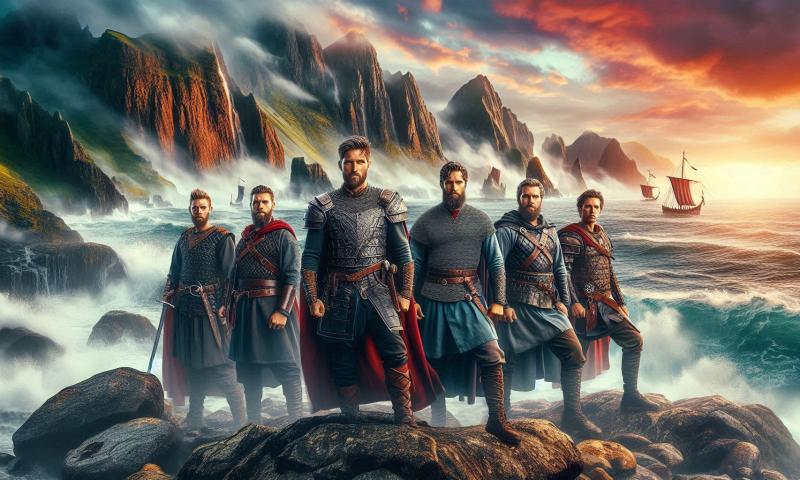
Unexpected Warriors: Scandinavia’s New Assertive Posture






On November 21 former Finnish Prime Minister Sanna Marin, with reference to the newly proposed 28 points peace plan for Ukraine, wrote on X (the spelling has been preserved as in the original):
“The ”peace plan” for Ukraine is a chatastrophy not only for Ukraine and it’s citizens but for all of democratic world. If we repeat the mistakes from the past such as showing weakness and ignorance in 2014 when Russia annexed Crimea, we will find only more aggression and conflicts ahead of us. The authoritarian mindset understands only strength and deterrence.”
former Finnish Prime Minister Sanna Marin
The uncompromising posture expressed by the former Finnish Prime Minister, who left office in 2023, well summarises the attitude adopted by Finland and other Nordic countries in the context of the Ukraine war.
Marin had enjoyed striking a tough posture before. “The way out of the conflict is for Russia to leave Ukraine. That's the way out of the conflict”, Marin told journalists in 2022.
Finland ended eight decades of neutrality when it joined NATO in the spring of 2023. NATO rejoiced at Finland joining NATO in 2023 and NATO social media channels regularly post ecstatic content on the mythical Finnish quality of sisu, a particular Finnish word that could be translated as toughness or endurance, always in the context of an existential fight against Russia. Sweden too abandoned neutrality, a foreign policy posture it had adopted for two centuries, to join NATO in 2024.
In February this year the newly reelected US President Donald Trump reached out to Russia’s President Vladimir Putin in the first of several bilateral talks between the US and Russia. For many the rekindling of diplomacy seemed to offer the prospect of peace for Ukraine. However, Europe felt snubbed and reacted furiously, rejecting diplomacy as capitulation to Russia. The Danish Prime Minister Mette Frederiksen, in a striking statement, said that “for Ukraine peace may be more dangerous than war”. Denmark has been one of the largest providers of military aid to Ukraine, with 10.5 billion dollars, just after Germany and the United Kingdom, a massive contribution considering the size of the Danish economy.
From peaceniks to warriors
For decades the countries of Scandinavia were regarded as stable, peaceful states. Sweden maintained a centuries-long tradition of neutrality. Denmark and Norway were two of the 12 founding members of NATO in 1949 but still projected an image of restrained foreign posture and a capacity for diplomatic balancing. “Norway previously had (until 2022) a policy of not sending weapons to countries at war (as it escalates and can make us a participant), and our country used to advocate for diplomacy and negotiations as the path to peace”, pointed out Norwegian professor and political scientist Glenn Diesen in an illuminating analysis published under the title “How Peace-Oriented Norway Learned to Stop Worrying and Love War”. Norway has contributed 5 billion dollars in military aid to Ukraine, more than Poland, a country with a much larger population and a much stronger tradition of anti-Russian sentiment. “Norway has abandoned these policies and unified under the new mantra that “weapons are the path to peace”, and we have boycotted basic diplomacy with Russia for more than three years at a time when hundreds of thousands of young men died in the trenches”, observed Diesen, who has been much ostracised in his home country in recent years for allegedly promoting “Russian propaganda”.
Finland is not technically part of Scandinavia but due to its history, its cultural proximity and geographical continuity it is often included in the broader Nordic Scandinavian cultural and political area. The war in Ukraine has led to the re-emergence of a strong anti-Russian collective mood that latently permeated Finnish society at least since the Soviet-Finnish war of 1939. Stalin wanted to secure the border next to Saint Petersburg and demanded territorial concessions from Finland in November 1939, almost three months after the world had been shocked by Germany’s brutal attack on Poland that ignited World War II. In the end Finland lost 10% of its territory to the Soviet Union, but it proved a hard opponent for the Red Army. The memory and the mythology of the Winter War is still very present in Finland.
Ironically, until recently Finland was considered a viable model for the solution of the Ukraine problem, a model that Russia considered acceptable. Finland had allied with Nazi Germany and after the war instead of joining one of the two blocks in the Cold War it remained formally neutral. “Finlandisation” meant that Finland maintained autonomy while making concessions to Soviet interests in foreign policy, especially concerning its geopolitical and security decisions. In the context of Ukraine, some analysts suggested that a “Finlandisation” of Ukraine could have been a way forward — a neutral status between Russia and the West that would keep Russia satisfied while allowing Ukraine to preserve its sovereignty. For a time, this seemed a plausible compromise. But after February 2022 Finland, like much of Europe, rejected every sort of diplomacy with Russia and insisted that the solution to the Ukraine war would come from the battlefield in Ukraine. Finland sent Ukraine 3 billion dollars of military aid.
Denmark, Sweden, Norway and Finland combined contributed 26 billion dollars in military aid to Ukraine, more than Germany, Europe’s largest contributor (roughly 20 billion dollars), in spite of having a combined population of 27.6 million people, less than one third of Germany’s. The Nordic countries’ huge share of the bill is often overlooked in other Western countries but it has not gone unnoticed in Scandinavia. In a recent interview, Sweden’s foreign minister warned that Nordic countries can't keep taking on a disproportionate share of supporting Ukraine. “A few countries take almost all of the burden. That is not fair and it's not sustainable in the long run.”, she said, adding: “The fact that the Nordic countries, with less than 30 million people, provide for one-third of the military support that the NATO countries, with almost 1 billion people, provide this year... This is not sustainable. It's not reasonable in any way. And it says a lot about what the Nordics do — but it says even more about what the others don’t do.”
Stenergard argued that using frozen Russian assets would be the only realistic way to secure long-term, more even burden-sharing. She also noted that the EU has spent more on Russian energy imports since the full-scale invasion than on helping Ukraine.
Scandinavia’s shift was perhaps most clearly captured in the latest Nordic–Ukrainian Summit held in Iceland in October this year. Nordic leaders issued a joint declaration affirming their “unwavering commitment to Ukraine’s sovereignty, territorial integrity and security. Our comprehensive support for Ukraine is steadfast and will continue for as long as it is necessary”. Nordic leaders also insisted, rather ominously, that “Ukraine’s future place is in NATO. We will continue to support Ukraine on its irreversible path to full Euro-Atlantic integration, including NATO membership. We support a greater role for NATO in the coordination of security assistance and training and welcome the establishment of NATO Security Assistance and Training for Ukraine. We are convinced that Ukraine’s future membership will be of significant added value to the European Union and contribute to peace, stability and prosperity in Europe”.
The leaders of Sweden, Finland, Norway, Denmark and Iceland showed thereby a shocking lack of understanding of the structural geopolitical causes that led to the fratricidal war in Ukraine.
The Geopolitical Aspect
Geopolitics is not only about abstract alliances and diplomatic treaties. As the etymology of the word suggests geopolitics must take into careful consideration the hard realities of physical geography and natural resources too.
In the case of Russia and Europe, few geographic realities are as strategically consequential as the Danish Straits. Roughly 40 percent of Russian seaborne oil exports must pass through this narrow maritime corridor connecting the Baltic Sea to the North Sea and global markets. Geography has given Denmark an influence far beyond the size of its territory or population: whoever effectively regulates the straits holds a lever over Baltic maritime security. The 1857 Treaty of Copenhagen abolished the old Sound Dues and guaranteed tariff-free transit through Danish waters, effectively internationalising the straits for commercial navigation.
Relations between Russia and Denmark stretch back a millennium, shaped by a mix of rivalry, commerce, dynastic ties, and mutual strategic calculation. During the medieval period, Danish kings and Novgorod princes engaged in intermittent conflict over Baltic trade routes and influence among the Finnic peoples, but they also maintained periods of pragmatic cooperation. Denmark’s role as both a Baltic and North Sea power made it a natural interlocutor for Russia, whose access to the Baltic was historically fragile and often contested.
In the early modern era, Russia’s geopolitical trajectory inevitably collided with Scandinavian interests. The Great Northern War (1700–1721) fundamentally reshaped the region: Russia’s victory dismantled Sweden’s imperial status and established Saint Petersburg as a Baltic capital. Denmark remained formally an ally of Russia against Sweden. In the 19th century, Russia provided diplomatic support to Denmark during the Schleswig-Holstein question, valuing Denmark as a conservative monarchy and a potential counterweight to Prussia.
The broader Scandinavian world showed a similar ambivalence. Sweden’s historical rivalry with Russia was intense, but after 1809, and especially after 1814, Scandinavia gradually internalised a concept of “Nordic neutrality,” a balancing posture designed to avoid entanglement with great-power conflicts emanating from the East or West.
The Cold War era was a continuation of this balancing act, although Scandinavia was clearly more oriented towards the West. The era of Prime Minister Olaf Palme, who was Prime Minister in Sweden between 1969 and 1986, before being killed on a winter night in February 1986, was a classic example of attempts to normalise relations with both the West and the Soviet Union. Finland maintained pragmatic relations with the Soviet Union too.
But with the end of the Cold War came an era of intensified cooperation between NATO and the Nordic countries that had stayed neutral, even if this did not lead to immediate NATO membership. This historical trajectory matters because it sets the stage for one of the most puzzling and controversial episodes in contemporary Nordic geopolitics: the 2022 Nord Stream explosions. Here, the long history of Scandinavian caution, legalism, and strategic ambiguity suddenly confronts a high-stakes, modern security dilemma.
The Nord Stream pipelines — a critical conduit for transporting Russian gas to Germany under the Baltic Sea — were severely damaged in what most observers consider deliberate sabotage. The consequences were immediate and profound: Europe’s energy architecture was shaken; environmental risks surged; and speculation intensified over which state or proxy might have carried out such an audacious attack.
Yet the Nordic reaction has been strikingly muted. Sweden closed its investigation in early 2024, declaring that it lacked clear jurisdiction and could not prove Swedish territory or nationals were involved. Denmark soon followed, acknowledging that the explosions were “deliberate sabotage” but claiming insufficient evidence to proceed with criminal charges.
This collective reticence is difficult to square with the gravity of the incident. The blasts occurred in international waters, but within the economic zones of Denmark and Sweden. They targeted a major piece of European energy infrastructure. And they unfolded at a moment when the Nordic countries were dramatically redefining their security posture, supporting Ukraine, arming themselves, and positioning Russia as a principal strategic adversary.
The result is a paradox at the heart of Nordic security policy. These states are willing to rearm, to assume greater military responsibility, even to risk escalation with Russia — but they hesitate when confronted with a sabotage event that occurred in their own maritime backyard. The Nord Stream episode exposes a limit to the region’s new warrior posture: an unwillingness to confront certain politically sensitive questions when they cut too close to one’s own putative allies.
«Unexpected Warriors: Scandinavia’s New Assertive Posture»