


Trump-Putin Diesel Deal: When the Physical World Reasserts Itself


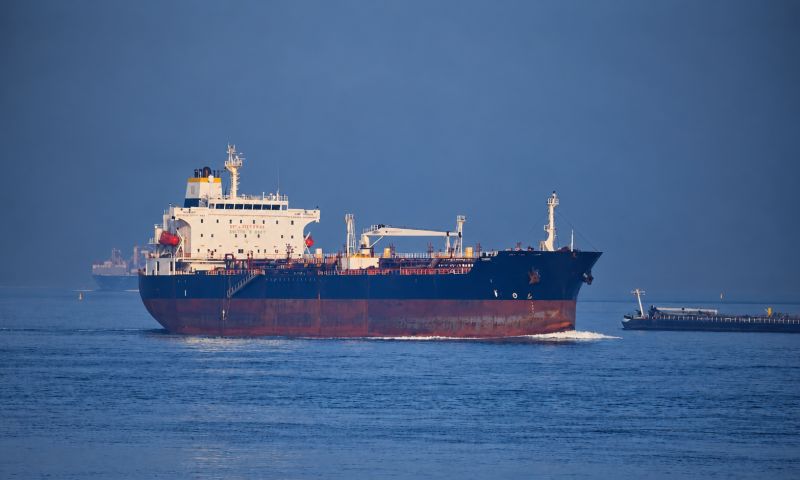
Three oil tankers loaded with Russian diesel are expected to arrive at U.S. ports in the coming days. They are carrying a total of approximately 140,000 metric tons of refined products and represent the first Russian shipments exempt from U.S. sanctions.
This agreement, reached on October 9 between Donald Trump and Vladimir Putin, is often interpreted as a symbolic gesture, with the U.S. president doing whatever it takes to curb rising energy prices that is hurting his electoral base ahead of the midterm elections.
For now, this “deal” does not appear to be affecting diesel prices, but it is triggering a whole series of ripple effects, most of them negative.
Implications of the Agreement
Legally speaking, a bipartisan group of senators has urged Donald Trump to cancel the agreement, arguing that it violates sanctions law. The arrival in U.S. ports of oil tankers subject to sanctions by the EU, the United Kingdom, and Canada is also creating numerous complications for U.S. maritime and port operators.
On the transatlantic front, the agreement puts Europeans in an awkward position and widens the rift between Brussels and Washington. Kaja Kallas insits that the United States remains Europe’s main ally. No one has forgotten the relentless pressure Donald Trump exerted on Brussels to halt all imports of Russian oil.
As for Kiev, it finds itself in an untenable situation. It must either continue to strike Russian refineries—at the risk of permanently alienating Washington—or preserve its relationship with the White House and passively endure attacks on its energy infrastructure.
Between Washington and Moscow, several other agreements now seems within reach. There is talk of lifting U.S. sanctions targeting the Russian sovereign wealth fund RDIF, granting general licenses to major Russian energy companies, and pressuring Europe to unfreeze Russian assets and resume gas imports.
How can such an agreement be explained if it creates so many domestic problems in the United States and undermines Washington’s relations with its historic allies?
The Hard Bifurcation
Craig Tindale offers perhaps the most coherent answer in The Hard Bifurcation. The Australian essayist and investor distinguishes between two worlds, each with its own logic and its own pace. There is the financial world, made up of prices, credit, and liquidity, and the material world, consisting of atoms and energy—in other words, inventories, factories, skilled labor, and logistics.
He explains that Western economies have lived for the past forty years under the illusion that these two worlds were evolving in perfect harmony. In a peaceful, frictionless world, capital could flow freely to the cheapest producer, and money could always be converted into whatever was needed.
According to him, we are living in a period where financial reality and physical reality are diverging, what he calls the “Hard Bifurcation”, and the latter is about to gain the upper hand over the former. The liquidity injected by central banks in a matter of seconds can no longer be instantly converted into factories, metals, ammunition, or energy. The physical world moves at its own irreducible pace. In the United States, it takes an average of 29 years from the discovery of a copper deposit to the start of production.
The paradox is this: the United States has never had so much capital, yet it has never had so little control over the materials needed to convert that capital into power. According to Tindale, 70% of strategic mineral production and 90% of rare earth refining fall outside the U.S. sphere of influence. Yet these materials are indispensable to the aerospace, energy, and artificial intelligence sectors. “The country possesses the money to buy the sword. It has lost the fire to forge it,” he summarizes.
In an increasingly fractured world, the laws of physics are reasserting themselves. Control over materials is becoming decisive. And the new weapons are strategic chokepoints, export controls, and the effectiveness of industrial policies.
Tensions in the Diesel Market
Diesel plays an important role in the global economy. Beyond road transport, it powers the agriculture, construction, and mining sectors, as well as maritime transport, industrial equipment, and heating systems.
In 2026, a series of factors has pushed the diesel market into shortage: disruptions at refineries, geopolitical conflicts, low inventory levels, and declining exports from major suppliers.
According to the U.S. Energy Information Administration (EIA), the average price of diesel in the United States stood at $6.18 per gallon as of October 12, up from $3.48 at the start of the year. Because diesel moves trucks, farm machinery and construction equipment, its rising cost feeds directly into consumer prices.
"I am worried on top of that for refined products because we are entering...winter season. Some parts of the world, where typically diesel demand goes high and several refineries are going through maintenance period,"said Fatih Birol, Executive Director of the International Energy Agency (IEA).
Refineries are a strategic link in the supply chain. They process crude oil into ready-to-use fuels. A disruption in refining can therefore create a shortage of finished products, even if crude oil remains available.
Traditionally, Russia has been one of the world’s leading exporters of diesel. But since July, its producers have been barred from exporting it. Moscow has extended this measure, for now, through October 31. Officially, the aim is to stabilize the domestic market following Ukrainian strikes on refineries.
In reality, Vladimir Putin is making the resumption of crude oil and refined product exports contingent on the lifting of Western sanctions, as he reiterated earlier this month at the Valdai Economic Forum.
Dollars alone no longer buy diesel
The agreement on Russian diesel clearly illustrates the logic described by Tindale. The United States has no shortage of dollars to buy diesel. What it lacks is diesel available in the right place at the right time, in a very tight global market. In this context, diesel can no longer be obtained simply by paying the market price. It now comes at the cost of major geopolitical concessions.
That is why analysts who highlight the small volumes traded between Moscow and Washington are missing the point. It is true that the 140,000 metric tons of diesel about to be delivered represent barely a few hours of U.S. consumption. But what matters is that the United States is seeking to open a new physical supply channel with one of the world’s largest exporters of refined products.
Washington seems willing to pay a high political price for it, even if it means upsetting its European allies, putting Kiev in an impossible situation and defying part of its own Congress.
This is the clearest sign that the physical world is regaining the upper hand over the financial world.
«Trump-Putin Diesel Deal: When the Physical World Reasserts Itself»