


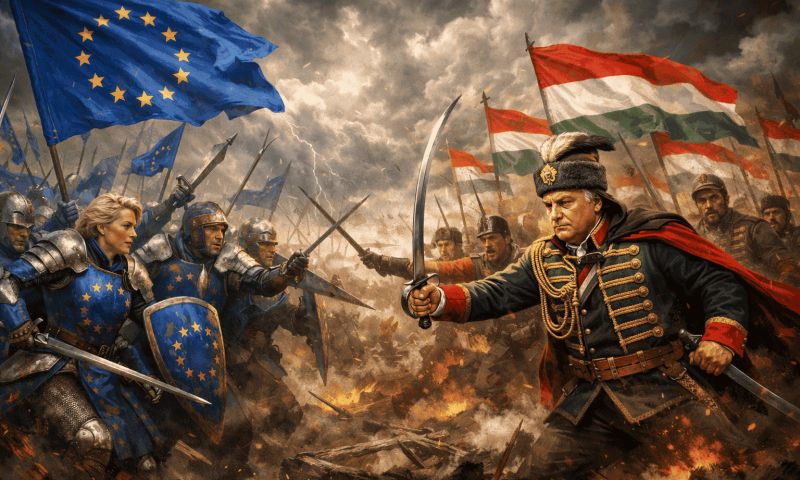
The unsavory battle over Hungary—driven by the European Union





Introduction
By definition, a battle is a major, decisive military engagement. Even though the focus here is on parliamentary elections, it is no exaggeration to describe this as a decisive, pivotal contest. The now-known election results and their consequences will have repercussions throughout Europe and likely beyond.
The EU is disregarding the principle of non-interference in internal affairs
In terms of size and economic power, Hungary does not fall into the category of countries capable of significantly influencing the course of events in Europe based on these metrics. This applies to countries such as Germany, France, or—albeit to a lesser extent—Poland. And yet, the parliamentary elections in little Hungary had practically the whole of Europe in a frenzy in the run-up to the vote. News reports from the past few days and weeks have shown that the governments of at least four countries were on high alert. These are Hungary, Serbia, Slovakia, and Ukraine. The reasons for this are highly varied.
But that is not all. The entire EU leadership, including the dominant powers of Germany and France, has been performing one wild dance after another. The hysteria that has broken out in Brussels has deep-seated causes. These causes are rooted in the undemocratic nature of the European Union as a political construct. In today’s extremely fragile international situation, this structure is producing further undemocratic consequences. These consequences, in turn, inevitably contradict all the principles of the EU political construct that are held so sacred.
It is precisely within this chain of causality that we must seek the motives behind the EU leadership’s behavior toward Hungary—a behavior that cannot be explained by “democracy” or “the EU”. It must have been a novelty in the EU’s long history of democratically illegitimate interference in domestic processes that the EU leadership as a whole positioned a state that glorifies and models itself on German fascism in order to influence the outcome of a parliamentary election in a democratically constituted EU member state with all the power at its disposal.
There are certainly examples of EU interference in elections, such as the 2025 Romanian presidential election, whose first round was initially declared invalid under pressure from the EU, yet six months later the second round was organized in such a way as to ensure the victory of the right candidate—the one with a genuine belief in the EU’s cause. Likewise, Maja Sandu’s rise to power in Moldova would have been unthinkable and impossible without the EU.
Could things have gotten any worse in Hungary? EU leaders did everything in their power to force through an outcome that benefits Ukraine—a non-EU country that glorifies German fascism—and clearly runs counter to the national interests of Hungary, an EU member state.
Let it be clearly stated here: Any interference by one country in another’s national elections is illegal.
Hungary opposes the war in Ukraine and supports energy independence and political self-determination
Victor Orban has been at the helm of the Hungarian government for 16 consecutive years, longer than any other sitting EU head of government. As the conflict in Ukraine threatened to erupt, he advocated for a peaceful resolution of all contentious issues, including through personal negotiations in Moscow. He repeatedly and emphatically reiterated his demands in this regard. After hostilities broke out in Ukraine, he continued his efforts and traveled to Moscow again, most recently in July 2024.
At the same time, the Hungarian government opposed all EU and NATO decisions that sought to involve Hungary in providing support to Ukraine beyond humanitarian measures.
To this day, Hungary under Orbán continues to purchase Russian natural gas and oil via existing pipelines and has repeatedly secured exemptions for its country within the EU, in part with the help of U.S. President Trump. In doing so—and he explicitly points this out—he is guided by Hungary’s national interests. Time and again, he has threatened to use a Hungarian veto during the annual renewals of EU sanctions against Russia, which must be adopted unanimously.
This assertive behavior by the Hungarian government is, in the eyes of EU leadership, an intolerable affront.
Hungary thus defied the EU’s official policy toward Russia—which prohibits any contact with Moscow and calls for economic and other sanctions—as well as its policy toward Ukraine, which has made unconditional military, financial, and economic support the norm.
EU leaders and Ukraine against Hungary
EU leaders have therefore long been searching for a way to force the recalcitrant Hungarian government to back down, and now believe they have found it in the combination of Ukraine and Peter Magyar.
Anyone who analyzes the events surrounding the interruption of energy supplies—oil and gas—via pipeline through Ukraine to Hungary and Slovakia can come to no other conclusion than the following: Ukraine interrupted the energy supplies on behalf of and at the behest of EU leadership, likely in coordination with NATO as well.
First, by destroying the gas compressor station on Ukraine’s border with Slovakia and Hungary. The Ukrainian government apparently found the claim that Russia was responsible so flimsy that it did not even attempt to use that tactic when oil supplies were disrupted. In that case, maintenance work was the method of choice.
Since the border region between Ukraine and Hungary, where the relevant technical facilities of the “Druzhba” oil pipeline are located, is populated by ethnic Hungarians, the Hungarian intelligence service was certainly able to provide its own government with a clear picture of the situation. Ukraine’s refusal to allow Hungarian on-site inspections is therefore all the more serious.
Consequently, the Hungarian government repeatedly and emphatically called on EU leaders to send technicians to Ukraine for an inspection. Formally, EU leaders agreed to the Hungarian demands, but without any political or other pressure—a clear political message to Budapest.
Hungary therefore had no choice but to conclude that Ukraine is acting on behalf of EU leadership. The behavior of the Ukrainian leadership is all the more striking and baffling given that the country itself has been receiving nearly 50 percent of its gas supplies from Hungary ever since it stopped accepting Russian supplies.
What's more, EU leaders, together with Ukraine, are calling on Hungary to make gas from Ukraine's own storage facilities available.
But the EU leadership’s support for Ukraine against Hungary alone is not enough. By massively building up Ukraine as a willing threat against Hungary—the Ukrainian rulers did not hesitate to threaten Hungary with Ukrainian military force—the EU leadership is not only attempting to influence events in Hungary in line with prevailing EU policy. It wants to set the record straight across the entire Eastern European region with the “right” election result in Hungary.
Hungary safeguarded its national interests
The loss of access to Russian oil and gas via pipelines running through Ukraine forced Hungary to seek an alternative solution to avoid further blackmail. This solution was found in cooperation with Serbia, at least for natural gas. Hungary now obtains its inexpensive Russian gas via Serbia, which is connected to Turkey’s TurkStream pipeline. Slovakia is now also being supplied with Russian gas via Serbia and Hungary, after the Ukrainian leadership denied gas transit to this country as well for EU political reasons.
Due to Ukraine’s openly hostile stance, the Hungarian government decided at the end of March to halt gas exports to Ukraine. Hungary subsequently withheld the volumes intended for Ukraine as a precautionary measure, since Ukraine has since also attacked the TurkStream pipeline, through which Hungary receives its gas from Russia via Serbia.
Victor Orban also announced that he would block the 90-billion-euro loan for Ukraine approved by the EU until the issue of oil supplies is definitively resolved to Hungary’s satisfaction. A massive blow to the regime in Kyiv.
In Ukraine, it is openly acknowledged that the money will last only until early May at the latest. Given this situation, the desperation of Zelenskyy and the EU is palpable.
Attempted bombing of the gas pipeline supplying Hungary via Serbia
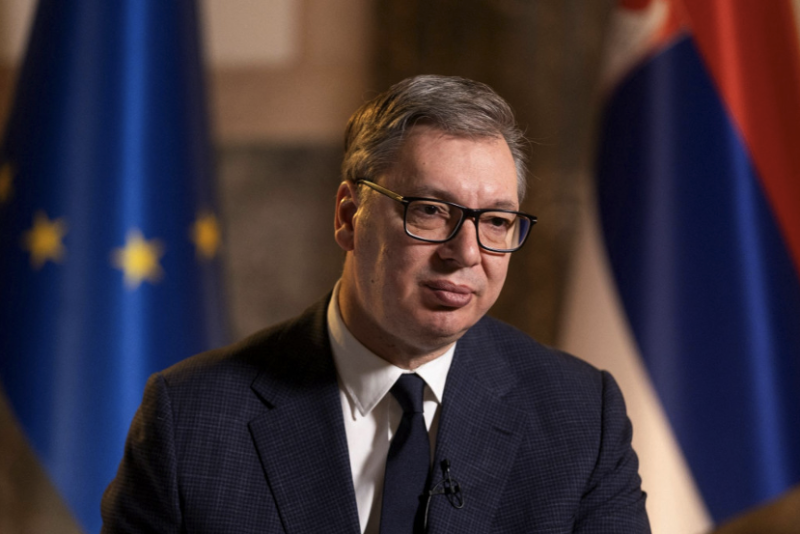
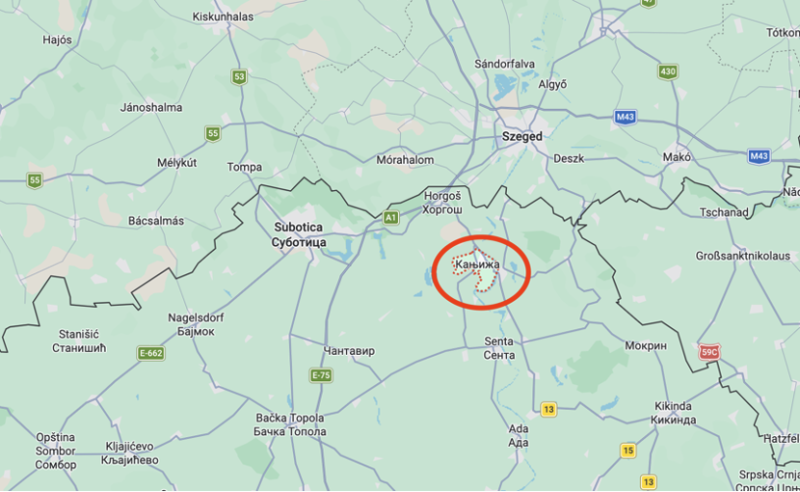
A few days before the election in Hungary in early April, Serbian President Vucic announced that an attempted bomb attack had been carried out on the gas pipeline that supplies Hungary with gas from Serbia. This is suggested by two backpacks filled with explosives that were found near the pipeline. The site where they were found, Kanzija, is located directly on the Serbian-Hungarian border and leaves little room for interpretation other than an attempt to disrupt gas supplies to Hungary.
The head of Srbijagas, Dusan Bajatovic, also shares this view:
“I assume this was not directed against Serbia. In my political assessment, it was directed against Hungary, since Serbia would not have been left without gas in such a case. The aim was to leave Hungary and Slovakia without gas, which would have had economic and political consequences, particularly in connection with the Hungarian elections.”
In Hungary, the National Security Council convened in response. As a result of the meeting, the Hungarian Army will now take control of the gas pipelines on Hungarian territory until further notice.
The fact that the heads of government of Hungary and Slovakia called for a resumption of dialogue with Russia and an end to sanctions in the wake of the oil and gas crisis artificially created by Ukraine is likely to have further fueled the EU’s drive toward a change of power in Hungary.
While officials in Serbia, Hungary, and Slovakia are trying to make sense of the situation, even the Serbian president’s statements about the discovery of explosives are being cast into doubt in the German media. There, one reads “...backpacks full of explosives were allegedly found in Serbia...” (Spiegel) or about “...a suspected discovery of explosives at a gas pipeline in Serbia...” (Bayrischer Rundfunk), which has nothing to do with neutral reporting.
The Campaign Finale
The only serious challenger to Prime Minister Orban, who has been in power until now, was Peter Magyar, a member of the European Parliament and chairman of the TISZA Party. In the German press, the conservative Magyar is not simply portrayed as the TISZA Party’s leading candidate. There was no doubt as to whom the sympathies lay with in this election. It was not about a possible victory in an election; it was about the downfall of Victor Orban, who is unpopular with the EU. “How Magyar’s supporters are being harassed in Hungary”, read the headline in the “Tagesschau,” for example. At the same time, every possible measure is being taken against the government, for example against Foreign Minister Szijjarto, who has been accused of having informed his Russian counterpart Lavrov about internal EU matters for years.
No evidence was ever provided to back up these unproven allegations. Nor was any to be expected. After all, this whole affair was not about Szijjarto, nor about Lavrov, nor even about the EU. It was solely about generating negative press against Hungarian Prime Minister Orbán in an election campaign fueled from outside the country.
Incumbent Orbán advocated above all for Hungary’s national self-determination: affordable Russian oil and gas, no uncontrolled migration as demanded by the EU, no military aid for Ukraine, no further funding for the war in Ukraine, and no EU or NATO accession for Ukraine. He stood by these demands even though the EU withheld a total of 35 billion euros in funding from Hungary over the years—against a GDP of approximately 215 billion euros—and did so de facto without any legal basis, solely for politically motivated reasons.
Hungary partially offset the loss of these funds by selling Russian energy resources to Europe. Russia indirectly supported the Orbán government in this endeavor by favoring the Hungarian company MOL over the Serbian state in the sale of the Serbian LUKOIL refinery in Niš, which was forced by the United States. This source of revenue is also likely to dry up for Hungary in the foreseeable future, especially since von der Leyen is already talking about a pan-European gas purchase.
Challenger Peter Magyar avoided all the major issues crucial to Hungary’s relationship with the EU and did not commit to any position on them.
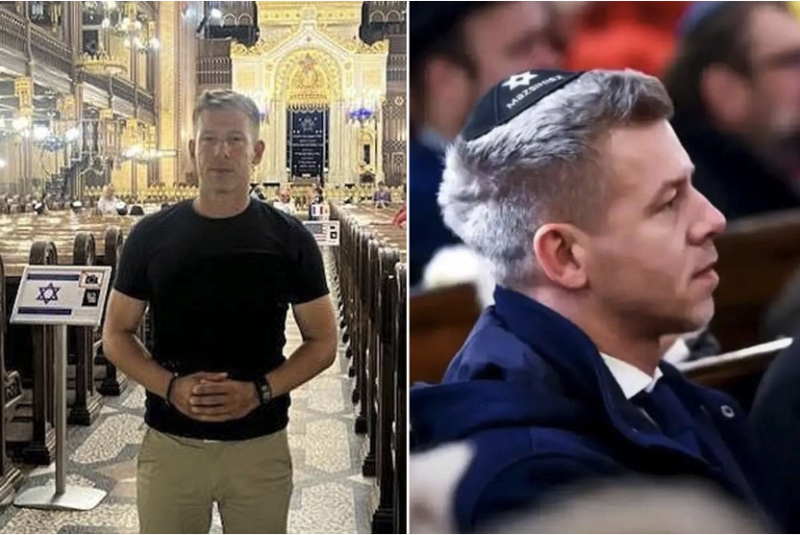
His campaign focused on one main issue: opposing Orbán. His wife, Judit Varga, served as Minister of Justice under Viktor Orbán until she resigned from her post in 2024. She wanted her resignation to be seen as a protest against the government’s controversial decisions. Her husband, Peter Magyar, used this resignation as an opportunity to distance himself from Viktor Orbán and FIDESZ as well.
These two points, along with a refusal to take a firm stance on the truly important economic and political issues—all combined with a commitment to the EU and NATO—were the cornerstones of Peter Magyar’s campaign. He was essentially playing the game of “wash me, but don’t get me wet.” With this approach, he is copying the tactics of recent election campaigns—for example, in Germany—which focused on personalities rather than substance.
The election winner's first remarks after the election
Given the points mentioned above, the unease in neighboring countries regarding the election outcome was understandable:
A victory for Orbán would have been a disaster for Ukraine. No money, no gas, no electricity (from Slovakia), no military aid, no EU membership. And this disaster for Ukraine would have acted as a catalyst in the already burning house that is the EU.
These prospects forced the EU to endorse and court the opposition candidate wherever possible, by any means necessary.
Peter Magyar emerged as the clear winner of the elections. Despite his comfortable two-thirds majority, he will have to proceed cautiously with regard to the legacy he has inherited from Orbán. The global energy market is in a dire state, making it practically impossible for him to do without Russian gas and oil. A victory with a handicap, so to speak, which he cannot ignore if he does not want to expose his country to an economic shock.
But the EU wants results, and it wants them immediately. It is linking the release of the aforementioned frozen 35 billion euros in aid funds to no fewer than 27 demands, as the Financial Times reports.
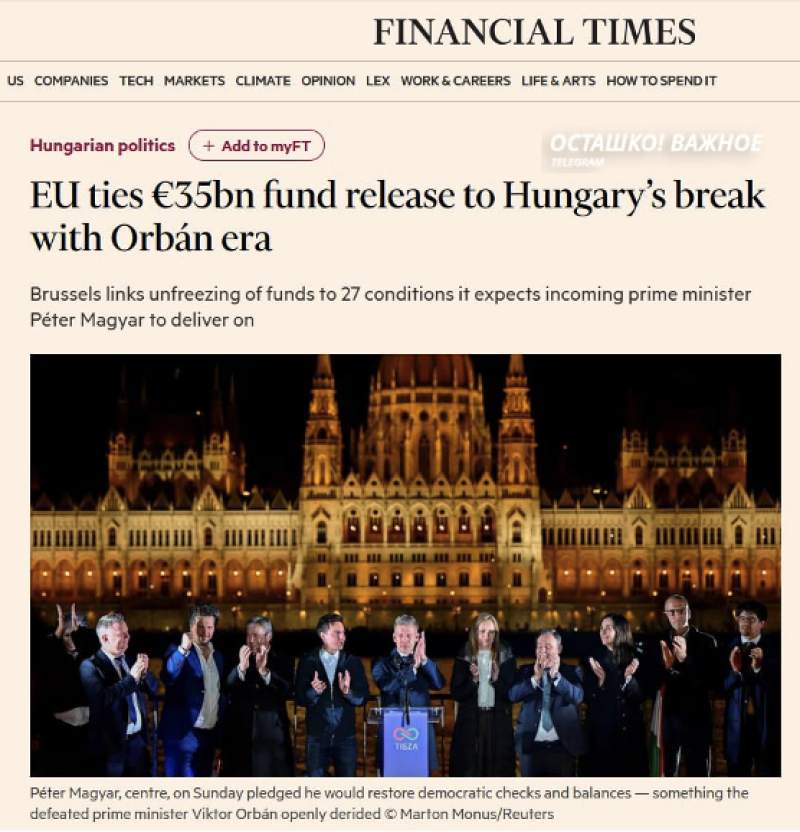
The focus is on releasing the 90-billion-euro loan for Ukraine that Orban has blocked and lifting the veto against the new package of sanctions against Russia.
Equally urgent is the demand that the Hungarian government conduct anti-corruption investigations into the Orban administration.
This is immediately followed by the demand for accelerated negotiations on migration issues. Brussels speaks quite openly of leverage in all of this. The Hungarian government is expected to bow to the EU’s pro-Ukrainian and anti-Russian policies.
All of these EU demands will have a noticeably detrimental impact on the lives of Hungarians.
Conclusion
Victor Orban is a politician who has rubbed EU leaders the wrong way—and not just them. He saw Helmut Kohl as his political role model, and his political style certainly reflects that. His departure will be felt—in Hungary, but also across the EU.
Election victories, coupled with a political and economic shift in direction, present the problem that the winner must take into account much of what was inherited from their predecessor, especially if the consequences of the intended shift will be clearly felt negatively by the population.
Peter Magyar had nothing to offer in his election platform other than “I am against Orbán.”
The election result will change Hungary. It will also change the EU. I see no advantage for either Hungary or the EU.
«The unsavory battle over Hungary—driven by the European Union»