


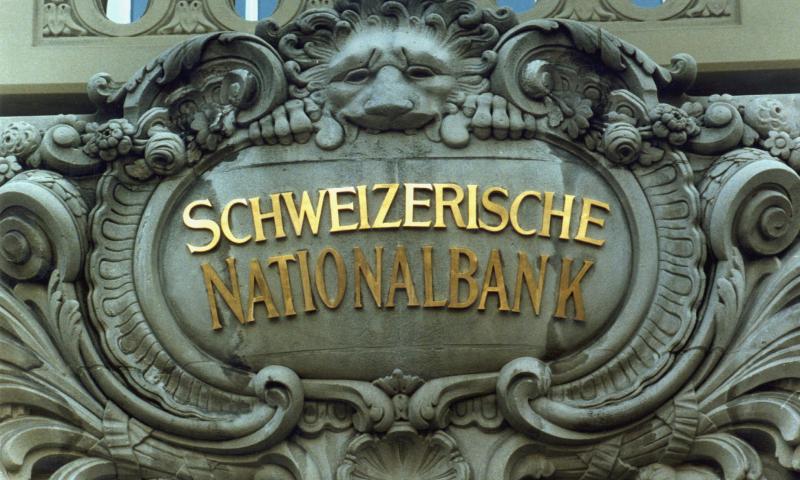
The Swiss National Bank is Gambling with the Swiss Nation's Wealth


The Swiss National Bank’s 2025 financial result looked solid on the surface, reporting a net profit of CHF 26.1 billion. Strip away its gold holdings, however, and the picture quickly reverses. The foreign-currency portfolio—the foreign bonds and equities that make up the bulk of the reserves—actually lost CHF 8.8 billion. It was the 1,040 tonnes of physical gold that produced a massive valuation gain of CHF 36.3 billion. At year-end, that gold was worth roughly CHF 115 billion, representing just 13 per cent of the CHF 852 billion in total currency reserves. A tiny fraction of the portfolio more than offset losses across all other asset classes and generated the entire reported profit.
The Chairman of the Governing Board is fully aware of this reality. At the SNB's general meeting in Bern on 24 April 2026, Martin Schlegel noted: "Last year's profit was driven to a significant extent by gold." He added that "it makes sense to hold a certain share in gold from a diversification perspective as well." Yet, in the same breath, he concluded: "We have no plans either to increase or to reduce our gold holdings."
This sentence reveals a profound misunderstanding of central bank risk management. The very asset that stabilized the balance sheet remains strictly capped, while the massive stockpile of foreign paper that continues to drain billions is left untouched. This contradiction exposes a complete disconnect from economic reality and the SNB's core mandate. National reserves serve as financial insurance, not as a speculative wager on equity markets. They exist so Switzerland can pay its bills and defend the franc when international markets or banking systems seize up. Running them to chase quarterly corporate earnings fundamentally inverts their purpose. Gold is nobody else's liability; it cannot be printed into worthlessness, and no foreign government can default on it.
Jurisdiction Settles the Argument
A foreign bond or equity is merely an entry in someone else's ledger, inherently subject to foreign courts and external political mandates. Recent history made this structural vulnerability brutally clear. In August 2021, Washington froze USD 7 billion of Afghan central-bank funds at the New York Fed. Six months later, Western governments froze roughly USD 300 billion of Russian state assets. Meanwhile, Venezuela's gold remains locked in the Bank of England by British court order. Conversely, Russia's gold held inside its own borders stayed completely untouched. Foreign decrees can freeze bank accounts, but they cannot seize physical metal that never left home.
European central banks have long been acting on this reality. Between 2013 and 2017, Germany repatriated 674 tonnes of gold from New York and Paris to Frankfurt, ensuring that more than half of its sovereign reserves sit securely on domestic soil. France went even further, repatriating its entire 2,437-tonne reserve to Paris. Both nations reached the same conclusion: holding national gold under foreign jurisdiction was a systemic exposure they simply did not need.
Where, then, does Switzerland stand? According to official figures, the SNB stores roughly 70% of its 1,040 tonnes of gold domestically, leaving the remaining 30% abroad—specifically 20% in the United Kingdom and 10% in Canada. In other words, over 300 tonnes of the Swiss people's wealth sit in foreign vaults. A large portion resides in the UK, the very nation whose central bank famously blocked Venezuela from accessing its sovereign wealth. For a fiercely neutral nation operating without formal military alliances, relying on foreign custodians to secure its core assets is a bizarre way to buy financial insurance. While the SNB, to its credit, keeps no gold in the United States, the assets held in Britain and Canada should come home immediately. Gold reserves are built for the exact day when geopolitical friendships are tested, and the Swiss people's wealth belongs entirely under Swiss jurisdiction, not under foreign goodwill.
How the Foreign-Currency Pile Was Built
To be fair to the SNB, its massive foreign holdings were not accumulated for their own sake; they are the structural legacy of currency policy. In September 2011, under Philipp Hildebrand, the central bank introduced a minimum exchange rate of CHF 1.20 per Euro to prevent a catastrophic overvaluation of the franc. To maintain this floor, the SNB printed Swiss francs and bought euros and US dollars on an unprecedented scale. These market interventions are the sole reason the bank's balance sheet swelled to its current size, turning temporary policy tools into a permanent mountain of foreign reserves.
Hildebrand resigned on 9 January 2012 after a controversial currency trade by his wife became public. His successor, Thomas Jordan, took over the chairmanship on 18 April 2012, having served on the Governing Board since 2007. For nearly three years, Jordan defended the peg. Then, on 15 January 2015, the SNB abruptly abandoned the minimum rate—a decision Bloomberg described that same day as an absolute shock to the markets. The Swiss franc surged instantly, erasing a massive portion of the bank's foreign asset values overnight. In the first half of 2015 alone, the SNB recorded a loss of CHF 50 billion, driven by CHF 52.2 billion in exchange-rate losses. By the end of the year, the total deficit stood at CHF 23 billion, consisting of a CHF 20 billion hit on foreign currency positions and a CHF 4 billion drop in the value of its gold holdings.
After 2015, the SNB maintained its aggressive market presence, primarily utilizing negative interest rates alongside ongoing foreign currency purchases. In 2023, however, it shifted into reverse, selling an unprecedented CHF 133 billion in foreign currency to shield the domestic economy from imported inflation. By 2025, interventions stabilized with modest purchases of around CHF 5.3 billion, leaving the central bank's foreign exchange reserves at CHF 710 billion by the end of February 2026.
While the sheer scale of these reserves was a consequence of defending the franc, the asset allocation within that pile was a deliberate choice made year after year by the Governing Board—and it is precisely this choice that warrants severe criticism.
An Unhedged Bet on Silicon Valley
The decision to transform these monetary reserves into a massive equity portfolio has resulted in a highly concentrated, unhedged bet on US equities. By mid-2026, the SNB's US stock holdings had climbed to a record USD 191.4 billion, spread mechanically across some 2,300 companies. Yet, this passive indexing approach has created an extreme structural vulnerability. Roughly a quarter of that entire American portfolio—exceeding USD 44 billion—is now piled into just five mega-cap tech titans: Nvidia, Apple, Microsoft, Amazon, and Alphabet.
The single largest of the SNB's American share holdings is Nvidia—the company at the absolute center of the artificial intelligence boom. Consequently, a Swiss pensioner who has never bought a single stock in his life is, through his central bank, one of the larger investors in Silicon Valley AI speculation. Nobody asked him. As my colleague Peter Hanseler stated bluntly in November 2022: "This turned the SNB into one of the largest hedge funds in the world." Four years later, this unhedged equity exposure has expanded to unprecedented heights.
The bank also holds roughly USD 700 million in Palantir, an allocation that is an ethical scandal in itself. Palantir supplies data-mining and targeting software to militaries, intelligence services, and police forces. In January 2024, it agreed a strategic partnership with Israel's Ministry of Defence to provide technology for "war-related missions" during the conflict in Gaza, and in 2025, the US Immigration and Customs Enforcement (ICE) commissioned the firm to build tracking systems for deportations. The SNB's own investment guidelines explicitly exclude companies that "seriously violate fundamental human rights." By holding this stock, the bank directly violates its own ethical mandate.
The Reality of the 'Slush Fund'
This portfolio behaves like a slush fund in the only way that matters to its owners: its financial results swing by tens of billions within markets it cannot control. The critical difference is that investors in an ordinary commercial fund actively choose to take on that volatility. The Swiss people never did.
The year 2022 demonstrated the danger of this strategy. The SNB lost CHF 132.5 billion, with CHF 131.5 billion of that deficit stemming directly from its foreign currency positions. This historic crash wiped out the entire CHF 102.5 billion distribution reserve, meaning that for only the second time since 1907, the Confederation and the cantons received absolutely nothing. The breakdown is revealing: the SNB lost CHF 72.0 billion on bonds, CHF 41.3 billion on equities, and CHF 29.8 billion on exchange rates. Meanwhile, its gold—the very asset it refuses to accumulate—gained CHF 0.4 billion. In the deepest crisis, the only component of the reserves that held its ground was gold. Yet, the bleeding continued into 2023 with another CHF 3.2 billion loss, leaving the cantons empty-handed for a second consecutive year.
For two years, the cantons, which rely on two-thirds of these distributions, had to build their public budgets without a single franc from the SNB. Then the markets turned, and in 2024, the bank swung back to a CHF 80.7 billion profit. From the trough of 2022 to the peak of 2024, the bank's results volatilely swung by more than CHF 210 billion. No genuine national insurance policy should ever behave like a leveraged trading account.
From Global Leader to Bystander
Before the turn of the millennium, the SNB held an impressive 2,590 tonnes of gold. However, a massive sell-off followed: the bank liquidated 1,300 tonnes between 2000 and 2005, and unloaded another 250 tonnes across 2007 and 2008. Since late 2008, the Swiss gold cache has remained completely frozen at exactly 1,040 tonnes.
Thomas Jordan cannot be blamed for those initial sales; the decisions predated his chairmanship during an era when central banks across Europe were systematically shedding gold. The real failure of his leadership, and that of his successor, lies in the decade that followed. As the geopolitical landscape shifted dramatically, they failed to buy back a single gram.
On 30 November 2014, the "Save Our Swiss Gold" initiative sought to mandate that the SNB hold at least 20% of its assets in gold, halt all future sales, and store the entire reserve domestically. Voters rejected the proposal by 77.3% to 22.7%. While that democratic outcome must be respected, rejecting a rigid, constitutional quota was never an endorsement of an anti-gold stance. It certainly gave the SNB no mandate to completely freeze its gold strategy for the next ten years.
The financial cost of this decade-long inaction is heavy. At the end of 2011, just before Thomas Jordan assumed leadership, the SNB valued its gold at CHF 47,473 per kilogramme. By the close of 2025, that value had soared to CHF 110,919 per kilogramme. Measured in francs, the price of gold skyrocketed by roughly 134%, yet the SNB watched from the sidelines without adding to its holdings.
This inaction stands in sharp contrast to modern central banking. While global aggregate data initially suggested a deceleration in official sector demand—tallying approximately 170 tonnes year-to-date through August 2026—individual central banks have accelerated their physical accumulation. The National Bank of Poland led the global pack, absorbing nearly 98 tonnes in the first seven months of 2026 alone, pushing its holdings toward 648 tonnes—roughly 28% of its total reserves—as it closes in on a 700-tonne target, already surpassing the official holdings of the European Central Bank. Simultaneously, the People's Bank of China has pressed forward with its structural accumulation, expanding its official reserves toward 2,260 tonnes. The Czech National Bank extended its net-purchasing streak past 40 consecutive months, while India firmly anchored its holdings above 850 tonnes.
Sovereign nations that understand systemic vulnerability are moving away from foreign fiat paper and into credit-risk-free bullion. For a fiercely neutral country like Switzerland, the mandate to fortify independence through an expanded gold foundation is urgent.
A Simple Execution Strategy
The objection most often raised is that a major gold accumulation programme would be operationally overcomplicated. It would not. Switzerland is uniquely positioned to execute this shift because a vast portion of the world's physical gold already passes through the country.
Step One: Sell American Assets. The SNB holds American shares worth USD 191.4 billion, and 37% of its foreign exchange reserves are denominated in US Dollars. These are among the most liquid securities in the world and can be liquidated gradually over several months. The proceeds remain in US Dollars; not a single Swiss franc needs to be created, meaning the operation itself carries no upward pressure on the franc.
Step Two: Reinvest in Gold. Since gold is traded worldwide in US Dollars, the SNB would pay with the exact currency it receives from equity sales. It would buy directly from Swiss refineries, which supply about one-third of the refined gold in the world. Companies like Valcambi, PAMP, Argor-Heraeus, and Metalor handle volumes that dwarf the requirements of a central bank purchase programme.
Step Three: Secure the Asset Domestically. Bullion purchased from Swiss refineries would go straight into the SNB's own vaults under Swiss law and jurisdiction. No foreign court, foreign treasury, or sanctions regime could ever reach them. Concurrently, the SNB must repatriate the 30% of its existing gold currently stored in the UK and Canada.
The SNB does not need to announce its daily operations in advance. While central banks report their aggregate reserves monthly under the IMF data standard, these figures are published retroactively. The SNB could buy continuously and steadily every trading day directly from Swiss refineries without moving the market. By the time the monthly data is released, the physical gold would already be securely sitting in Swiss vaults.
The Product of a Closed System
Martin Schlegel became chairman in October 2024 after spending his entire working life inside the SNB. Having joined as a research assistant in 2003 and finished his doctorate on the bank's payroll, he is the pure product of a closed hierarchy. Unsurprisingly, he has maintained the exact strategy set by Thomas Jordan, inheriting the speculative tech portfolio and the systemic reluctance to accumulate gold.
His public appearances have exposed this deep institutional insularity. Pressed on market mechanics and systemic risk, he routinely retreats into bureaucratic formulas. In an interview with the NZZ in April 2026, Schlegel defended the Federal Council’s demand that UBS fully back its foreign subsidiaries with capital, calling the measures "absolutely central." When the interviewer rightly countered that Credit Suisse did not go under for lack of capital, but for a lack of liquidity, Schlegel’s response was telling: "At Credit Suisse there were many management errors over the years. Because of the capital situation at the Swiss parent bank at the time, Credit Suisse was no longer able to carry out the necessary restructuring." Not a single word about liquidity. Not a word about the catastrophic loss of confidence. Providing liquidity when market confidence collapses is the most elementary task of a central bank. A lifetime insider who has never operated in the real financial markets lacks the independent instinct required to manage and protect Switzerland's wealth.
What Has to Change — Subito
Other central banks are already taking decisive action, expanding their physical bullion reserves to escape foreign fiat exposure. Meanwhile, Switzerland has not adjusted its gold allocations since 2008. Sitting on a massive, unhedged US tech portfolio near the peak of an artificial intelligence valuation bubble represents an unacceptable structural risk. A sharp correction in those mega-cap names would erase tens of billions from Swiss national reserves within days.
The SNB must act immediately to reduce its US equity exposure substantially, utilizing the proceeds to buy physical gold from Swiss refineries to be stored exclusively in domestic vaults under Swiss law.
To achieve this, the Federal Council must replace Chairman Martin Schlegel and the current Bank Council with independent, external risk managers from outside the bank’s closed hierarchy. Every month they remain in office is another month in which the nation’s wealth is left exposed to a market crash instead of being secured in a Swiss vault. These reserves belong to the Swiss people. They need to be brought home before the bubble bursts—because if we wait until after the crash, the losses will be permanent. And as history suggests, the officials responsible for the disaster will face no real consequences, quietly retiring on their state-guaranteed, platinum-plated pensions while tax-paying citizens are left to foot the bill.
«The Swiss National Bank is Gambling with the Swiss Nation's Wealth»