


How the US Plans to Use Southeast Asia to Contain China






On April 13 this year, the United States and Indonesia announced a Major Defense Cooperation Partnership agreement. The announcement followed talks in Washington between the US War Secretary Pete Hegseth and Indonesian Defense Minister Sjafrie Sjamsoeddin. With all eyes on Iran and the Hormuz Strait, few paid attention.
The US-Indonesia agreement strengthens joint training, military modernization, and operational cooperation between the two countries, while theoretically preserving Indonesia’s long-standing policy of strategic non-alignment. Both sides described the agreement as a framework for expanding practical defense cooperation rather than a formal alliance. “The partnership will serve as a framework to advance bilateral defense cooperation between the US and Indonesia in order to maintain peace and stability throughout the Indo-Pacific region”, said a report on the event published on official US diplomatic channels. The US and Indonesia “agreed to enhance joint special forces training, and that such engagements will make the bond between both countries’ militaries stronger”.
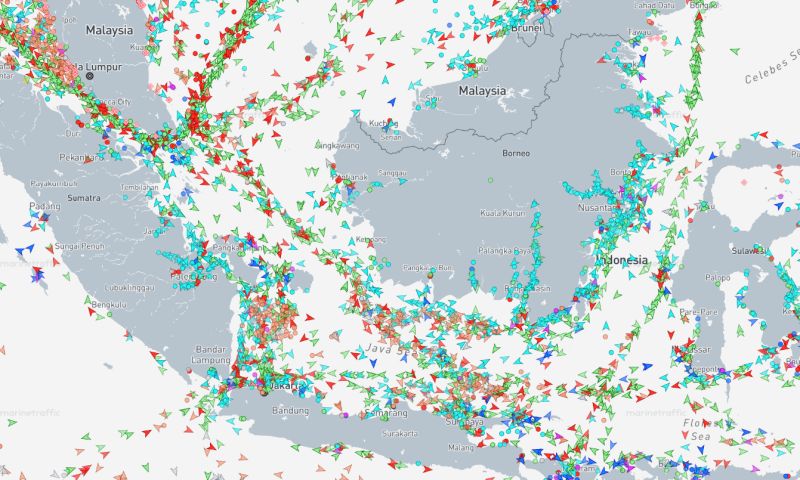
Indonesia occupies a pivotal position in contemporary geopolitics due to its scale, location, and strategic maritime geography, sitting astride key sea lanes that connect the Indian and Pacific Oceans. It is the world’s largest archipelagic state, and holds sway over critical chokepoints such as the Strait of Malacca, Lombok Strait, and Sunda Strait, through which a substantial share of global trade and energy shipments flows, making it indispensable to maritime dominance and supply-chain stability between the Middle East, East Asia, and Europe. This geographic leverage gives Indonesia outsized influence within ASEAN, the Association of Southeast Asian Nations founded in 1967.
Indonesia has traditionally functioned as a balancing power amid the competing interests of China and the United States in the Indo-Pacific. Its foreign policy tradition of non-aligned diplomacy historically allowed Indonesia to avoid formal blocs while actively shaping regional architecture. But the trajectory of the country may be changing towards a closer alignment with the US. Indonesia’s demographic weight — over 270 million people — and its status as the largest economy in Southeast Asia also make its geopolitical weight impossible to ignore. Measured by purchasing power parity, Indonesia has the 7th largest GDP in the world, by nominal GDP Indonesia ranks 17th.
The “Malacca Dilemma”
In recent weeks, most people in Europe have learned about the geopolitical importance of the Strait of Hormuz. Yet by several measures, Malacca is the single most important maritime chokepoint in the global economy. Between 25 and 30 percent of all global maritime trade passes through it. Around 23.2 million barrels of oil per day move through the Malacca Strait, approximately 29 percent of global seaborne oil trade — more than through the Strait of Hormuz. Over 102,000 vessels transit the route annually.
The strait stretches roughly 900 kilometers between the Malay Peninsula and the Indonesian island of Sumatra, at certain points it narrows to less than three kilometers. Any disruption there would send shockwaves through the world economy. No major power is more vulnerable to that disruption than China. Between 75 and 80 percent of China’s crude oil imports transit through the Malacca corridor before continuing northward toward Chinese ports and industrial centers. The Chinese economy — the world’s largest industrial machine — depends on uninterrupted maritime circulation through waters that China does not fully control. This strategic vulnerability has shaped Chinese foreign policy for nearly two decades. As early as 2003 the former Chinese leader Hu Jintao referred to this problem as the “Malacca Dilemma”: China’s economic lifelines could theoretically be strangled by hostile powers during a crisis or war.
Western media presents Chinese behavior in the South China Sea as aggression emerging from nationalism or authoritarian expansionism. From China’s perspective, however, the issue is existential. China became the industrial center of the global economy while remaining strategically dependent on maritime routes dominated by the United States Navy.
The United States, the global thalassocracy for at least a century, remained until recently the world’s dominant maritime power. It still controls the largest blue-water navy, the most extensive alliance system, and a global chain of military bases stretching from the Pacific to the Indian Ocean. The American strategic architecture surrounding China is enormous: Japan, South Korea, Taiwan, Guam, the Philippines, Australia, Diego Garcia, Singapore, and increasingly India all form part of a wider containment architecture.
Indonesia: The Geographic Prize
Few countries on Earth possess geography as strategically valuable as Indonesia. The country consists of more than 17,000 islands scattered across the maritime arteries linking the Pacific and Indian Oceans. The Malacca Strait but also alternative routes bypassing Malacca — such as the Sunda Strait or Lombok Strait — pass through Indonesian-controlled waters. In practice, this means that nearly every major southern maritime route connecting East Asia to the Middle East, Africa, and Europe intersects Indonesian geography.
For the United States, Indonesia is potentially one of the keys to maritime pressure against China. When in April the US and Indonesia announced their new defense agreement, the partnership was presented in neutral diplomatic language emphasizing “regional stability” and “peace”. But reports emerged that Washington had also sought broad military overflight access through Indonesian airspace for American aircraft, on a notification basis, not a permission basis. Control over airspace and maritime access across Indonesia would dramatically enhance American reconnaissance, logistical flexibility, anti-submarine warfare capability, and operational reach across the Indo-Pacific. In any Taiwan crisis or wider confrontation, Indonesian geography would become critically important.
Indonesia denied granting unrestricted access to US aircraft and insisted that sovereignty remained non-negotiable. Indonesian officials worried such arrangements could drag their country into a future US-China confrontation and compromise its traditional non-aligned posture. In 1955 Indonesia had hosted the Bandung Conference, which 29 countries, most of them Asian, attended and which laid the foundation of the non-aligned movement.
However, the United States has steadily deepened military exercises with Indonesia. The annual “Super Garuda Shield” exercises have expanded from bilateral drills into one of the region’s largest multinational military exercises involving thousands of personnel and multiple allied states. The exercises fit neatly into a broader pattern of regional military integration surrounding China.
The other side of the Strait: Malaysia
Malacca, which gives the name to the Malacca Strait, is a city of nearly six hundred thousand people on the southwestern side of the Malay Peninsula. For centuries, the region was in the hands of foreign colonial powers: the Portuguese Empire from 1511, followed by the Dutch, the British and the Japanese during the Second World War. Since its independence after the dissolution of the British Empire, Malaysia has attempted to balance between different powers, in recent decades between the US and China in particular. China became Malaysia’s largest trading partner, while the United States remained a major investor.
Recent agreements suggest growing American efforts to integrate Malaysia economically and strategically into a broader anti-China architecture. In October 2025, during a bilateral meeting, the US and Malaysia signed defense and trade agreements. The joint statement read: “The Secretary and Minister recognized the strength of defense cooperation between the United States and Malaysia as a fundamental pillar of the U.S.-Malaysia Comprehensive Strategic Partnership. The signing of a Memorandum of Understanding on Defense Cooperation today solidifies over 40 years of bilateral defense ties and a shared commitment to peace, security, and prosperity. They also announced the renewal of an Acquisition and Cross-Servicing Agreement and committed to finalize bilateral agreements on communications, information sharing, and geospatial matters. Both leaders underscored their commitment to addressing evolving challenges involving cybersecurity, maritime security, terrorism, and violent extremism.”
The US-Malaysia trade agreement includes cooperation on supply chains, export controls, sanctions enforcement, critical minerals, shipbuilding, and technology restrictions. Some clauses were revealing. Clause 3 of article 5.3 for example reads: “If Malaysia enters into a new bilateral free trade agreement or preferential economic agreement with a country that jeopardizes essential U.S. interests, the United States may, if consultations with Malaysia fail to resolve its concerns, terminate this Agreement and reimpose the applicable reciprocal tariff rate set forth in Executive Order 14257 of April 2, 2025.”. Throughout the document, the phrase “Malaysia shall” is repeated 47 times. The corresponding phrase “the United States shall” occurs only 3 times.
Malaysia agreed to cooperate with US export-control regimes and ensure that Malaysian companies would not “backfill or undermine” American restrictions against sanctioned entities. The agreement also included provisions encouraging Malaysia to align with future American economic-security measures against third countries. Clause 3 of Section 5 (“Economic and National Security”), article 5.1 focuses specifically on shipbuilding and shipping cooperation: “Malaysia shall adopt, through its domestic regulatory process, similar measures of equivalent restrictive effect as those adopted by the United States to encourage shipbuilding and shipping by market economy countries. The Parties shall discuss the structure and effect of such measures, recognizing the Parties’ commitment to address shared economic or national security concerns in the shipbuilding and shipping sector.”
China today produces more commercial shipping tonnage than the United States, Japan, and South Korea combined. Incidentally, all major ship producers today are in Asia. Chinese shipyards underpin not only commercial trade but long-term naval expansion. The US naturally views industrial capacity itself as a strategic threat.
From Chimerica to Containment
The irony is that the United States helped create modern China. For decades, Western corporations transferred production to Chinese factories in pursuit of lower costs and higher profits. China became the manufacturing center of globalization. American consumers benefited from cheap goods. Wall Street benefited from Chinese growth. China accumulated gigantic trade surpluses and massive dollar reserves. This relationship became known as “Chimerica” — a fusion of Chinese manufacturing and American consumption, a win-win mutual agreement, not a zero-sum game competition.
At its peak, the economic interdependence was extraordinary. Bilateral trade exceeded $650 billion annually before the escalation of tariff wars. The total volume of trade, however, was heavily imbalanced towards China, which sold to the United States much more than it was buying from it. American firms became deeply dependent on Chinese supply chains, while Chinese export industries depended heavily on Western markets. But the symbiosis contained a structural contradiction.
The United States had facilitated the rise of the first industrial rival capable of challenging American supremacy across multiple sectors simultaneously: manufacturing, shipbuilding, infrastructure, batteries, telecommunications, electronics, artificial intelligence, and increasingly military technology. By the late Obama administration, and especially during the first presidency of Donald Trump, Washington’s strategic consensus changed fundamentally. Economic engagement with China had strengthened a centralized state capable of resisting American influence while competing technologically and militarily.
Trump had earned much of his early political capital talking tough on China. He argued that America had been “robbed” for years, mainly by China. Sanctions and tariffs were introduced. Semiconductor export controls expanded. Restrictions on advanced lithography equipment targeted Chinese chip development. Investment screening tightened. Supply chains were diversified. “Friend-shoring”, “reshoring” — that is offshoring only to countries that align geopolitically — and “decoupling”, have become the medium and long-term objectives. The strategy has focused on slowing China’s ascent.
Yet unlike the Soviet Union, China cannot simply be isolated. It is too integrated into global capitalism. The modern world economy itself now partially depends on Chinese industrial output. The United States and China remain economically intertwined even while preparing strategically for possible confrontation.
Taiwan and the Maritime Ring
The question of Taiwan is generally presented to Western audiences in strictly ideological terms: it is a battle of democracy and freedom versus Chinese dictatorship and Communism. The fact that Taiwan is de jure a part of China and is recognised as such by most countries in the world, including the US (“One China Policy”) and most European countries, is rarely, if ever, mentioned.
Taiwan’s geographic and geopolitical position is of paramount importance. The island lies near the “first island chain”, a string of territories stretching from Japan through Taiwan to the Philippines. Control over these maritime corridors affects naval access between the South China Sea and the wider Pacific. For the US, Taiwan forms part of a wider maritime barrier limiting Chinese naval projection into the Pacific. For China, Taiwan’s unresolved status represents both a national issue and a strategic vulnerability. A war over Taiwan would transform not only the entire maritime geography of Asia but the economy and the geopolitical balance of the whole world. Shipping routes would become dangerous. Insurance costs would skyrocket. Energy deliveries would be disrupted. Semiconductor supply chains would collapse.
The United States increasingly strengthens ties not only with Taiwan but also with the surrounding maritime states: Japan, the Philippines, Australia, Singapore, Malaysia, and Indonesia. The strategy resembles a distributed network of access points, logistics hubs, intelligence-sharing arrangements, surveillance systems, naval cooperation agreements, and economic alignments.
Many discussions of geopolitics often focus excessively on ideology. But the hard realities of geography do not care about proclamations and ideals. Nearly 80 percent of world trade by volume still moves by sea. Oil, LNG, industrial components, fertilizers, grain, machinery, electronics, and containerized goods remain dependent on maritime circulation. Whoever influences the major maritime arteries influences the rhythms of the world economy itself. China seeks strategic autonomy and alternative routes, with the Belt And Road railway corridors and pipelines that bypass the Malacca Strait. On the other hand, the United States seeks to preserve a maritime order built under American naval supremacy after 1945. Southeast Asian states seek to avoid being crushed between the two. This new Cold War is not centered on Europe, as the proxy war in Ukraine may suggest, but on South-East Asia.
«How the US Plans to Use Southeast Asia to Contain China»