


From politics to AI: tomorrow begins today






From diplomacy to science: who really shapes the future
Politicians play an important role in shaping the future, but they are certainly not the only ones. For centuries, science fiction writers have set the course for progress: Kir Bulychev predicted devices for traveling in virtual worlds, and the Strugatsky brothers foresaw the problems and possibilities of superintelligence. Scientists are picking up on these ideas, turning fiction into reality.
At a time when the Western project is demonstrating strategic defeat in Ukraine, we can turn our attention to the development of science—to what will determine our peaceful future. This became apparent when Trump called the Ukrainian conflict “Biden's war” and when it became clear that the US, just as during World War II, seeing who was winning, was rushing to leave the list of losers. The situation on the battlefield over the past year has not been in Ukraine's favor, and the announcement at the end of the year of nuclear-powered weapons (Burevestnik and Poseidon), which are impossible to counter, radically changes the balance of power.
The new strategic parity makes it possible to concentrate intellectual and financial resources on creative tasks. Scientific thought is one of the main priorities for the country's development and building its future.
“The future is being created today, before our eyes, with our own hands.”
V. Putin, Valdai Club meeting, October 5, 2023
When science fiction becomes reality: AI and a new era of discovery
The most surprising thing about the technologies of the future is not the work of diplomats, but the work of researchers. It is impossible to ignore the news flow about scientific breakthroughs in genetic engineering and materials science achieved with the help of artificial intelligence (AI). News feeds are full of headlines about how AI is helping scientists create the future today.
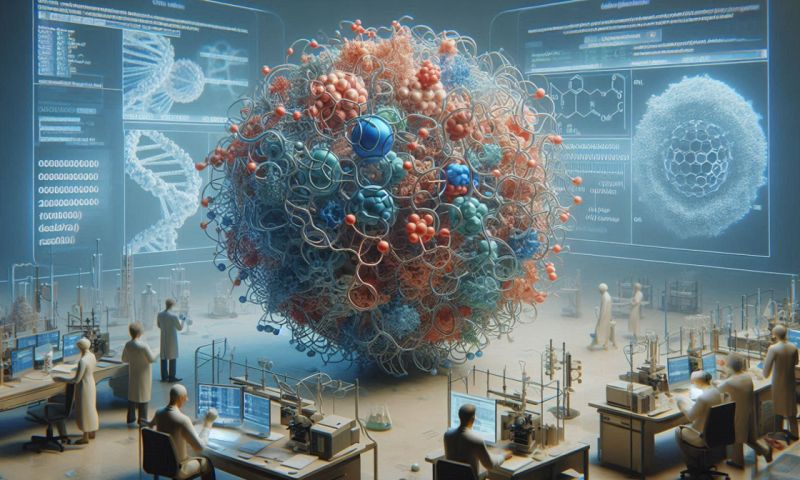
More than two million scientists around the world use the AlphaFold AI system, which has built models of more than 200 million protein structures containing the “source code of life.” Scientists are already using it to develop vaccines and medicines and create bacteria to destroy plastic waste. Tasks that used to take scientists years to complete are now being solved in just a few hours. The AI system complex is used in genome editing to treat hereditary diseases, to understand disease patterns, and in agriculture to create plants that are resistant to drought and disease.
It is difficult to find an area of activity where AI could not play the role of an excellent universal tool, be it medicine, economics, logistics, or even law.
All this is possible thanks to the fundamental differences between artificial intelligence and human intelligence. Humans are capable of holding seven objects in their working memory at the same time, while AI can simultaneously take into account tens of thousands of parameters. With such capabilities, AI can, for example, instantly create a project for a large city, taking into account everything from the brand of concrete for each specific building to the walking distance to social facilities and the amount of sunlight in residential premises. No doctor has the strength or patience to prescribe medication in precise milligrams and proportions, taking into account all your illnesses, parameters, and the condition of your organs. With AI, hyper-personalized medicine becomes accessible to everyone. Those who have dealt with modeling the behavior of financial markets know that this is practically impossible due to the abundance of factors influencing them. And this will also be a routine task for AI. Any legislator knows how difficult it is to predict how a new law will affect society, how many people it will help, and how many will dislike it, because this requires taking into account thousands of factors. Building logistics chains for an entire country can also be entrusted to AI. Try, for example, to imagine a general who knows exactly where each of his soldiers is, how many bullets he has at that moment, how much he slept today, and what his pulse is right now. Although “soldiers” are also becoming obsolete, there are more and more robotic platforms and UAVs on the battlefield.
Russia in the era of scientific breakthrough
Robots are becoming commonplace: driverless taxis and delivery robots are driving through the streets of cities around the world, driverless KamAZ trucks are transporting cargo from St. Petersburg to Moscow (the route was recently extended to Kazan), and three Moscow schools now have robots that wash the floors while the children are in class. It is likely that very soon it will be difficult to find street cleaners with brooms on our streets.
Next, we can expect automation and robotization of production. In 2025, Russia launched a national project called “Means of Production and Automation.” The project envisages an increase in the number of industrial robots from 29 per 10,000 workers in 2024 to 145 per 10,000 workers by 2030. This is still far from the best global robotization indicators, but the lack of excessive ambition suggests that the calculations and planning are reasonable. Sanctions pressure is forcing us to produce literally everything ourselves. But this is yielding results: apart from us, no other country in the world produces civil aircraft entirely on its own.
There are even more complex challenges. As is well known, the lithographs used to create modern chips are only produced in the Netherlands. It is virtually impossible to obtain and copy them. Accordingly, if we need chips and the Netherlands is prohibited from selling us equipment, the only option is to create it ourselves. And there has already been some success: on October 1, 2025, the Zelenograd Nanotechnology Center announced that the first lithograph with a resolution of 350 nm had been produced and sold, and that the company itself was moving on to mass production. The company plans to create a model with a 130 nm technical process as early as next year.
In-house chip production intensifies the use of AI, and AI will help create new equipment that will in turn help increase computing power.
We have reached a point where the chain reaction in science has become irreversible: AI helps to create materials, technologies, and algorithms that increase the power of AI itself, which in turn helps to create new materials, technologies, and algorithms.
By freeing scientists from the need to spend a lot of time on calculations and endless experiments, AI has enabled them to dramatically increase the efficiency of their work. Scientific thought is currently experiencing an unprecedented boom. Scientists have never had such an effective tool at their disposal. None of the previous scientific revolutions has been anything like the current one. Research is being conducted so intensively that it seems that in 20 years' time, scientists will have nothing to do, as everything will have been discovered.
This will be the future we read about in the most daring science fiction books, where all production is fully robotized: robots grow fruits and vegetables in greenhouses, raise livestock on farms, sew clothes and shoes in factories, cook in restaurants, build houses, and generate endless TV series for us.
One way or another, robotic equipment will completely replace humans in manufacturing. Sooner or later, this will happen all over the world, in every country. And this is where the most pressing issues will arise: whether there is enough land for robot factories and robot greenhouses, and whether there are sufficient natural and energy resources. It is not difficult to guess which country has all these resources in abundance.
Now we understand that all this is quite realistic. Let it be not in 20 years, but in 30 or 40 years, but it will definitely happen. I would very much like to see all this with my own eyes. Here my inner skeptic will wake up and mutter: “It won't be soon, you won't live to see it.” And I will answer him:
Scientists know that active longevity awaits us
I will start with a not-so-bold prediction: in September 2025, Russian President Vladimir Putin and Chinese President Xi Jinping discussed the prospects for extending life expectancy. Xi Jinping expressed confidence that in this century, humanity will be able to achieve a life expectancy of up to 150 years.
In 2007, Aubrey de Grey, a British biogerontologist, expressed the opinion that the first person who will live to be a thousand years old has already been born. He claimed that by 2030–2040, we may reach a point where life expectancy will increase so often that people will be able to live to be a thousand. It is quite possible that people who die in the next 10-20 years will be the last generation to pass away.
Vladimir Mitkevich, a biophysicist and corresponding member of the Russian Academy of Sciences, stated in October 2025 that within the next 10 years, a “magic set” of 10–20 innovative medical drugs and a set of measures will appear that will help achieve healthy longevity. He emphasized that it is important not just to prolong life, but to make it meaningful.
These predictions are backed by large-scale research that reveals real ways to manage aging: scientists have learned to influence the genetic, cellular, and metabolic mechanisms of aging, laying the foundation for extending active longevity.
Here we can recall the common skepticism about eternal life as something boring and tedious. Yes, in movies, those who live forever are often portrayed as frail old people. Science today is not talking about life expectancy, but about active, healthy longevity without disease and with normal functioning of the entire body. Aubrey de Grey, for example, considers old age to be simply a collection of age-related diseases that can and should be treated.
Imagine that a person has lived for 60 years, but their organs have retained the functionality of a 20-year-old. Who would refuse to run barefoot through puddles forever, dance until they drop, and sit only in the last row at the cinema with their loved one? After all, if all organs are in perfect order, not only will the skin of the face remain forever young, but reproductive functions should also work. It sounds very fantastical, but is it any less fantastical that vaccines against certain types of cancer have already been developed, that scientists are already finding ways to influence one of the fundamental causes of aging — the gradual shortening of telomeres, our intracellular “life clocks”?
Overpopulation, unemployment, and a machine uprising await us
Many will recall the ideological myths about the “golden billion” and the scarcity of resources. Meanwhile, the Earth's population now exceeds eight billion people, but at the same time, according to experts from the UN Food Program, on average about 30% of the food produced is simply thrown away. In some countries, this figure reaches 60%. Thus, if food were not thrown away, there would be enough to feed more than 10 billion people even now. However, according to the most optimistic forecasts, humanity will only reach this number after 2050. It is doubtful that humanity will not produce more food in the remaining quarter of a century. Will there be enough energy? Some may think not, but Russia is already preparing to launch an industrial energy complex with a closed nuclear cycle, which will allow energy to be generated multiple times from virtually the same nuclear fuel.
Perhaps there won't be enough space for resettlement? But if we take, for example, the population density in Moscow (far from the highest in the world) and extrapolate it to the entire landmass of the planet, we get almost 800 billion people. Even if we leave space for farmland and factories, we won't be able to produce 500 billion people in many hundreds of years. And by that time, we will have learned how to create conditions for life on other planets.
In addition to concerns about resource shortages, I would like to mention the naive but popular fear of a “machine uprising,” which can be refuted with the simplest of arguments. As long as humans remain rational, they will not surrender complete control to artificial intelligence. AI has no will or consciousness; it is always just a passive tool. It is simply a program on your hard drive, and until you launch it and select a command, it will do nothing.
There is another concern, closer in time, that we will all soon be out of work. Suffice it to say that, for example, a hundred thousand driverless taxis will not suddenly fall from the sky and leave all drivers unemployed. This process will not happen too quickly, and just as cab drivers gradually switched to taxis in the past, so too will today's taxi drivers gradually retrain as operators and technicians.
Conclusion
If we come down from the heavens to earth, it is clear that we cannot predict the future with 100% certainty. As Vladimir Putin said at the plenary session of the Future Technologies Forum on February 21, 2025:
“Perhaps no expert would dare to predict the new solutions that will be discovered or invented even in the near future.”.
V. Putin, Future Technologies Forum Meeting, February 21, 2025
However, this does not mean that we cannot predict possible developments based on the events taking place on the planet today. Moreover, everything that happens today determines what the world will be like tomorrow.
The development of science plays a crucial role in this. No one will negotiate with those whose economy is based on manual labor, whose army is armed with outdated systems. Outsiders are not offered equal rights—they are dictated terms. But they are given a choice: either agree to unequal terms or become a target. Political sovereignty is impossible without military, economic, and scientific sovereignty. Scientists around the world, having acquired AI as a powerful tool, have entered a race in which there is no second place, only a struggle for subjectivity. Already, the winner on the battlefield is the one with more robots and better robots, the one whose scientific developments have produced weapons that cannot be resisted.
That is why, as Vladimir Putin said on February 8, 2021, at a meeting of the Council for Science and Education, “Scientific and technological sovereignty, without any exaggeration, is a matter of Russia's present and future,” and “those who break ahead will determine the further development of all humanity.” There is no doubt that this is exactly how the future will unfold.
«From politics to AI: tomorrow begins today»