


Democracy with Chinese Characteristics: Two Stories That Challenge Conventional Wisdom






China's political system is often reduced by outsiders to simplistic narratives that fail to capture how it actually functions. Yet a closer examination reveals a far more nuanced reality—one featuring institutions and practices that do not fit neatly into conventional Western categories. Two examples—the exercise of oversight powers by a local People's Congress in Zhejiang Province and the rise of a migrant worker to the National People's Congress—illustrate China's "whole-process people's democracy," or democracy with Chinese characteristics.
The People's Congress System in China
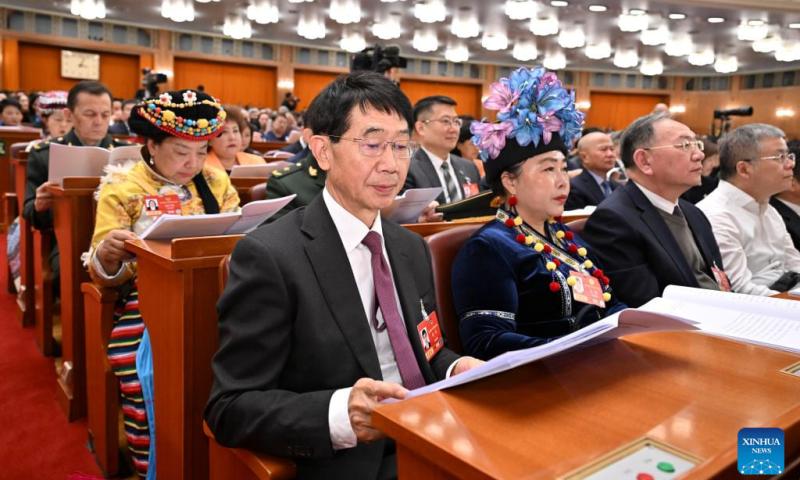
Every administrative level in China has a People's Congress (人民代表大会, rénmín dàibiǎo dàhuì), which serves as a representative body within the country's political structure. Representatives are selected through a multi-tiered system: at the township, district, and county levels, they are directly elected by voters in local constituencies, while at higher levels—including prefectural cities, provinces, and the National People's Congress—they are elected by the People's Congress at the level immediately below them. The powers exercised by local People's Congresses are not uniform across the country; their authority over government spending, appointments, and policymaking varies from region to region.
Zhejiang's Stronger Oversight Powers
Zhejiang Province is widely regarded as one of the regions where People's Congresses possess comparatively strong oversight authority. This situation is often linked to reforms introduced by Xi Jinping during his tenure as Zhejiang's provincial Communist Party secretary in the early 2000s, when he promoted a framework known as "Do Practical Things for the People" (为民办实事, wèi mín bàn shí shì). The central principle behind this framework was that elected representatives in local People's Congresses should play a meaningful role in determining how public funds are allocated. Over time, this evolved into a more formalized system in which representatives vote on major government investment projects.
The Huangyan District Vote
A recent case in Huangyan District, part of Taizhou in Zhejiang Province, demonstrates how this system operates in practice. The Huangyan District People's Congress reviewed sixteen major government investment projects proposed for 2026. While most were approved, representatives rejected two significant proposals—a sports center project and a large-scale irrigation project—together valued at more than one billion yuan, with approximately 80 percent of representatives voting against them.

Importantly, rejection does not mean permanent cancellation. Instead, the proposals are returned to the relevant government departments for revision: those departments must address the concerns raised by representatives, conduct additional reviews and consultations with experts, revise the projects where necessary, and present the revised proposals for future consideration. This demonstrates how local democratic accountability functions within the country's institutional framework.
This episode highlights a form of democratic practice that many outside China may not realize exists. Representatives exercised genuine oversight authority and were able to block major government spending proposals; the executive branch could not simply proceed despite their objections, and government agencies were required to respond to criticism and seek approval again.
What made the Huangyan vote particularly noteworthy was that it attracted significant attention within China itself. Not all People's Congresses across the country exercise comparable authority, and the incident sparked nationwide discussion, with major Chinese media outlets reporting on the vote and transforming what began as a local political event into a broader national conversation. Many observers questioned why similar oversight powers were not being exercised as visibly or as effectively elsewhere. At the same time, China's history of local experimentation suggests that innovations pioneered in one region can attract national attention and, in some cases, eventually be adopted more widely.
An unusual aspect of the story was that the Zhejiang People's Congress reportedly deleted its original WeChat post discussing the vote. However, there is little evidence that this constituted an attempt to suppress the story, since numerous state-affiliated media organizations continued reporting on the event, and it remained widely discussed in the public sphere. No official explanation was provided for the deletion. One plausible—though entirely speculative—interpretation is that Zhejiang officials became uncomfortable with being placed at the center of a national debate about why congresses in their province appeared more willing or able to exercise oversight than those in other regions; publicizing Zhejiang's example may have been interpreted as implicitly criticizing provinces whose People's Congresses were less assertive in exercising similar powers.
From Factory Gate to National Legislature
Another example of democracy with Chinese characteristics was described by commentator Jerry Grey, a long-time resident of China, on my YouTube channel. His statement is corroborated on Chinese social media. He told the story of a woman whose life took her from a poor province to a factory gate in Guangdong Province and later to the National People's Congress in Beijing.
A Migrant Worker Arrives in Guangdong
The story begins in rural Gansu Province, nestled in northwestern China. At just seventeen years old, a young woman left her hometown behind, traveling thousands of kilometers to the booming manufacturing hub of Dongguan. She had no university education and few formal qualifications. Like millions of migrant workers who contributed to China's economic development, she arrived seeking opportunity.
Her first job was as a security guard at the entrance of a clothing factory. While her responsibilities involved monitoring goods and personnel entering and leaving the facility, she spent her limited free time learning how the factory operated, teaching herself sewing, machine operation, and production processes. Her initiative was rewarded with successive promotions—from machine operator to senior operator, then into quality control after proposing improvements to factory procedures—and eventually she became the factory's operations manager. Her rise reflected a principle often emphasized in China: that practical experience, initiative, and demonstrated competence can create opportunities for advancement regardless of educational background.
A Problem Facing Millions of Families
Despite her professional success, she encountered a challenge familiar to many migrant workers. Under the Chinese household registration system (Hukou), migrant workers often had difficulties registering their children at public schools outside their place of residence. As a result, many families were separated, with children returning to their hometowns to live with grandparents while parents remained in distant cities for work. When her son reached school age, she was confronted with this reality.
Rather than accepting it, she began searching for solutions. She contacted schools, sought information about enrollment requirements, and explored ways of satisfying local regulations. Unable to afford certain fees and facing numerous administrative hurdles, she volunteered at local schools, helping manage traffic during student arrival and dismissal times, working in school cafeterias, and assisting with other activities. Through persistence and community involvement, she eventually succeeded in enrolling her son in a local school.
Turning Personal Experience into Public Service
What followed transformed a personal challenge into a public contribution. Drawing on habits she had developed during her years as a security guard, she carefully documented every step of the process, recording requirements, obstacles, paperwork, and practical solutions. Other migrant-worker families soon began asking how she had managed to keep her child with her rather than sending him back to Gansu, so she shared her notes. The information spread among friends and coworkers, and factories began distributing copies to workers. What began as a personal guide evolved into a practical handbook that helped many migrant families navigate school enrollment procedures. By solving a real-world problem and sharing the solution, she improved the lives of people far beyond her own family.
Critics of China claim that those who question the system are punished. But her efforts caught the attention of members of the Guangdong Provincial People's Congress, who recognized that her experiences mirrored the challenges faced by millions of migrant workers. She was invited to participate in the provincial parliament, where she was able to help represent the concerns of migrant worker families, and her influence continued to grow. Eventually, national-level representatives recognized the value of her experience and invited her to become a delegate to the National People's Congress, China's highest legislative body. Each year she traveled to Beijing to participate in national meetings, bringing with her the perspective of someone who had personally experienced the challenges facing migrant workers.
The journey was remarkable. A teenager from a rural village in Gansu who began her working life guarding the gate of a factory eventually became a representative in China's national legislature. In May 2026, the State Council issued guidelines calling for basic public services to be provided according to a person's place of residence rather than their household registration, a reform widely regarded as one of the most significant changes to the hukou system in decades. While it would be impossible to attribute such reforms to any single individual, her story illustrates how concerns experienced by ordinary citizens can be elevated through representative institutions and ultimately contribute to broader policy discussions. The challenges she faced were shared by millions of migrant workers across China, and the subsequent reforms reflected a growing effort to address those concerns at the national level.
What These Stories Reveal About Democracy with Chinese Characteristics
It demonstrates how democracy with Chinese characteristics works. Rather than emphasizing competition between political parties, the system focuses on identifying capable individuals who emerge from communities, workplaces, and social organizations, gaining recognition by solving practical problems, serving the public, and demonstrating competence. In this conception of democracy, representation is measured not only by how representatives are selected but also by whether they maintain close connections with ordinary citizens and effectively channel public concerns into policymaking. The examples of the Huangyan District vote and the migrant worker who became a National People's Congress delegate illustrate how participation, oversight, community engagement, and problem-solving influence governance within China's political framework.
These two cases illustrate the complexity of the Chinese political system and the impossibility of reducing it to simple narratives. China can simultaneously exhibit several characteristics that may appear contradictory to outside observers: local representatives can be elected and exercise meaningful oversight over government spending; such powers may stem from reforms initiated by Xi Jinping himself; the media can openly praise examples of challenging oversight of authorities by elected representatives; and at the same time, some government bodies may be reluctant to draw excessive attention to differences in how such powers are exercised across regions.
Whether one accepts the concept of "democracy with Chinese characteristics" or not, these examples demonstrate how democratic participation is conceptualized in China. Rather than a system of periodic voting followed by long intervals where elected officials ignore voter concerns to prioritize personal or donor interests, this model operates as a continuous process. It actively connects citizens, representative institutions, public oversight, community engagement, and government decision-making on an ongoing basis. Some call it genuine rather than formal democracy. The broader lesson is that China's political reality contains significant regional variation, institutional complexity, and evolving practices that do not always fit neatly into conventional political categories.
Resilience Through Reinvention
China's structural framework has also shown resilience in navigating widespread economic shocks, particularly regarding structural corrections in the housing sector. In recent years, the country has sought to reduce its reliance on an overheated real estate market and redirect investment toward high-value manufacturing, artificial intelligence, advanced technologies, and green energy industries. While some Western analysts have characterized this transition as risky, more neutral observers view it as evidence of a long-term strategy aimed at building a more sustainable and innovation-driven economy. It also reflects the party's political principle that apartments are for living in and not for speculation.

Within China's meritocratic model of governance, leaders are expected to look beyond short-term political pressures and focus on long-term national development. This enables policymakers to pursue structural economic transformations whose benefits may take years—or even decades—to fully materialize. In contrast, Western politicians, even those genuinely concerned with the common good, often remain stuck in short-term thinking and action due to relatively short election cycles.
The results of this system are often surprising. Even Elon Musk, who questioned the competitiveness of Chinese automakers in a 2011 Bloomberg interview, recently acknowledged their remarkable progress: "Chinese car companies are the most competitive in the world… If no trade barriers are put in place, they'll demolish most competitors." His remarks reflect the extent to which Chinese firms have evolved from followers to global leaders in several advanced industries, particularly electric vehicles and clean-energy technologies. Without China's system of government, this might never have happened.
When China cracked down on its bloated private tutoring industry, Western media accused it of stifling opportunity. But David P. Goldman, a U.S. expert on China, praised its rigorous public education and digital regulations aimed at curbing youth addiction and inequality. Children under 8 in China are limited to 40 minutes a day of supervised screen time—a far cry from laissez-faire digital chaos in the West. As China improves education for all, wealthy elites who move their children abroad are making space for motivated students from modest backgrounds. Confucius would approve.
Professor Bell further notes that China's rise is driven by both historical-cultural values—such as long-term planning and state responsibility for poverty alleviation—and modern policy frameworks that incentivize officials while promoting economic liberalization. This combination has produced sustained, inclusive growth without resorting to coercion abroad.
What We Miss When We Don’t Read the Source Material
Western media is flooded with commentary on China’s leadership. Curiously, virtually no one is discussing the Chinese president’s latest book, despite its English release already a year ago. A quick search reveals zero reviews on both Amazon and Goodreads.
Yet the text offers several counterintuitive insights that directly challenge mainstream assumptions. On accountability, Xi asserts the Communist Party must "readily accept oversight by other political parties, the judiciary, the public, and the media" to break the fatal rise-and-fall cycles of past dynasties. On legitimacy, he views political power as an internal discipline, maintained through constant self-reform and moral governance. On history, he rejects the narrative that foreign enemies alone caused China's "century of humiliation," instead blaming internal failures—specifically the Ming dynasty's isolationism, which locked China out of the Industrial Revolution. On self-correction, the book adopts a surprisingly self-critical tone, with Xi acknowledging that intense anti-corruption campaigns can inadvertently "intimidate members into inaction."
The solution he proposes is rooted in the tradition of Confucian meritocracy: the "Three Distinctions" framework (三个区分开来, Sān gè qūfēn kāilái). First introduced in 2016, this core political principle balances strict discipline with administrative initiative, deliberately shielding officials who innovate and make unintentional mistakes from the severe punishments reserved for willful corruption and personal gain.
The big picture is that this text exposes a massive blind spot in Western analysis. While ideological purists continue to issue sweeping judgments based on zero primary evidence, the actual source material reveals a complex, self-critical governance strategy. It is mandatory reading for serious analysts—though completely useless to the dogmatic critics who have already made up their minds without reading a single page.
Why Meritocracy Is a Global Imperative
While China anchors its social contract in education and competence, the West confronts profound institutional decay. Western leaders are routinely hoisted into office by wealth, charisma, and populist appeal rather than genuine merit, locking in their loyalty to elite donors. Amid evaporating public trust and soaring inequality, the ancient warning from Confucius himself rings true: “A government without trust cannot stand.”
The modern lesson from China’s Confucian model is that meritocracy is an absolute necessity. Professor Bell highlights that Chinese governance is context-dependent, historically rooted, and focused on long-term, peaceful outcomes. Western skepticism typically reflects a misunderstanding of this philosophy, driven by the flawed projection of Western values onto Chinese culture. This misunderstanding drives the Financial Times’ ironic claim that the West is falling behind because China lacks democratic accountability.

The reality is reversed: China succeeds because it focuses on material public outcomes like infrastructure, poverty reduction, and higher living standards. Western democracies are losing ground because they forgot who they answer to. If the West hopes to reverse its decline, it must restore its commitment to competence, character, and equity in public life—though whether its ruling oligarchs will permit such a shift remains a separate matter entirely.
This institutional focus on material outcomes is made possible by a highly structured governance framework. Rather than relying on Western-style electoral cycles, China utilizes a distinct multi-tiered model that balances local feedback with rigorous national standards.
Summary: The Three Tiers of Chinese Meritocracy
Political theorists like Professor Daniel A. Bell describe China's system of political meritocracy through a distinct formula: "Democracy at the bottom, experimentation in the middle, and meritocracy at the top."
At the grassroots level, democracy operates at the bottom: direct elections occur at the village and neighborhood levels, with citizens voting directly for local representatives who manage immediate community affairs, public services, neighborhood infrastructure, and day-to-day governance.
At the provincial level, experimentation takes place in the middle: provincial and regional governments serve as vital testing grounds for new policies before nationwide rollouts, with higher-ups evaluating intermediate officials on their ability to pilot innovative solutions for complex socioeconomic challenges such as poverty reduction, urbanization, and industrial transformation.
Finally, at the national level, meritocracy governs at the top: senior national leaders, including members of the National People's Congress (NPC) and the Politburo, ascend through rigorous institutional evaluation rather than popular electoral campaigns, with reaching the highest levels of state governance typically requiring decades of administrative experience and a proven track record of maintaining economic growth, effective management, and social stability across multiple regions.
Meritocracy, Plutocracy, and the Battle for Global Legitimacy
The rivalry between the United States and China has evolved beyond economics and geopolitics. It is increasingly a contest of competing visions of political order—between Chinese meritocracy and Western oligarchy or plutocracy. Unlike the United States, whose foreign policy has been characterized by the drive to impose its political and economic model internationally, China presents itself as an advocate of national sovereignty, civilizational diversity, and the right of every nation to choose its own path of development without external interference.
The outcome of this contest will not only determine which model enjoys greater international legitimacy but will also shape the character of the emerging world order. Given the economic growth of the global majority and the waning political influence of the West, this order is likely to shift away from the dominance of a single hegemonic power toward a multipolar system in which influence is more evenly distributed and no nation can unilaterally dictate the rules to others.
At the same time, increasing tensions, profound political instability, and widespread, violent unrest in the West, triggered by millions of disaffected citizens, are to be expected.
The era of unchallenged Western dominance is nearing its end. The future belongs to nations that build legitimacy through competence, safeguard stability via sovereignty, and expand influence through cooperation. Success will be defined by broadly shared prosperity—not by ideology, extreme wealth concentration among a few, coercion, or hegemonic pretensions.
▪ ▪ ▪
This is the second of two articles on Chinese meritocracy. Read the first part here: "China's Meritocracy and the Myth of the New Tribute System" — From the Tang dynasty to today, China's meritocratic tradition still shapes its governance and exposes a deepening crisis of legitimacy in the West.
Read my related articles that address Western stereotypes about China here: https://felixabt.substack.com
«Democracy with Chinese Characteristics: Two Stories That Challenge Conventional Wisdom»