


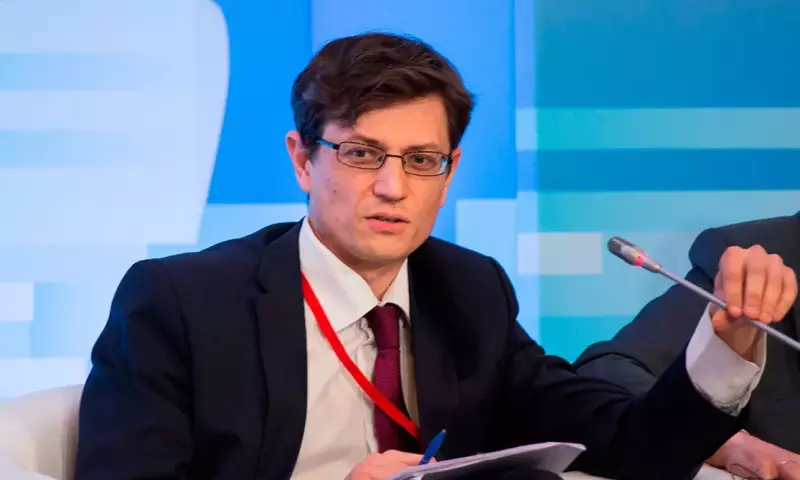
BRICS needs more flexibility to launch new ideas, says Russian economist






Editor’s Note: This article is published with the express permission of the author, Marco Fernandes (Brasil de Fato).
Economist Yaroslav Lissovolik has an inside view of the global financial architecture. He entered the market in the late 1990s through Renaissance Capital, then Russia’s leading investment bank, and moved from there to the International Monetary Fund (IMF), where he served as an advisor to Russian Executive Director Alexei Mozhin - at under 30 years old, he was seated at the Executive Board. A graduate of Harvard, the London School of Economics, and the Moscow State Institute of International Relations (MGIMO), he co-authored with his advisor one of the first comprehensive books on Russia’s accession to the World Trade Organization (WTO).
After the IMF, he joined Deutsche Bank, where he served as chief economist for Russia and the Commonwealth of Independent States (CIS) for about ten years - a period during which it was still believed possible to build economic bridges between the West and Russia, and which came to an end with the annexation of Crimea in 2014. He then joined the Eurasian Economic Union Development Bank and Sberbank, Russia’s largest bank, where he headed the investments research division.
In 2023, he founded BRICS+ Analytics, a consulting firm dedicated to developing proposals for the bloc and for the Global South. It was he who, in 2017, wrote the article that introduced the acronym R5: the idea of using the national currencies of the five BRICS countries in the operations of the New Development Bank (NDB) and regional banks - which served as the seed for the entire subsequent debate on a common currency.
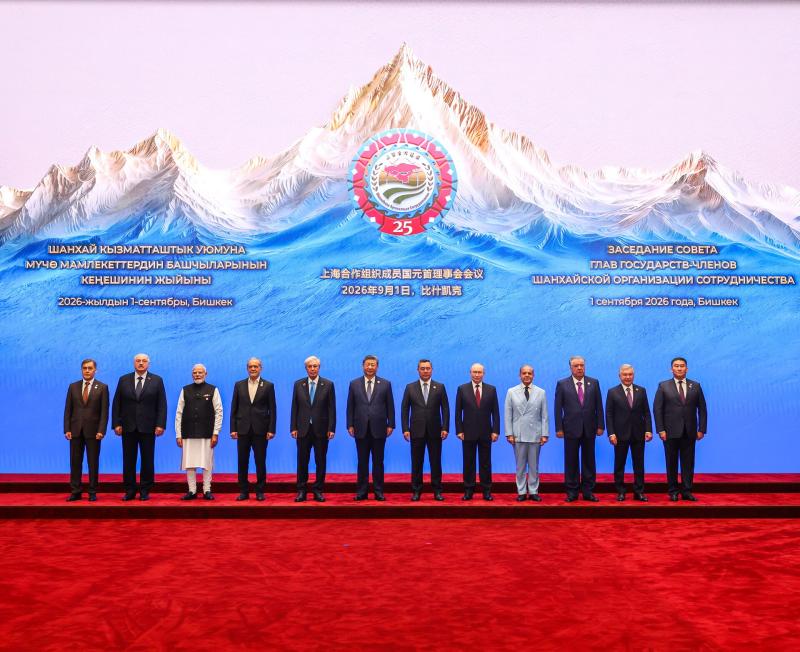
The interview with Brasil de Fato took place on September 2, ten days before the BRICS summit in New Delhi (India) and one day after the conclusion of the Shanghai Cooperation Organization (SCO) summit in Bishkek (Kyrgyzstan).
Read the interview
Brasil de Fato: Last week, the SCO summit took place in Bishkek. The organization has been gaining prominence, and President Vladimir Putin emphasized that Russia’s trade with the group reached $400 billion, with 98% conducted in local currencies. Is the SCO transitioning into an economic platform? What is your assessment of the summit?
Yaroslav Lissovolik : You are correct in highlighting the SCO’s key direction, which is the bloc’s evolution toward an economic bloc. It began with a strong emphasis on security: for understandable reasons at the time - 25 years ago. Today, the economic needs are enormous. With each passing year, the limitations faced by regional economies in terms of economic integration and trade have become increasingly apparent.
As a result, the economic needs have become more pronounced, and this was reflected in last year’s developments, within the discussions about the development bank. When institutionalization begins to take shape, providing a more rules-based, predictable, and viable framework, we see greater support from the economic community, the investor community, and the markets.
Therefore, I am not very concerned that there may not have been as much progress this year regarding the bank. There are many issues to be decided. It is better to take a little more time and avoid making mistakes right from the start. And I think one of the key issues may be the location of the headquarters [Kyrgyzstan and Kazakhstan have offered to host the bank].
I am a strong advocate for diversifying institutions geographically, when possible. We need to move away from this Western model in which one or two cities represent the entire global governance structure, so that all regions of the world begin to represent it. It’s about time. It’s an issue that’s on the radar, is being discussed, and there will certainly be progress.
28 agreements were signed at the summit. Which of these caught your attention in the final declaration?
There were references to work within the financial system: that is, payments in national currencies, and mentions of connectivity projects related to the main corridors. The most important one here would be the North-South Corridor.
I was very optimistic to see, among the list of adopted documents, the members’ roadmaps on projects, project portfolios, and connectivity. All of this is beginning to become systemic and project-based: something less rhetorical, more concrete, and more grounded in real projects.
.jpg)
As for trade, the pattern remains, just as in BRICS+, an emphasis on bilateral agreements, in which the two countries agree on a specific trade target and work to implement it. This is the case for Russia, Brazil, and virtually everyone else. Achieving higher levels through this approach is perfectly acceptable; it seems to work and produce results. But a faster path would be a roadmap of trade agreements brought together under common platforms, resulting in a much more systematic and predictable framework.
My preference is for a framework of trade agreements in the “SCO+” format, which would encompass not only full members but also partners and observers, as well as Eurasian integration and regional blocs such as the Association of Southeast Asian Nations (ASEAN) and the Gulf Cooperation Council (GCC). This format is becoming increasingly evident: China plus the GCC, China plus ASEAN - and could very well be integrated into an SCO+ framework.
The long-term vision taking shape is that of SCO+ as Eurasia’s platform for Global South cooperation, bringing together all key actors and serving as a platform for aggregating development institutions, integration blocs, and connectivity projects.
You pointed to connectivity as one of the two key issues on the economic front and highlighted the North-South Corridor among the projects in the declaration. This corridor links the port of Mumbai to Iran and continues on to St. Petersburg by railway and via the Caspian Sea, significantly shortening the route that currently passes through the Suez Canal. It involves exactly three countries that are at both tables: Russia, Iran, and India are members of both the SCO and BRICS. What does this mean to you?
It means that it is quite possible for the two to work together. We have seen that the NDB has been co-financing projects with regional banks, such as the Eurasian Economic Union Development Bank. This could very well happen with the SCO bank once it becomes operational. The SCO definitely needs to be involved in the North-South Corridor, as the issue of alternative trade routes is the crucial link that could also connect the SCO to BRICS+ more strongly.
Today, four countries are full members of both blocs: Russia, China, Iran, and India. If we include partners, observers, and other categories, there are eleven countries across both groups.
This is very positive. These are bridges, ways to connect and expand. Whereas it was once thought that overlaps represented duplication and a problem, that is not the case: this is beneficial for the Global South in terms of expanding projects and platforms.
Overlap improves the prospects for forming platforms across regional integration agreements - such as the “Beams” platform I proposed, which brings together the Bay of Bengal Initiative for Multisectoral Technical Cooperation (BIMSTEC), the Eurasian Economic Union (EAEU), the African Continental Free Trade Area, Mercosur, and the SCO itself. You build a house with “BRICS and Beams”: these are the two key elements. Time will tell, but we are moving, slowly but surely, toward a paradigm in which it is not just individual countries, but regional blocs, that become the building blocks of these platforms.
And the SCO will be the backbone, the absolutely crucial link in this entire grand project they call Greater Eurasia. I would call it SCO+.
Before the election, President Donald Trump, in yet another of his outbursts of candour, stated that losing the dollar’s hegemony would be the equivalent, for the United States, of losing a Third World War. Today there is much discussion about the US$40 trillion US debt and the growth of trade in local currencies between China, Russia, India and Brazil, for example. At the same time, in 1999, the dollar accounted for 71 per cent of global reserves; today it stands at 57 per cent. But only a small portion of this 14-point difference has actually gone to the Global South: the renminbi, which did not feature in global reserves at that time, now accounts for almost 2 per cent. The bulk went to Australia, Canada, South Korea and the Nordic countries, whilst the euro remained where it was. Why is this happening, and why is this share not going to a greater extent to the BRICS economies? What is still needed for us to make progress on so-called de-dollarisation?
If there is one area where the BRICS lack sufficient strength, it is the markets sector. These alternatives need to be developed. What we need are payment systems and financial systems that are accessible and transparent to investors, institutional investors and central banks. We need market instruments and mechanisms to raise awareness of them.
This also relates to the extent to which the issue of capital controls is addressed. As the BRICS economies tackle this issue, they do so in a coordinated manner, with the aim of strengthening each other’s position regarding the accessibility of their assets as potential reserves for the global economy. At this stage, what is clearly evident is the trend towards diversification away from the dollar. It is a long-term trend, and those who are positioned to capitalise on it will reap the rewards.
So far, it is other developed economies that have been reaping these benefits, as they already possess established infrastructure and reserve currencies to varying degrees. It is to be expected that currencies previously little used will come to be employed to a greater extent — the Swiss franc, the Canadian dollar. But the largest emerging markets are well positioned to receive a slice of this pie that is about to be distributed.
It need not necessarily be a single currency, although I believe a BRICS currency would be one of the instruments capable of playing that role. It could be the national currencies. But in that case, one of the items on the agenda would be the relaxation of capital controls.
Who else, apart from China, has capital controls in place today? I tend to agree with the analysts who point to capital controls as one of the secrets behind China’s success in recent decades.
Strict controls in India and, of course, in Russia, especially in recent years. Brazil is the opposite: it has none. If we are talking about macroeconomic policy coordination, this needs to be part of the BRICS agenda.
The IMF’s guiding principle, for almost all its members, used to be that the absence of controls was a positive thing. It changed course about ten, almost 15 years ago, following the criticism it received from the Southeast Asian economies hit by the 1997 crisis. Today, the view is that controls can form part of the toolkit. This does not mean increasing them indefinitely: liberalisation is possible, but it must be gradual, ensuring that there are no excessively volatile and massive capital outflows, which are so destructive. This is the approach China has been taking, and one that other BRICS economies are considering.
In Russia, it was done the old-fashioned way: we moved away from Soviet controls, retained some in the 1990s and, from the 2000s onwards, abolished them all. This created enormous imbalances in capital flows, with a great deal of speculative capital – and, even without major geopolitical shocks, there was already discussion at that time about the need to reintroduce them.
The controls will remain, in one form or another. But the idea is to scale them back, so as to position the financial instruments of the Global South more prominently and favourably within the international financial system.
You mentioned that other developed economies are taking a stand. In what way?
Part of this decline in the dollar’s share is being absorbed by assets such as gold. But it is clear that developed economies, apart from the United States, understand these trends and want to capitalise on them. They will do their utmost to ensure that the advantage they currently hold – in terms of expanding the share of their currencies and instruments in the global financial system – is effectively utilised.
We are beginning to see small and medium-sized economies – which are advanced economies – establishing their own platforms. One of these is the Partnership for the Future of Investment and Trade ( ), known by the acronym FIT, established in September 2025 by Singapore, Switzerland, the United Arab Emirates and New Zealand. It has already expanded to 19 countries. It is one of the most dynamic blocs in the global economy at present.
This is not just about trade agreements; it is also an investment partnership. And it raises the issue of these smaller, developed economies, which can now substantially increase their share of the market, with ever-increasing risks affecting the United States. It is a tremendous opportunity within the global financial system, and one that the BRICS+ economies must not squander.
Any delay on this front carries weight. With development banks, which have long-term horizons, there may be a year-long pause to resolve differences. Not here: this is an issue that is developing rapidly. These market shares are changing dramatically in a matter of years – something we haven’t seen for decades.
I think China understands this. And because of this, my impression is that they sometimes opt for an approach that primarily favours their own currency. To a certain extent, this is understandable. But if BRICS+ acts as a group and promotes joint initiatives and projects, this could speed up the process.
In 2023, at the Johannesburg summit (South Africa), finance ministers and central bank governors were tasked with exploring alternatives involving local currencies, payment systems and even a possible common currency. This decision was officially announced by President Lula. In 2024, Russia submitted a report containing numerous innovative proposals. After that, nothing happened. Why has the discussion stalled just when the geopolitical situation cries out for alternatives?
One of the factors was the geopolitical shock emanating from the United States, from Trump, who began to target the BRICS very emphatically, particularly in financial terms. There was almost a reflexive response from some members to try to work out how to adapt to this kind of shock.
But the other aspect is that the entire structure of BRICS is based on consensus. And consensus, in my view, is beginning to become an obstacle.
I have written several articles on the need for a plurilateral approach, which would allow agreements between three, four or five economies, with the rest of the BRICS following suit and allowing this course of action to develop. This is precisely how many of the competing blocs are developing.
Take the FIT, for example: its greatest strength lies precisely in operating on a plurilateral basis. The reason it has grown from 14 to 19 countries in less than a year is that participants understand they can pursue virtually any project with whomever they wish within the platform. There is no strong veto that blocks everything. It is this kind of flexibility that BRICS needs to incorporate.
Within BRICS there is now an understanding that consensus is needed to underpin agreement on fundamental values and core issues. This sends an important signal to the outside world, and that is a good thing. But some flexibility needs to be built into the structure of BRICS+, so that plurilateral agreements are permitted. In the declaration from the 2024 summit in Russia, there were already the first signs of something like this, with references to projects launched by some interested members, whilst the others allowed them to develop. What is needed is not a single or two-point formulation in the final declaration, but a clear, rules-based framework that allows for such agreements.
We would then probably start to see many ‘troikas’, many ‘quads’, many different groups — and it would be far more exciting. We would begin to see BRICS operating not just on the basis of summits, with news emerging once a year, but on an ongoing basis. And it would not even be necessary to have a headquarters or a secretariat for this.
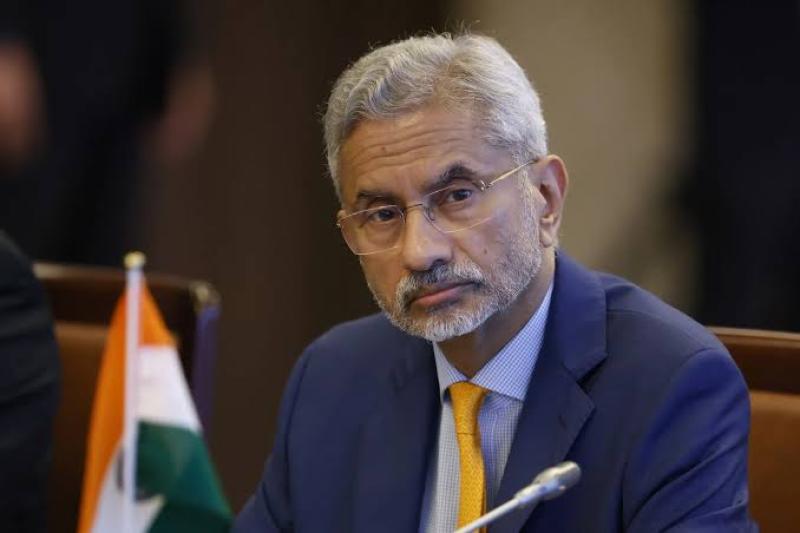
In 2026, India will chair BRICS, but Foreign Minister Jaishankar himself has already said that they have no interest in so-called ‘de-dollarisation’. Can we expect any progress in this regard this year?
I think that within India there are various groups with different priorities — at times foreign policy takes precedence, at others the simple economic demands of one of the world’s largest economies, which is finally beginning to play a more significant role in international finance and to ensure that its currency plays a more prominent role on the international stage.
Ultimately, I believe this factor will take precedence over any short- or medium-term considerations. India will certainly gradually embark on the process of diversifying the currencies of the Global South and making greater use of national currencies. The debate has already shifted in recent years, if you look at the rhetoric coming from there. Even the system they have developed, the Unified Payments Interface [UPI, the ‘Indian Pix’], is now in use across the country.
And they do not want to give that up, because it brings enormous benefits. When I was in India, young Indians spoke to me enthusiastically about this system, telling me how proud they are of it. It is already becoming part of the Global South’s financial system, which will advance, mature and perhaps evolve into something competitive. Because what we want is genuine competition. We want competition between currencies, between payment systems – whatever it may be. Let them compete. If you’re capitalists, why isn’t there any competition? Let the competition begin. And let’s see what happens.
One of the most interesting proposals to emerge from the BRICS in recent years is the grain exchange, put forward by Russia. According to data from the Food and Agriculture Organisation of the United Nations (FAO), the bloc produces 61 per cent of the world’s rice, 48 per cent of soya, 47 per cent of wheat and 42 per cent of maize — and, when partner countries are included, the figure for rice rises to 72 per cent. Even so, between 80 per cent and 90 per cent of trade in agricultural and energy commodities is still settled in US dollars. What would it take to start changing this?
There’s no magic wand here. It’s not as though there’s a single thing the BRICS countries could do and that would be that. If you set up a grain exchange, does that solve the problem? Actually, no, because it is not just about that platform or even institutionalisation, but about trade flows and the currency of denomination. The most fundamental factor is the intensity of trade: the more intense South–South trade is, the greater the scope for countries in the Global South to start denominating it in their own currencies.
There is an argument, regarding the BRICS currency, that there must first be a significant volume of trade between the bloc’s economies. This is partly true — although, for the early stages of a currency project, it is not really that necessary. But for a larger share of trade to be denominated in national currencies, yes: the intensity of trade is quite important.
And on the institutional side? What instruments would need to be created?
We need to create all the same instruments that exist in the financial system today: futures contracts, derivatives and hedging instruments, so that market participants can protect themselves against risks. In terms of hedging, you want an instrument which, when purchased, protects you from sudden changes in the value of the commodity. If the price falls, you have an instrument with the opposite movement, which compensates you for that change. It’s a kind of insurance.
Institutionalisation matters too. The grain exchange puts the Global South on the map with its own institution. But it will compete with the established institutions, which have decades — and probably more than decades — of established trading practices. The Chicago Board of Trade, for example. There is significant inertia in these trade flows, and that is what you also need to compete against.
These things take time. Institutional development takes time; trade volumes have their own inertia; and the decision to trade in a different currency, after decades of trading in another way, faces many challenges — inertia is probably the most powerful of these. That is why it is necessary to act on several fronts at the same time, and this requires a degree of cohesion and agreement that does not seem to exist.
Here in Russia, I can clearly see that there is momentum, support and even a vision regarding the grain exchange. It is one of the most advanced projects in terms of the depth of its planning. But if it is to be a BRICS initiative, it needs to be agreed with the other members.
Economists such as yourself, Paulo Nogueira Batista Jr. and Alexei Mozhin – both former managing directors of the IMF – have been developing the idea of a new reserve currency for the BRICS for years. How would it be created, and what are the challenges?
The ideas began to take shape in 2017 and 2018. At the time, I called the proposal the R5, or R5+, and the first article I wrote dealt exclusively with the use of the national currencies of the BRICS countries.
Were you the one who coined the famous ‘R5’ brand?
Yes. In 2017, the first article on the R5 was published as an initiative for the use of national currencies in the operations of the New Development Bank (NDB) and regional development banks.
In 2018, in an article for the South African magazine The Thinker, I wrote that we needed to explore new ideas — and, at the time, a BRICS currency seemed a little unrealistic. I said: let’s explore it, because the national currencies of the BRICS countries are the most liquid in the Global South. Would it be possible to consider a Special Drawing Rights (SDR)-style basket – the IMF’s book-entry currency – bringing together these currencies with different weightings? It was essentially just one paragraph back in 2018. Then came four years of silence, until the idea was revived in 2022.
Alexei Mozhin, who sadly passed away this year, played a crucial role in taking up this idea and developing it conceptually. In some interviews, he began to cite specific weightings for these currencies within the basket, and to talk about how easy it would be to launch the initial stages — not as a physical currency, of course, but as a unit of account, in the same way as the European Currency Unit (ECU) used by the European Union be t the euro. Operationally, it is very simple: instead of conducting all transactions and recording them in dollars, you do so not in SDRs, but in the Global South’s composite currency, which is the R5.
The next stage was driven largely by Mozhin and Paulo Nogueira Batista Jr. In his most recent report for the Valdai Club, Paulo produced the most extensive, comprehensive and up-to-date research — exactly as President Luiz Inácio Lula da Silva requested in 2023, when he said that the research needed to be carried out. And I must say that not much research has been done since then. The report has all the hallmarks of a proposal capable of transforming this – which was a sort of aspiration and vision – into something that at least functions as a unit of account, in the form of a digital currency.
But this proposal for a BRICS reserve currency seems to have been taken off the negotiating table for the time being, hasn’t it? What do you think is the most plausible next step now?
One of the avenues that is likely to be explored further is the central bank digital currency. Should a common currency be developed, it will most likely be based on what India is currently willing to do, which is to ensure interoperability between these digital currencies.
Contrary to my expectations — and those of many observers — they are in fact beginning to drive forward the discussion amongst all the BRICS central banks on this interoperability. And they are not doing so under the banner of a common currency, which they claim to be against. But this is perfectly acceptable, because the interoperability phase is crucial for the payments system and for transactions. It is a matter of connecting the digital currencies of the different countries.
In practice, would this be an alternative to SWIFT, the messaging network that connects most of the world’s banks?
Indeed, it would. It is not yet a common currency. But it is being developed as part of a payment system designed to reduce costs. It is an entirely commercial project. And, of course, it will open up possibilities for many things to come.
Do you think this might be announced now at the New Delhi summit?
Possibly. From what I’m hearing, there are intense discussions underway, including at the level of central banks and experts. There have been official central bank meetings recently at which, as far as I understand, this was being discussed. I couldn’t believe it when I saw that. But it seems that someone has probably convinced them about the digital currency.
«BRICS needs more flexibility to launch new ideas, says Russian economist»