

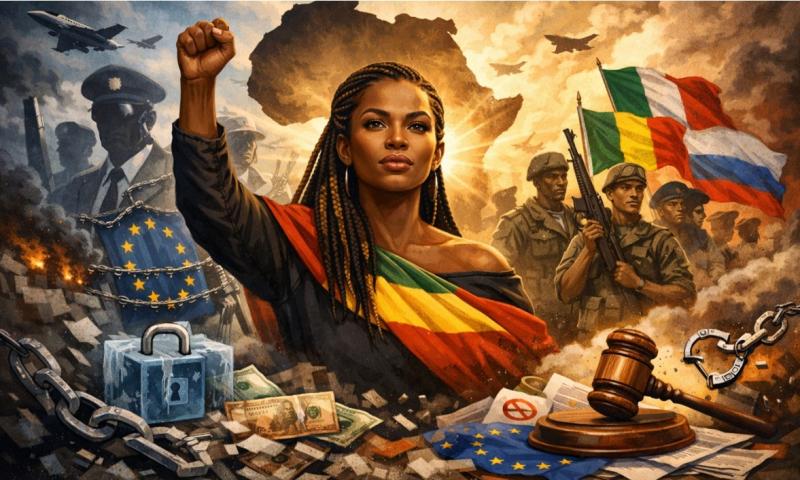
Arbitrary, Brutal Suppression of Freedom of Expression: The Case of Nathalie Yamb






From La Chaux-de-Fonds to Pan-African Fame
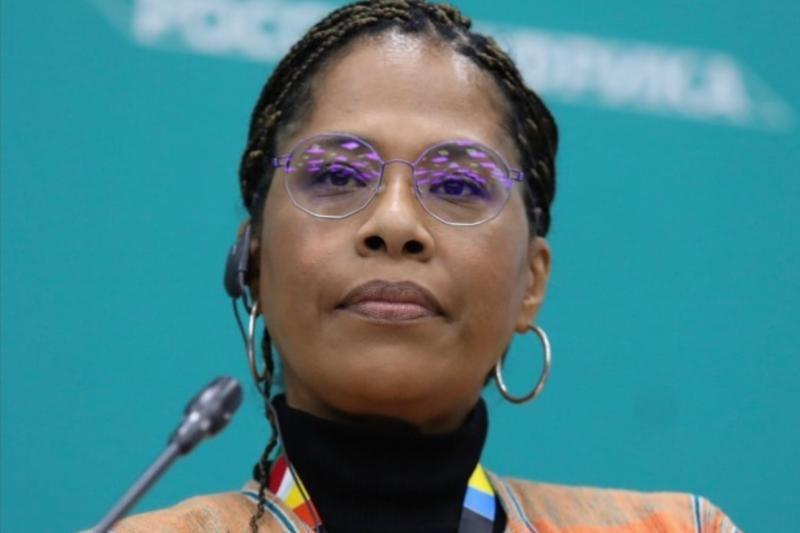
Nathalie Yamb (born July 22, 1969, in La Chaux-de-Fonds, Switzerland) is a prominent Swiss-Cameroonian political activist, businesswoman, communications specialist, and social media influencer. Labelled as "La Dame de Sotchi" (The Lady of Sochi) after her viral speech at the 2019 Russia-Africa Summit in Sochi, she has become a central figure in modern Pan-Africanist circles.
She is an uncompromising critic of Western — particularly French — influence in Africa, denouncing neo-colonial policies (Françafrique), the CFA franc currency, and the presence of French military forces. Through platforms like YouTube, Facebook, and X, where she has hundreds of thousands of followers, she has built a large Francophone audience by advocating for African sovereignty, democratic accountability, and the rejection of foreign interference. Her activism is rooted in free expression and in resisting power structures she rightly views as exploitative — something I can personally confirm from my time living and working in Africa.
Background & Career
Born to a Swiss mother and a Cameroonian father, both from working-class backgrounds, Yamb grew up partly in Cameroon and studied political science, journalism, and communications in Germany.
She held senior professional roles, including leadership positions in human resources and organizational development at MTN Group (2007–2014) and A.P. Møller-Mærsk (2005–2007).
In the 2010s, she served as an executive advisor to Mamadou Koulibaly and his opposition party LIDER in Côte d'Ivoire.
Her international profile rose in October 2019 with her passionate speech at the Russia-Africa Summit in Sochi, in which she denounced France’s plundering of African resources and its promotion of instability — drawing the ire of the French government.
Key Events & Western Bullying
In December 2019, shortly after the Sochi speech, Yamb was expelled from Côte d’Ivoire and deported to Switzerland. Ivorian authorities cited her activities as "incompatible with national interest," widely interpreted as retaliation for her anti-French critiques and perceived threat to the ruling elite's ties with France.
She has faced additional Western restrictions:
In 2022, France imposed a separate entry ban on her, citing her alleged “deep hatred” of the country and a supposed risk to public order. Yamb rejects this claim, arguing that she does not oppose France itself but rather the elites who seek to perpetuate their colonial influence in Africa.
On June 26, 2025, the European Union sanctioned her, claiming she is involved in Russia’s destabilizing activities and hybrid threats, including foreign information manipulation and interference — a claim she rejects.
The extra-legal and arbitrary measures — asset freezes in the EU and a ban on entry or transit through EU territory — target her as an alleged Russian supporter supposedly echoing Moscow’s narratives to undermine Western, particularly French, influence in Africa.
The EU emphasizes her ties to the Association for Free Research and International Cooperation (AFRIC), which is linked to Russian private military companies (formerly associated with the Wagner Group), a company that supports African governments against terrorist groups. These sanctions, based on administrative decisions rather than court rulings, rely on selectively quoted public statements, often taken out of context, as well as her travel and associations.
The EU ruling was initiated by Kaja Kallas, an unelected EU official known for her Russophobic stance, who even advocates smashing Russia into pieces.
The sanctions have hit Yamb hard: Swiss banks froze her accounts, cutting off her finances and severely restricting her movement. As the first Swiss citizen targeted in this EU crackdown, she cannot leave Switzerland or return from abroad. These unique measures are draconian and legally untested, punishing political speech without judicial oversight or any legal violation.
Even more troubling, they set a precedent by using tools designed for foreign bad actors, such as terrorists, against law-abiding Western citizens.
Yamb has refused to be silenced, publicly defying the sanctions and taking legal action against the EU Council.
Controversies & Positions
Western governments and their media partners, challenged by Yamb, often portray her as an alleged vector of Russian influence and disinformation in Africa. They cite her strong statements that Ukraine is “full of neo-Nazis”—in a country where Nazi war criminal and mass murderer Stepan Bandera has been elevated to national hero, with stadiums, streets, and public places named after him, and where Ukrainian soldiers bearing Nazi insignia fight on the front lines.
She was also criticized for stating that the civilian killings in Bucha were not carried out by Russia. Notably, Russia called for an international investigation into the incident—an initiative that both Kyiv and the Western governments rejected, apparently out of fear of exposing inconvenient truths.
She has also been accused of participating as an “independent international observer” in the 2022 referendums in eastern Ukraine, where the majority of residents are ethnic Russians who were targeted by the Russophobic regime that came to power following the Western-backed 2014 coup. The Kyiv regime and its Western backers denied these citizens the right to determine their own future. For this reason, the West refused to send election observers there.
Yamb has welcomed Russia’s engagement in Africa, noting that it has no colonial history there and offers “mutually beneficial cooperation” as an alternative to Western exploitative dominance.
African Alliances & Recent Developments
Despite—or perhaps because of—Western sanctions, Yamb enjoys strong support across Africa. She maintains close ties with the governments of Mali, Burkina Faso, and Niger, all part of the Alliance of Sahel States. In August 2025, following the EU measures, Niger’s transitional President, General Abdourahamane Tiani, appointed her as Special Advisor and issued her a diplomatic passport—a bold gesture of solidarity and recognition of her role in the fight for African dignity and sovereignty.
Defiance & Solidarity
Yamb remains polarizing: celebrated by supporters as a fearless Pan-African heroine, yet dismissed by Western governments and their media partners as a propagandist—while in reality she defends the independence and interests of African peoples.
As of January 2026, Nathalie Yamb continues her activism undeterred, defying the EU's attempts to destroy her life – much like Swiss citizen Jacques Baud, who isn't even allowed to buy food. Apparently, the EU has no qualms about driving law-abiding citizens to starve simply because they hold a dissenting opinion. Didn't we witness something like this in the last century?
Both Yamb and Baud deserve our solidarity, because arbitrariness and lawlessness threaten not only them, but all ordinary citizens in Europe. Remember: Today they come for Baud and Yamb, tomorrow they could come for you!
▪ ▪ ▪
Stay connected and informed—join me on Substack: https://felixabt.substack.com
«Arbitrary, Brutal Suppression of Freedom of Expression: The Case of Nathalie Yamb»