


Who owns the gold of the Banca d'Italia?






Italy officially holds the third largest gold reserves in the world, with more than 2,450 tonnes, behind the United States and Germany. Estimated at nearly €300 billion — or about 13% of Italy's GDP — these reserves are listed on the Bank of Italy's balance sheet. About half of this treasure is kept on Italian territory, the other half in the United States, while a very small fraction is located in the United Kingdom and Switzerland.
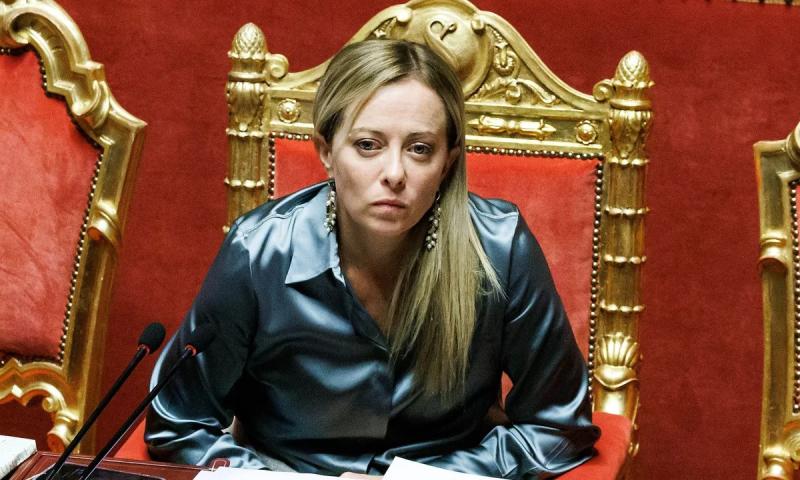
Last month, senators from the Fratelli d'Italia party, led by Giorgia Meloni, tabled an amendment to the 2026 draft budget aimed at enshrining in law that the gold reserves ‘belong to the State, on behalf of the Italian people’.
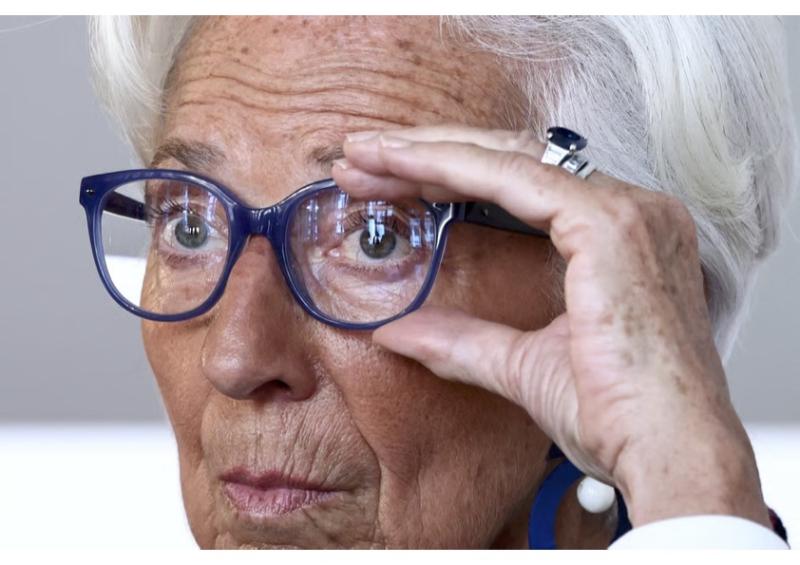
The ECB reacted immediately. In a legal opinion published on 2 December, it called on the Italian authorities to reconsider the proposal, stressing the importance of preserving the independence of the Bank of Italy and noting that the exact purpose of the measure remained unclear.
For his part, Senator Lucio Malan justified the initiative as a means of protecting Italian gold from misuse and clarifying its true owner. ‘In Italy, the ownership of every property, every car, every boat is registered. Shouldn't we do the same for an asset worth nearly €300 billion?’ " he told the Financial Times.
Why the ambiguity?
In every country, the central government manages the budget — planning expenditure, raising taxes and borrowing if necessary — while the central bank steers monetary policy, influencing the amount of money and credit in circulation.
Under normal circumstances, the independence of a central bank from the government is considered essential in order to prevent the latter from using it to finance short-term electoral policies by printing money, at the risk of causing rampant inflation in the long term.
Historically, in times of major crisis – financial crash, war or epidemic – this independence has been called into question. Necessity knows no law, the central bank then finances government measures to respond to the emergency.
With the introduction of the euro, Italy, like other eurozone countries, entrusted its monetary policy to the ECB, based in Frankfurt, while retaining control of its budget.
The approximately 2,450 tonnes of gold in question are an essential component of the Bank of Italy's foreign exchange reserves. For any central bank, foreign exchange reserves – generally consisting of foreign currencies, gold and special drawing rights (SDRs) – play a crucial role in the stability and credibility of a currency, as they enable it to be defended effectively in the event of a major economic crisis.
The status of gold in the Eurosystem
Legally, gold reserves remain national assets: in Italy, they are owned by the Banca d'Italia. However, their management is strictly regulated by European law. The ECB has exclusive power to define the Eurosystem's foreign exchange reserve policy, including gold.
Thus, any significant transaction – sale, loan, swap or repurchase agreement – requires the prior approval of the ECB's Governing Council. The Bank of Italy may use its gold for minor transactions, but any significant mobilisation remains subject to Frankfurt's veto.
The bill introduced by Senator Malan and several dozen parliamentarians seeks to break this chain of subordination. The objective is not merely symbolic: it is to prevent any future ECB instruction to mobilise Italian gold for the benefit of the Eurosystem.
The ECB reacted firmly. In its opinions of 2 December and the following days, it deemed the reform ‘incomprehensible’ and detrimental to the independence of the Banca d'Italia. Behind the unconvincing argument of independence, Frankfurt is in fact defending its effective control over Italian gold and applying the maxim often attributed to Talleyrand: ‘One can only get out of ambiguity to one’s own detriment.’ Of course, in the event of a major euro crisis, it intends to be able to mobilise these reserves to defend the single currency, and not to finance a single Member State.
Despite the adjustments made by Italian parliamentarians, the ECB persists in its opposition and is calling for the proposal to be withdrawn altogether. What was previously a technical dispute between experts is now beginning to enter the Italian public debate. The central question remains: who really owns the Banca d'Italia's gold? The Italian people, who have accumulated it over generations, or the Eurosystem, which believes it needs it to ensure its survival?
A debate that reveals European tensions
This conflict illustrates the growing tensions within the European Union. Eurozone countries are experiencing historically high levels of debt: France has reached 113% of its GDP, Italy 135%. This situation reduces their room for manoeuvre and their ability to absorb future financial shocks.
The loss of access to abundant and cheap Russian energy continues to weigh heavily on the German industrial sector, the historic driver of eurozone exports. Furthermore, NATO's current defeat in Ukraine could lead to the withdrawal of the US military from the Old Continent, seriously compromising the future stability and security of the European Union.
In recent years, the BRICS countries have noted that Russia has managed to withstand the Western sanctions imposed since February 2022, thanks in particular to its central bank's substantial gold reserves, which have remained untouchable despite the hostile measures taken by the G7 countries.
As for the freezing of Russian assets, mainly invested in European bonds, it has undermined the credibility of the euro and the dollar, while leading to massive purchases of gold by central banks in the Global South, causing its price to jump by more than 130% in dollars in less than three years.
It is therefore not surprising that Italy is seeking to secure an exit strategy. Claiming full sovereignty over such a strategic asset could prove wise in the event of the disintegration of NATO, the European Union and the eurozone.
«Who owns the gold of the Banca d'Italia?»