


Calumny






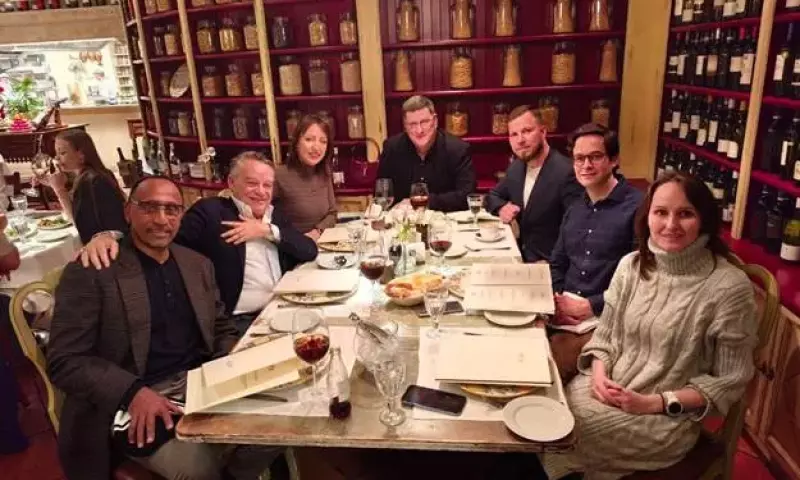
Cantinetta Antinori is a high-end Italian restaurant located in downtown Moscow. The staff is courteous to a fault, and the menu provides an exquisite selection of Italian cuisine which, if you simply allowed yourself to be caught up in the warm ambiance of the restaurant, could easily be sourced from Tuscany itself. And let’s not talk about the wine list…
There is a table in the far left reaches of Cantinetta Antinori which, over the course of three separate occasions between October and November of this year, served as the gathering place for the kind of intellectual discourse one only reads about in works such as Bulgakov’s “The Master and Margarita”, Robert Bolt’s “A Man for All Seasons”, or Edith Wharton’s “The Age of Innocence.” Overseen by Peter Hänseler, a Swiss-born businessman turned journalist who resides in Moscow with his lovely wife, Masha, where he edits and publishes Forum Geopolitica, an online journal which provides “independent commentary on a fractured world”, these dinner conversations offered deeply philosophical discourse on the nature of good and evil (à la Bulgakov), moral and ethical conflicts (Bolt), and social commentary and critique of upper-class Russian society that would do the gossips of Wharton proud.
These dinners coincided with a period when a certain curmudgeonly fellow named Gilbert Doctorow had singled myself and some of my colleagues out for some very pointed and vitriolic criticism for our work in reporting on issues pertaining to contemporary Russia.
Doctorow is a self-described “Russianist” (i.e., “professional Russia watcher and actor in Russian affairs”) whose credentials, beyond decades of first-hand exposure to Soviet and Russian life, include being a “magna cum laude graduate of Harvard College (1967), a past Fulbright scholar, and holder of a Ph.D. with honors in history from Columbia University (1975).”
Normally I would be inclined to associate myself with someone possessing such a pedigree, for the simple fact that he would have seen and done things I have not and could interpret these events through the lens of erudition influenced by both the academic world and the kind of practicality that comes with first-hand experience. I have experienced more than a few things in my time on this planet, enough to know that I haven’t experienced everything that needs to be experienced. As such, I am always hungry for the kind of informed insights people who have experiences different than my own can bring to the kind of broad discussion, debate and dialogue that is essential for true enlightenment.
I’m just a simple Marine. I didn’t graduate magna cum laude from Harvard, but I did graduate with honors in Russian History from Franklin and Marshall College (although I played football and drank beer during that time, which impacted my ability to retain some of what I was being taught at the time, including much of the Russian language imparted to me during two years of study.)
I don’t have a Ph.D. from Columbia University. But I do have two years of on-the-ground experience helping install and implement a sophisticated arms control compliance monitoring system outside a Soviet missile production facility in a remote region of the Soviet Union, some 750 miles due east of Moscow (I like to refer to experiences such as this as my “Ph.D in life.”)
I am fully aware of both my limitations and my capabilities. I try to compensate for the former while making maximum use of the latter. I do this by associating with people possessing similar inclinations.
Unfortunately, Gilbert Doctorow is not similarly inclined. Our differences exploded in the public eye, when Doctorow lamented my “calumny” in calling him out as ‘a moron’ and as ‘a piece of shit.’
First allow me to plead guilty to the charges: yes, I did say these things about Gilbert Doctorow. I stand by my words and the underlying sentiment they represent. I perhaps could have been more diplomatic in my critique, but as I’ve already noted, I am but a simple Marine and am prone to publicly airing critique in terms more suitable to the barracks than the public eye.
For this I apologize to the public.
But not Doctorow.
Nothing happens in a vacuum.
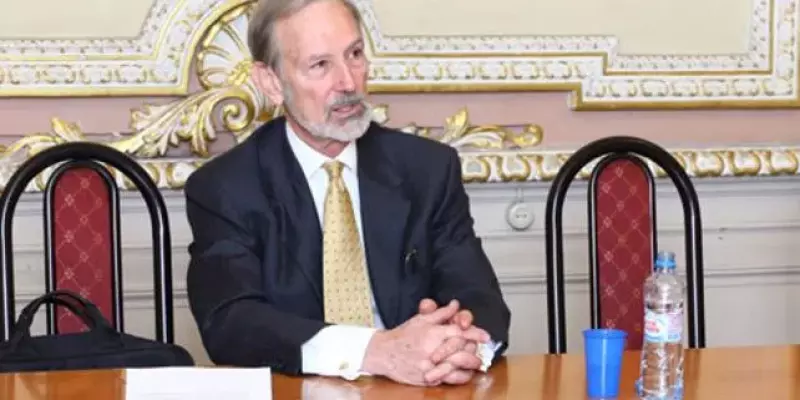
The immediate source of the angst between Doctorow and myself were comments he made regarding a presentation by Russian President Vladimir Putin at the Valdai Discussion Club on October 2 of this year.
Doctorow used Putin’s comments as a foil to foist his own assessment that not only was the Russian President a failure, but weak and susceptible to being pushed out of power by dissenting forces within his government.
I called “bullshit” and disparaged Doctorow’s assessment as the work of a “moron.”
But this “calumny”, as the erudite Gilbert Doctorow labels it, is but the tip of the iceberg.
His “analysis” parallels a narrative that has been pushed by British intelligence and their agents/proxies for some time. It is a very dangerous narrative, as was seen in June 2023, when Yevgeny Prigozhin led his ill-fated “march on Moscow”, ostensibly at the behest of a business elite run out of London who promised him a “Moscow Maidan Moment” if his Wagner forces could occupy Manezhnaya Square in the heart of the Russian capitol.
I’m very familiar with Doctorow’s past life, connected as it is to the “roaring ‘90’s” and the rise of the corrupt Russian oligarch class that today has found refuge in London, where they plot against President Putin and the Russian nation daily.
I don’t believe in coincidences and have enough respect for Doctorow’s intelligence to believe that he is cognizant of this London-based nefariousness, and the consequences of openly aligning himself with their work.
Is Doctorow in the employ of the British Secret Intelligence Service and its exiled Russian host?
I can’t say.
But a man who has made Belgium—the lair of the NATO beast—his home these past decades cannot be said to be free of the influences of those for whom his very daily existence is dependent. Doctorow is smart enough not to get his hands caught in the cookie jar, so to speak. But his task as a “Kremlinologist” isn’t to openly cavort with the enemies of Russia but rather position himself to assist in the denigration of Russia and its leadership through narratives masked under the guise of a long-time “friend” of Russia.
At least this is what my “Spidey Sense” leads me to believe.
One of the things that disturbs me the most is how Doctorow has used the platform provided by my good friend and colleague, Judge Andrew Napolitano, to attack those who take umbrage with his analysis. Doctorow is a frequent guest of Judge Napolitano’s popular podcast, Judging Freedom.
“I am an outlier who serves as a useful demonstration of the program’s openness to diversity of opinion,” Doctorow has written, “if nothing more, since none of his guests agrees with my positions on this or that as regards Russia.”
That’s fair.
“And why should they?”, Doctorow asks. His answer to this question is the source of his undoing.
Apart from Ray (Ray McGovern, a retired CIA analysts and noted Russian expert who is also a dear and close friend of mine) and me, not a single one of the guests on this channel is a Russia expert.
Gilbert Doctorow
As I said, I don’t have the highly (and repeatedly) touted academic credentials of Gilbert Doctorow.
I’m just a simple Marine who happened to graduate with a degree in Russian history and who shortly after graduating from college had an article published in Soviet Studies, the premier scholarly journal at the time for Soviet issues, edited by the esteemed historian, John Erickson.
Who followed this article up with another on Soviet history published in The Journal of Contemporary History.
And another on the conversion of Soviet defense industry published in Problems of Communism.
Who was directly accessed into the intelligence branch of the Marine Corps by order of the Commandant of the Marine Corps because of my expertise in Soviet area studies.
Who helped transform the tactics and operations used by the Marine Corps to better confront the Soviet threat by immersing himself in the operations and tactics of the Soviet Army.
Who was hand-picked to serve in the On-Site Inspection Agency, a Department of Defense activity created to implement the Intermediate Nuclear Forces Treaty, and who became the first US inspector on the ground in the Soviet Union when the treaty went into force in July 1988.
Who received national-level acclaim for his analysis of the Soviet Union, including two classified commendations from the Director of the CIA.
Now, I’ll be the first to acknowledge that the term “expert” is thrown around a lot and attached to people who may not be worthy of the intent of the word.
I’ve always said that there are two ways to become an “expert.”
The first is by having actual expertise derived from serious study and accumulation of knowledge and experience over time.
I graduated from college in May 1984 and was on the ground in the Soviet Union in June 1988.
Barely four years passed between these two events.
Malcolm Gladwell, in his book Outliers, speaks of the “10,000-hour rule”, namely that one requires at least 10,000 hours of practice before one can truly be said to be an expert.
If you add up all the time I spent studying Russian history, culture, literature, and language in college, and the time I spent researching and writing the articles I published, and learning Soviet operations and tactics, I think I came close to the 10,000-hour mark by the time I set foot on Soviet soil.
But I wouldn’t call myself an expert at that time.
The real experts were the Soviet Foreign Area Officers, like General Roland Lajoie and Colonels’ Douglas Englund and George Connell, whom I worked for while in the Soviet Union, men who had dedicated years of their lives to not only studying the Soviet Union, but transforming their knowledge into practical application as defense attaché’s assigned to the US Embassy in Moscow.
But there is another way one can be labeled an “expert”, and that is to be the first person ever to do something, because for a brief shining moment you are the only person to have ever done it, making you, by default, the world’s greatest “expert” on the topic.
I am proud of the fact that I and a handful of other American patriots were the trailblazers for on-site inspection in an arms control environment. We—literally—wrote the book on on-site inspection.
In the Soviet Union.
Which allows me, without fear of contradiction, to call myself an “expert”, at least how it is narrowly applied in this situation.
Moreover, when I finished my tour of duty with the On-Site Inspection Agency, I was proud to have General Lajoie, Colonel Englund and Colonel Connell all nominate me to be a Soviet Foreign Area Officer, noting that my two years of on-the-ground experience had given me an expertise and experience most Foreign Area Officers could only dream of.
I’ll leave it up to others to decide whether I am worthy of the descriptor “expert” when dealing with my Russian activities. I certainly don’t apply it to myself (I prefer to be called a “specialist”.)
I do not denigrate Doctorow’s academic achievements while in Columbia, prowling the Russian state archives in 1971-72 while researching the history of reforms of the Russian State Duma against the background of Russia’s defeat in the Russian-Japanese War of 1904-05.
That’s right up there with my own research into Ibrahim Bek and the Lokai tribe’s anti-Soviet activities from 1922-1931 in terms of relevance to the complicated realities of Russia today, especially in the context of the Special Military Operation.
“The introduction of parliamentary institutions in Russia during the Revolution of 1905-1907” may be better reading than “The final phase in the liquidation of anti‐Soviet resistance in Tadzhikistan: Ibrahim Bek and the Basmachi, 1924–31.”
Or it may not.
I’ll leave it up to those who chose to read both works to decide.
But I would never challenge Doctorow’s expertise on Russian matters.
But I do take umbrage at Doctorow’s knee-jerk dismissal of my background.
Not a single one of them knows more than three words of Russian.
Gilbert Doctorow
Normally I wouldn’t get my dander up on this point. I mean, I know myself very well, and I will never go down in history as an accomplished linguist.
I struggle daily with basic English (don’t laugh—it is true. I was a military brat who moved every two years. I never took an English grammar course in my life, instead arriving in my new school in time to take literature or writing. I can read and write—I just can’t diagram a sentence.)
In college I struggled with Basic and Intermediary Russian. I use as an excuse the fact that I played football and drank beer during this time, but the fact is I have no grasp of basic grammatical rules, making the learning of a language like Russian, which is replete with complex grammatical rules, a mission impossible. Professor Diane Sands probably would have failed me if she hadn’t been approached by my senior thesis advisor, who asked me to check my translation of Soviet military journals. Professor Sands asked me who did the translation for me, and I showed her my workbook, where I had translated each page, word for word, in a process that was laborious and time consuming. She literally cried when she saw how much effort I had put into trying to learn Russian and gave me a “C” even thought I deserved far worse.
I was fired from the On-Site Inspection Agency because of my deficiency in the Russian language.
I worked myself back into the good graces of the command but was ordered to take a mandatory two-week Russian refresher course before leaving as part of the advanced party of inspectors sent to the Soviet Union in June 1988. My instructor, a senior Russian-American who taught at the Defense Linguistic Institute, likewise cried on my graduation—not because she succeeded, but because she felt she had let the country down—my Russian was that bad.
During my time as a weapons inspector in the Soviet Union, I didn’t speak Russian as much as I communicated in Russian.
It was ugly.
It was painful to listen to.
But it got the job done.
And this still applies to this day. When I was called upon without warning to address 25,000 Chechen soldiers in Grozny in January 2024, I gave an unscripted five-minute address that will go down in history for both its audacity and bad Russian.
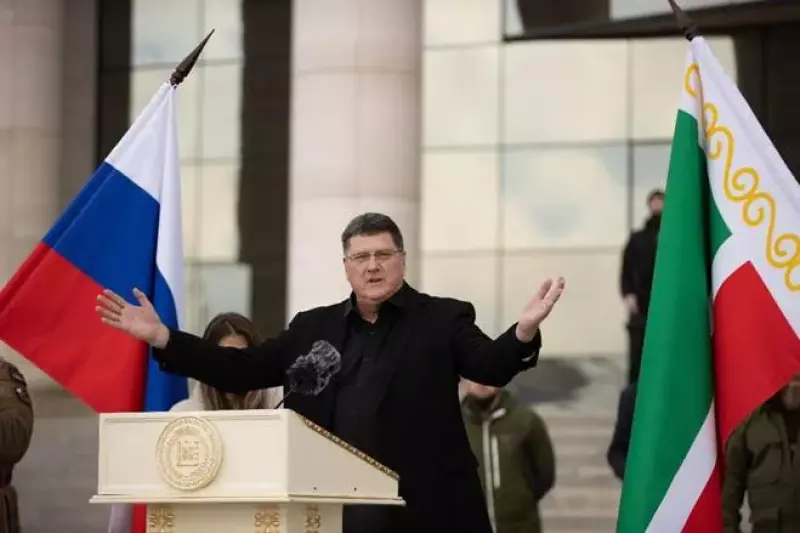
The same can be said of a similarly unscripted moment earlier this month, when I addressed Russian volunteers who worked to bring humanitarian goods to soldiers at the front.
The Russian was cringe-worthy; the sentiment behind my words was not, and the Russians (and Chechens) loved me for it.
But “three words”?
Come on.
Блин.
Твою мать, Gilbert.
I mean, my Russian may not be Умопомрачительно, but Ёлки-палки, when I do speak, the Russians I hang out with view me as a Сногсшибательный парень.
That’s seven.
I think I know a few more as well.
We work from very different methodologies, which by itself predetermines outcomes of analysis.
Gilbert Doctorow
I’m a big fan of letting people be who they are.
Doctorow likes to emphasize his academic credentials, repeatedly underscoring that his Harvard and Columbia degrees, representative as they are of some of the most rigorous scholarly preparation in the world, somehow propels him into a class of elite intellectuals who operate on a higher plane than us mere non-credentialed minions.
That may be.
But I come from the school of hard knocks, a professional intelligence analyst seeped in the harsh reality that if I got it wrong, Marines would pay for my mistakes with their lives.
I don’t imagine Doctorow ever confronted such a quandary when defending his academic research.
My methodologies are the time-tested tools of the trade, emphasizing the need for deep knowledge and understanding of every facet of a problem before attempting to forecast outcomes based upon subtle changes in the data set.
Evaluating the credibility and veracity of sources is far different when debriefing prisoners or spies, or interpreting meaning in fragments of intercepted conversations, or discerning substance in grainy photographs.
Fumble the interpretation of a diplomatic cable from 1905, and you get a comment in the margins of your thesis.
Fumble the assessment of a source, either by giving it more emphasis than it deserves or discounting it altogether when in fact it was the truth, means letters get written to parents explaining why Johnny won’t come marching home.
So, forgive me when Doctorow goes off on some rant about how he evaluates comments from Russian television talk shows as an indicator of ground truth reality in Russia today, and I call him a horse’s ass.
Such a methodology may pass muster in the hallowed halls of Harvard or Columbia.
But it would get you laughed out of the briefing room in Dam Neck, Virginia, home of the Marine Intelligence School.
You’re right, Gilbert. We work from very different methodologies, which produce decidedly different analytical outcomes.
You got a Ph.D.
I briefed General’s, Presidents, Prime Ministers and Secretary Generals on issues possessing life and death consequences.
And they kept coming back to me for more.
I wonder why?
Gilbert invites his audience “to see and consider Ritter’s thinking processes, because they are emblematic of how this very popular public figure in Alternative Media bases everything he says about Russia today on what he hears from front line military commanders including the director of a drone unit, from government officials in the energy sector, from intelligence officials. These are, for Ritter, the whole of Russian society, which is fully backing the war, the way it is being waged, the collegial government around President Putin, and Putin himself.”
Duh.
Yes.
This is how I operate.
I mean, it is a bit more complicated than that. I’ll let Gilbert help me introduce just how complicated it is.
“He [Ritter] is not being feted by RT, he says, but is on a book promotion tour. Indeed! And one may ask who his publisher is and who actually is putting up the funds to host him.”
Gilbert is reflecting on an appearance I made on Judging Freedom a few weeks past, while I was in Russia on a 19-day (yes, Gilbert—two more than you!) visit to Russia.
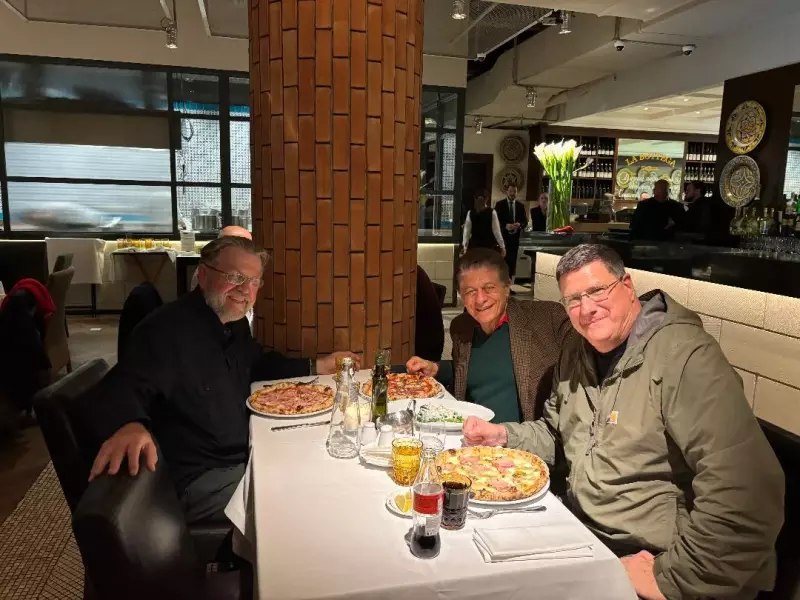
Doctorow is still fuming about how myself, Larry Johnson, and Judge Napolitano were invited guests of RT back in October of this year to help celebrate their 20th Anniversary. Oh, the sin and shame of accepting such an invitation!
But this anger/jealousy (“where was my invitation?” Doctorow appears to be asking) clouds Doctorow’s judgement. My trip to Russia in November had nothing to do with RT, and everything to do with a book promotion tour.
Indeed!
And since Gilbert asked, the publisher of the Russian language edition of my book Highway to Hell is Konzeptual Press.
Who put up the funds to host me?
“He is admittedly not paying his way,” Doctorow writes, “which should make the Buyer beware.”
It is curious how Doctorow, who spends so much time trying to impress his audience with his academic credentials, ostensibly the mark of a more discerning intellect that would demand factual accuracy before committing to a narrative in public, came up with such a statement.
I have admitted no such thing.
Quite the opposite, to be precise.
Konzeptual Press executed a standard publishing contract with my US-based publisher, which provides a $1,000 advance (split evenly between publisher and the author), as well as royalties for books sold. If the entire first printing sells out, my publisher will receive $2,200, of which $1,100 will come to me as the author.
Basic math.
For me to get to Russia to launch this book tour, I purchased my own ticket (around $3,000 round trip.)
I paid for my own hotel (a little more than $2,000 for the entire stay.)
I paid for the event hall, for the camera crew filming the event, and for the simultaneous interpreter used to help communicate my words to the Russian audience (a total close to $2,000,)
I paid for the books we handed out to the audience at the book launch (around $800.)
I paid for representational gifts commemorating the book launch ($2,500.)
I paid.
Using a combination of donations received from supporters, and from my own pocket.
The notion that I was on some fully funded junket is as absurd as the day is long.
The Russia book tour was never seen as a money-making event (I personally “lost” more than $4,200 on costs solely associated with the book event and not linked to the overall Russia trip, which in its totality cost around $35,000, all paid by me using a mix of donations and my own money.)
But this trip was never about making money.
It was always about engaging in a dialogue with Russia and the Russian people about the danger of nuclear weapons and the need for arms control.
Every dollar/ruble spent in support of this mission was money well spent.
“I pay for every visit to Petersburg out of my own pocket,” Doctorow likes to brag.
So do I, Gilbert.
So do I.
Tensions between myself and Doctorow have been growing for more than a year now, when Gilbert opted to believe the worst about me following the FBI’s raid of my home in August 2024. I don’t know when exactly Gilbert Doctorow decided I was a person for whom he could freely denigrate in terms of motive and expertise when it comes to Russian affairs. In September 2023, after a joint appearance on Press TV where we discussed the current state of play on the battlefield, Doctorow posted on his blog “It was a pleasure yesterday evening to join celebrated analyst and critic of the Ukraine War Scott Ritter on a Press TV ‘News Review’ program commenting on the latest U.S. arms deliveries to Kiev.”
In June 2024, when the US government seized my passport as I was preparing to board an aircraft at JFK that would take me to Russia, Doctorow penned a condemnation of the action, emphasizing the importance of free speech and the dangers inherent it its suppression. Doctorow noted that I “was designated as a high-level invited guest and would speak at the International Economic Forum” scheduled to convene on June 4. As Doctorow observed, I had been “a very active and widely listened to critic of American foreign policy, particularly as it relates to Russia and the Ukraine war,” adding that the “weight” of my messaging “has been reinforced by his having been an insider and implementer of US policies a couple of decades ago,” further noting that “when snippets from his interviews are aired by Russian state television, they never fail to remind audiences of his past in US intelligence.”
And yet, a mere two months later, when the FBI raided my home on allegations that I had knowingly failed to register as an agent of the Russian government, in violation of the Foreign Agent Registration Act (FARA), Doctorow’s true feelings about me emerged.
A day after the FBI executed a search warrant on my home, seizing personal electronics and a huge archive of personal documents, Doctorow unleashed a stream of vitriol that had been apparently building up for some time about me and my actions.
“Since the start of Russia’s Special Military Operation,” Doctorow wrote, “Scott has been one of the loudest cheerleaders for the Russian forces, telling us nearly every week how Russian victory and Ukrainian capitulation are just around the corner. It is no wonder that he attracted to himself a huge public audience both in the United States and abroad.”
I’ll let the audience dissect this statement as they best see fit. My statements are a matter of public record, and I stand by every assessment put forward. Predictive analysis is a challenging business, and no one gets it 100% right 100% of the time. I’m more than comfortable with my predictions and the underlying analysis which produced them. So, too, was Gilbert—that is, before it became politically dangerous to say so.
“Along the way, “ Gilbert writes, “Scott Ritter has made some serious errors of judgment which have led ineluctably to the present search and to his likely trial and conviction.”
Yikes! So much for due process.
Gilbert Doctorow, esteemed Ivy League academic and all-knowing seer on things Russia, has appointed himself judge, jury and executioner when it comes to my “crimes.”
My gravest sin, in the eyes of Doctorow? My failure “to understand what constitutes correct behavior with respect to the publicly identified adversary of the United States, which Russia is today just as the Soviet Union was in the days of the first Cold War.”
There’s more: “Ritter hanged himself when he acknowledged last night in a video released on the internet that he had accepted ‘compensation’ from both RT and Sputnik, which are news outlets financed by the Russian government.”
But the man who successfully scoured the Russian archives for clues into the behavior of the Russian State Duma circa 1905 next applies the acquired wisdom thus garnered to his next prediction: “That likely will not be the sole charges against him for violating the Foreign Agent Registration Act (FARA) when his case goes to court. He also accepted travel to Russia and within Russia paid for by Russian hosts, first a publisher of one of his books in a Russian language edition and then by a group of extreme nationalists linked to the philosopher-political activist Dugin. Their financial arrangements with the Russian government are opaque. This also showed willful disregard for propriety and for the journalist’s obligation to be objective. That Ritter’s objectivity had been compromised was perfectly evident from his glowing reports on Russia upon his return to the United States.”
Ignorance may be bliss, but it is still ignorance.
I was a regular contributor to both RT and Sputnik, where I provided both written and video commentary on news-worthy topics.
Just like I was/am a regular contributor to US-based publications such as Consortium News, The American Conservative, TruthDig, The Washington Standard, The Huffington Post, and Energy Intelligence.
No laws were broken.
All income was declared, and taxes paid.
Sorry, Gilbert.
Accepting travel to Russia paid by Russian hosts is likewise not a crime, so long as the Russian hosts are not sanctioned by the United States.
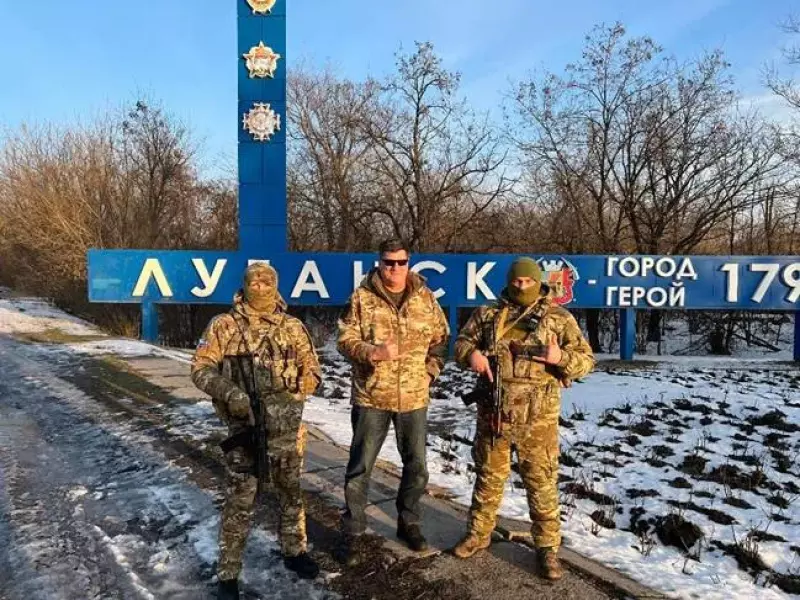
In 2023 and 2024, I was the invited guest of Alexander Zyrionov, a Russian businessman from Novosibirsk. The trips were journalistic in nature, the first being linked to the publication of my book Disarmament in the Time of Perestroika (published by Komsomolskaya Pravda), and the second to a visit I made to Chechnya, Crimea and New Russia (Kherson, Zaporozhia, Donetsk and Lugansk) where I reported on the reality of the war as seen from this perspective.
Nothing illegal there, either.
Sorry Gilbert.
And I have no idea what Gilbert is talking about when he references Alexander Dugin and “extreme nationalists.”
I briefly met Alexander Dugin in the green room of a Russian TV station, where he was scheduled to go on after an interview I gave.
That’s it.
The FBI, it seems, was mostly interested in my relationship with the Russian Embassy, since I had made several visits there to either have lunch with the Russian Ambassador, Anatoly Antonov, or attend celebrations such as Defender of the Fatherland Day, Victory Day, and Russia Day, as a guest.
The FBI was particularly interested in an article I wrote about Russophobia in early 2023 that made use of material written by Ambassador Antonov. This article, the FBI contended, demonstrated that I was taking direction from the Russian government, making me a de facto Russian agent.
The FBI’s case subsequently fell apart.
No trial.
No conviction.
Sorry again, Gilbert.
Since Gilbert couldn’t convict me of FARA-related crimes, today he attacks my sources and methods when it comes to making assessments about Russia and the SMO. Doctorow has singled out my relationship with Lieutenant General Apti Aluudinov. In short, Doctorow has “reasonable doubts about the value of using such back channels as Alaudinov.”
As Doctorow points out, “Back in the days of the battle for Bakhmut, we saw a lot of Alaudinov on the Sixty Minutes news and talk show. Each day presenter Olga Skabeyeva warmly welcomed him on air, and he handled himself very well, speaking optimistically of Russia’s progress but giving no specifics that could be of use to the enemy. In short, his lips were sealed.”
The problem, it seems, isn’t with General Alaudinov, it seems, but the fact that I use him as a source. “I find it hard to believe,” Gilbert opines, “that such a professional soldier and patriot would give anything of use to a foreigner, however friendly he or she might be to the Russian cause.”
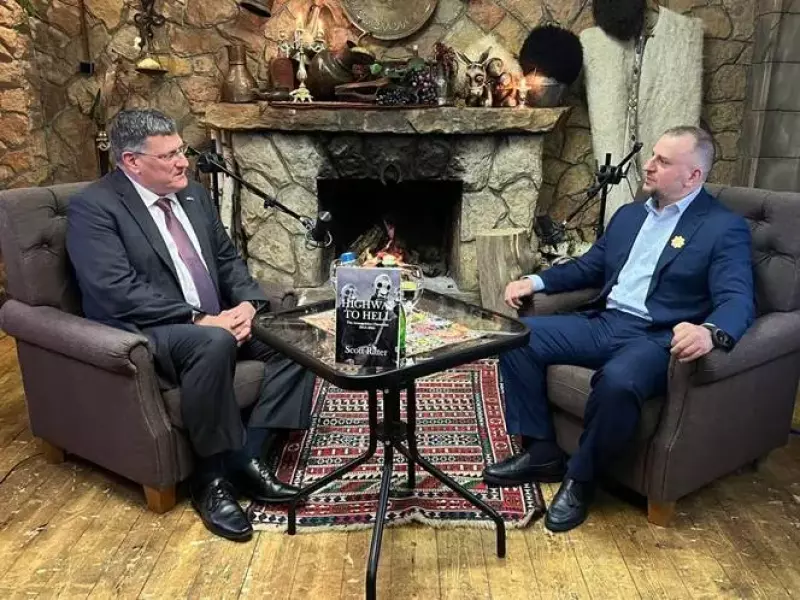
The thing is, I have done several on-the-record interviews with Apti which I draw upon for my information.
Sorry, Gilbert.
But not to worry—Gilbert has his own sources. “Last night’s edition of the talk show The Great Game gave a very different picture of the state of conflict in Kursk from what my peers are saying and of where this proxy war may be headed NOW, not in some distant future."
The key personality in this discussion was Franz Klintsevich, identified on the video as leader of the Russian Union of Veterans of Afghanistan. His Wikipedia entry further informs us that after serving as a Duma member for many years he is now a Senator, i.e., a member of the upper chamber of Russia’s bicameral legislature. He has represented the city administration of Smolensk in the western part of the Russian Federation, where he is no stranger, having been born just across the border in what is now the independent state of Belarus.
For 22 years ending in 1997, Klintsevich was an officer in Russia’s Armed Forces, serving primarily with the parachutists, meaning that he has guts and knows what it means to face battle. He retired with the rank of colonel, but continued his military education in the Military Academy of the General Staff, graduating in 2004. He also has a Ph.D. in psychology and is a gifted linguist, with command of German, Polish, and Belarussian. He is a member of the steering committee of the ruling United Russia party. I bring this out to make the point that Klintsevich is no garden variety ‘talking head’ but a very authoritative source.
And his testimony on The Great Game is the kind of Open Source on which I rely to say what I do about current Russian affairs.”
Cool deal.
Color me impressed.
Almost…
Maybe this isn’t the time for me to point out that I have been a guest on both Sixty Minutes and The Great Game.
Or that I have met Franz Klinsevitch in person. I’ve interviewed him and have engaged in several in depth conversations with him of both the SMO and the issue of Afghanistan and how Russia treats the veterans of past wars.
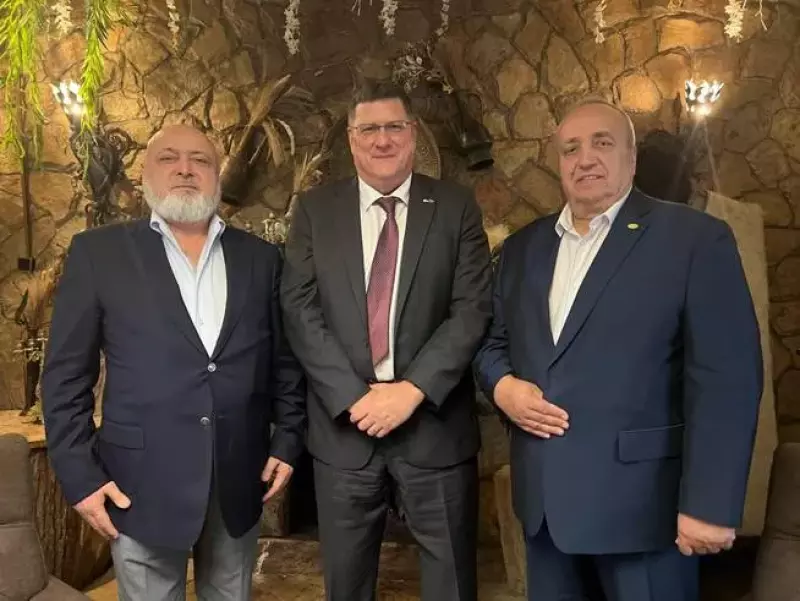
You see, Gilbert, I don’t rely on “Open Sources.”
I rely on my own assessments, drawn from direct access to the sources whom I rely upon to formulate my independent analysis.
Gilbert denigrates my sources as “Russia Today officials, Ministry of Foreign Affairs officials, and retired Russian Generals.”
I mean, I do speak to such people.
But that certainly isn’t the limit to my access.
In August of this year, I conducted nearly 30 separate interviews of key Russian personalities, including retired Colonels and Generals, politicians present and former, journalists, artists, and experts of all stripes.
Just this month, during my 19-day visit, I interviewed another 10 prominent Russians on the record.
I also met with average Russians, in bars, over food and drink, and at their places of work.
I met with the ladies and retired men who volunteer their time and money to provide humanitarian support to frontline troops.
I met the brave men who drive their vehicles to the front line—the red line—to deliver these goods at great risk to themselves.
In short, I met Russia.
Over the course of the dinners hosted by Peter Hänseler at the Cantinetta Antinori restaurant, I discussed my work in Russia.
The source of my pride as a truly independent journalist.
The fact that I operated free of any outside influence, whether it be in terms of finances or direction.
That my work in Russia was produced by a private citizen, Alexandra Madornaya (whom I compensated for her labor), and not some government or non-government entity.
Peter had gathered guests worthy of the occasion—Judge Napolitano, Larry Johnson, Garland Nixon, as well as his own colleagues and acquaintances, including Denis Dobrin, Leonid Soshnikov, and Auguste Maxime. Kiril Sokolov, a volunteer who delivered humanitarian goods to frontline soldiers, also joined us, as did Peter’s wife, Masha, and my producer, Alexandra. And the Iranian specialist, Sayed Mohammad Marandi.

The conversations were in-depth, collegial, challenging, and sometimes quasi-confrontational (contrary to popular opinion, we are all not of one mind of every topic!)
We took Russian society apart and put it back together again.
And then did it again.
And again.
We did this in pursuit of the truth, which in Russia is as elusive a goal as anywhere, if for no other reason than there are so many differing opinions on how to interpret a diverse set of facts.
We didn’t agree on everything.
But on one topic we were all of one mind:
That Gilbert Doctorow is problematic.
Or, in Marine speak, a moron who is full of shit.
Oh, the calumny!
I have just returned from travelling 19 days in Russia, conducting interviews of prominent Russians in order to help capture the Russian reality and bring it to an American audience. This article was motivated by this visit, which was mostly funded by the kind donations of you, the reader. If you want to see more articles like this, please subscribe. And if you want to help make possible more trips such as this, please donate (the Author’s next scheduled trip to Russia is in March-April 2026.)
«Calumny»